
Kabaka’s envoy challenges Ugandans in Europe to put unity first
Ssekajjugo, who represents the King in Germany, Switzerland, Belgium, the Netherlands and Luxembourg, said Ugandans abroad should look beyond their ethnic and political affiliations and recognise their shared national identity and responsibility towards their homeland.
The representative of the Kabaka of Buganda in five European countries that form the Rhineland county, Owekitiibwa Sam Ssekajjugo Musoke (left), receives a gift from Ugandan community members in Luxembourg.
The representative of the Kabaka of Buganda in five European countries that form the Rhineland county, Sam Ssekajjugo Musoke, has urged Ugandans living in Europe to put aside tribal and political differences and embrace unity.
This, he argued, will strengthen their community, preserve their culture and support Uganda’s development.
Ssekajjugo, who represents the King in Germany, Switzerland, Belgium, the Netherlands and Luxembourg, said Ugandans abroad should look beyond their ethnic and political affiliations and recognise their shared national identity and responsibility towards their homeland.
He made the remarks while addressing Ugandans in Luxembourg at an event organised to commemorate Uganda’s 64th Independence anniversary, under the theme “Unity, Community and Progress.”
Ssekajjugo, who started off by delivering greetings from the Kabaka, thanked the organisers, the Ugandan Embassy representatives and members of the community for gracing the celebrations, saying the sight of Ugandans displaying the national colours of black, yellow and red filled him with pride.
Although it was his first meeting with the Ugandan community in Luxembourg, he said he immediately felt at home among fellow citizens.
“We are here to celebrate 64 years since Uganda got its Independence on October 9, 1962. These have been years of struggle, progress and lessons,” he said, reflecting on the country’s journey since independence.
Comparing Uganda to a young man who has grown, Ssekajjugo acknowledged that the country had made mistakes and registered achievements but said it continued to move forward.
“Our independence will only have meaning if we, the children of Uganda in the diaspora, remain united,” he said, urging Ugandans of different ethnic backgrounds to put their differences aside.
“Whether you are Muganda, Munyankole, Acholi, Musoga or Mufumbira, today we are one. We are Ugandans,” he added.
Beyond the diaspora unity call, Ssekajjugo highlighted initiatives he supports in Uganda, guided by the Kabaka’s teachings of obuntu bulamu, obwetowaze n’emirimu. Literally means humanity, humility and hard work.
He said his efforts focused on youth empowerment through football, promoting a savings culture and improving agricultural practices, which he considers essential to building hardworking and self-reliant communities within a united Uganda.
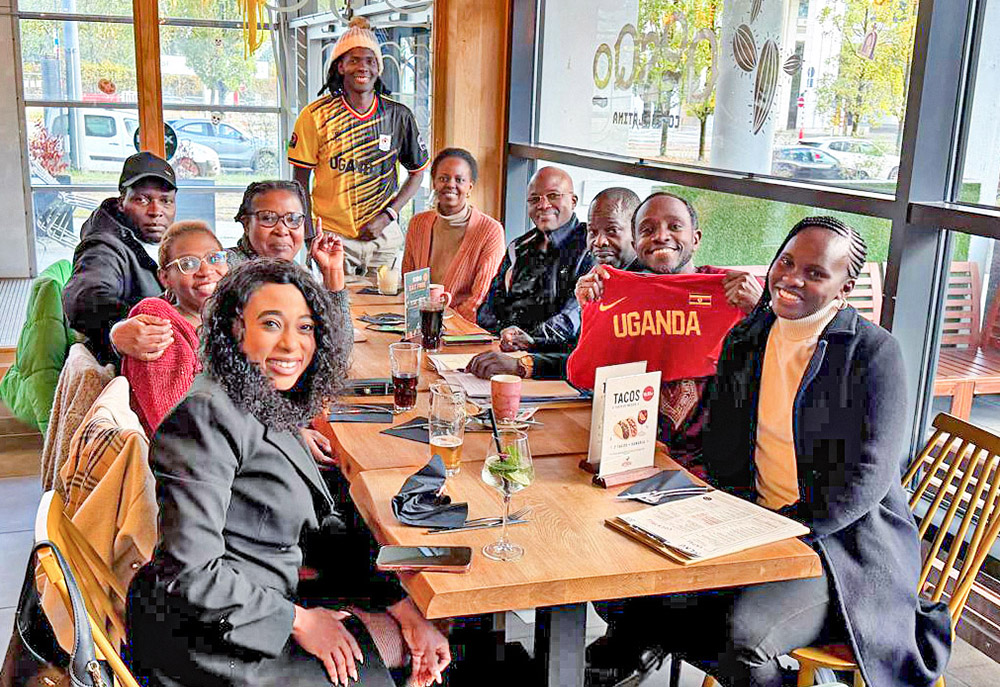
Some of the Ugandan community members in Luxembourg who attended the event to commemorate Uganda’s 64th Independence anniversary.
On youth empowerment, Ssekajjugo said many young Ugandans possess considerable talent but lack opportunities to develop their abilities and earn a living.
“Community football tournaments were organised not only to identify and nurture talent but also to discourage young people from engaging in harmful habits and introduce them to income-generating activities,” Ssekajjugo said.
He said under the initiative, winning teams receive Bajaj Boxer motorcycles, which can be used to generate income and provide young people with an opportunity to learn financial discipline and save towards their development.
Ssekajjugo also emphasised the importance of saving, arguing that hard work alone cannot guarantee development without proper financial management.
He said a savings and credit cooperative organisation (SACCO) had been established to encourage people to pool resources, access loans, invest and work towards financial independence.
“Togetherness is wealth,” he said, urging Ugandans to embrace collective saving as a pathway to economic security and community development.
On agriculture, he said Uganda’s fertile soils offered significant opportunities that remained underexploited because some farmers continued to rely on traditional methods.
He said community training initiatives were helping farmers adopt improved farming techniques, including better seeds, storage and marketing practices, to transform agriculture from subsistence activity into a viable business.
Ssekajjugo said the initiatives were intended to advance the Kabaka’s vision of a hardworking, self-reliant Buganda within a united Uganda.
He urged them to draw lessons from their host country’s emphasis on order, hard work and unity while maintaining their cultural identity.
The envoy challenged them to welcome newly arrived Ugandans, support members facing difficulties and build a community where children could learn their languages and remain connected to their heritage
He also pledged to work with the Ugandan Embassy to make the community more visible and respected, inviting members to share ideas and participate in strengthening their collective efforts.
“Progress means investing back home wisely, not just building houses but investing in our youth and in farming that feeds our nation,” he said.