
Judiciary turns to plea bargain to ease prison congestion
“Plea bargain provides a lawful avenue for eligible criminal matters to be resolved expeditiously. By concluding cases without requiring every matter to proceed through a full trial, the process can reduce pressure on court cause lists while enabling judicial resources to be directed towards cases requiring full adjudication,” Gadenya noted.
A separate plea bargain session held at Butuntumula Prison in Nakasongola district concluded 40 cases in a single day, bringing the total number of cases disposed of through the two recent interventions to 66. (Credit: Farooq Kasule)
The Judiciary has turned to plea bargaining as one of the measures to ease prison congestion and address the growing backlog in the criminal justice system.
This was revealed by High Court Judge Paul Gadenya at the close of a three-day sensitisation mini-plea bargain camp at Kigo Main Prison on October 1, 2026. Kigo Main Prison is home to more than 1,450 inmates.
Uganda Prisons Service officials say they are operating at more than three times their official capacity.
Appearing before Parliament’s Defence and Internal Affairs Committee on March 31, 2026, the officials said the country’s inmate population had surged to more than 80,000, far exceeding the system’s holding capacity of about 23,000.
Undersecretary Samuel Emigu told MPs the service was grappling with an excess of more than 56,000 inmates, translating into an occupancy rate of roughly 345%.
“For every one space available, we effectively have four inmates occupying it,” Emigu said.
Deputy Commissioner General of Prisons Samuel Makena said that as of March 30, 2026, the prison population comprised 42,340 convicts and more than 37,000 remand prisoners, highlighting a persistent backlog in the criminal justice system.
During the sensitisation campaign, Justice Gadenya urged inmates who had admitted guilt to embrace plea bargaining so they could begin serving their sentences early instead of remaining on remand for longer periods while awaiting trial.
Over the three days, 26 accused persons entered into plea agreements and were convicted and sentenced, providing a timely conclusion to matters that might otherwise have remained pending while awaiting full trial.
“Plea bargain provides a lawful avenue for eligible criminal matters to be resolved expeditiously. By concluding cases without requiring every matter to proceed through a full trial, the process can reduce pressure on court cause lists while enabling judicial resources to be directed towards cases requiring full adjudication,” Gadenya noted.
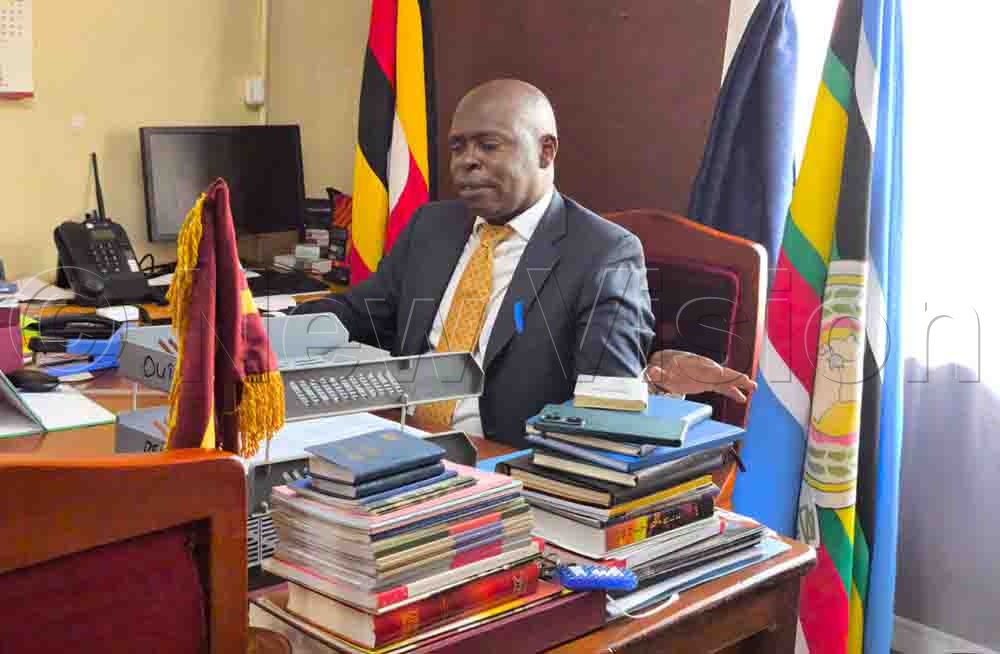
Justice Gadenya noted that plea bargaining also provides accused persons with certainty about the outcome of their cases, particularly those who have spent extended periods on remand. (Credit: Farooq Kasule)
Justice Gadenya noted that plea bargaining also provides accused persons with certainty about the outcome of their cases, particularly those who have spent extended periods on remand.
Meanwhile, a separate plea bargain session held at Butuntumula Prison in Nakasongola district concluded 40 cases in a single day, bringing the total number of cases disposed of through the two recent interventions to 66.
According to the judge, this demonstrates the practical value of taking justice services closer to inmates and dedicating court time to the expedited disposal of eligible criminal matters.
Presiding over the plea bargain session at Butuntumula Prison, Luwero chief magistrate Esther Adikini said the exercise was consistent with the objectives of the Judicature (Plea Bargain) Rules, 2016, which seek to promote an efficient, orderly, predictable and timely criminal justice system.
Equally, imploring inmates to embrace the initiative, Adikini said plea bargaining provides an avenue through which an accused person and the prosecution, in consultation with the victim, may agree on an appropriate sentence subject to the supervision and approval of the court.
According to the Judiciary’s ADR Registry, more inmates across the country have expressed interest in plea bargaining after being sensitised about it.
At Nakasongola Prison, more than 80 inmates have been registered for the upcoming plea bargain camp scheduled for October 12, 2026, following sensitisation by the ADR Registry.
At Arua Main Prison, a total of 243 inmates have been registered for a joint High Court and Chief Magistrate’s Court plea bargain camp scheduled for October 13 and 14, 2026.
The registered inmates comprise 126 whose matters are listed for the High Court and 117 for the Chief Magistrate’s Court.
At Jinja Prison Complex, sensitisation has been conducted ahead of a plea bargain camp scheduled for October 15, 2026.
In the Eastern Region, a joint plea bargain camp for Soroti and Kumi is scheduled for October 18 and 19, 2026, extending the Registry’s efforts to bring expedited case disposal closer to inmates in the region.
The Mbale High Court is also scheduled to conduct a plea bargain camp on October 21 and 22, 2026.
The recent activities at Kigo and Butuntumula, together with preparations for camps at Nakasongola, Arua, Jinja, Soroti, Kumi and Mbale, demonstrate the Judiciary’s continued use of plea bargaining as part of broader efforts to promote expeditious justice, effective case management, reduce case backlog and decongest prisons.
Through the ADR Registry, the Judiciary continues to take justice services closer to the people while strengthening the implementation of the Judicature (Plea Bargain) Rules, 2016.