
Judiciary to clear sh200b banking disputes in two weeks
Zeija said the initiative aims to unlock the trillions of shillings currently tied up in litigation at the commercial division of the High Court.
Chief Justice Dr Flavian Zeija addressing participants during a meeting at the Supreme Court on May 7, 2026. (Photos by Nancy Nanyonga)
________________
Following last month’s colloquium on commercial disputes in which the Bank of Uganda Governor Michael Atingi-Ego underscored the importance of the timely resolution of disputes, the Judiciary has launched a mediation drive to clear banking disputes worth over shillings 200 billion in two weeks.
Chief Justice Dr Flavian Zeija made the revelation during a roundtable discussion with the stakeholders ahead of the planned mediation settlement fortnight for the banking disputes at the Supreme Court conference hall on May 7, 2026.
“We have entrenched a culture of mediation fortnights as a masterplan for fast-tracking dispute resolution through the use of Alternative Dispute Resolution (ADR) mechanisms. I am pleased to announce that the judiciary will host a mediation settlement fortnight for banking disputes from May 18-28,” Zeija said.
Bank of Uganda Governor Michael Atingi-Ego speaking during the meeting at the Supreme Court on May 7, 2026.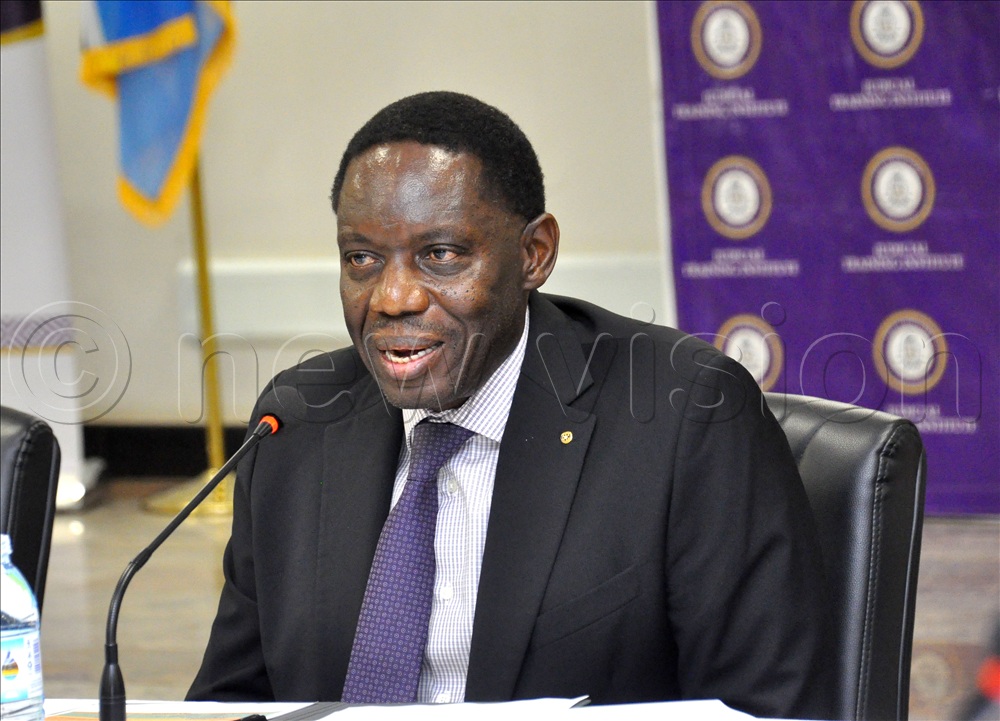
Zeija said the initiative aims to unlock the trillions of shillings currently tied up in litigation at the commercial division of the High Court. Statistics from the court indicate that banking disputes worth shillings 982 billion are tied up in litigation.
Zeija said mediation and arbitration offer a surgical precision that a blunt judgment often cannot, as it restores relationships, allows the restructuring of debts and preservation of trust.
The mediation settlement fortnight for the banking disputes will run from May 18-28.
Zeija said ADR mechanisms such as mediation are no longer an alternative but a policy alternative for the judiciary to overcome the case backlog, which stands at over 45,000 cases.
Underscoring the importance of ADR mechanisms in resolving banking disputes, Zeija noted that delayed recovery of loans often leads to increased borrowing rates, which in the long run affects the economy.
“When we have non-performing loans, the banks will try to cover that by increasing interest rates for those who pay well. Therefore, we must embrace mediation to overcome this because it affects all of us,” Zeija said.
Giving an overview on the status of the banking disputes before the court, High Court Judge Anna Mugenyi, also the head of the Commercial Court, revealed that they intend to handle over 326 banking disputes during the planned mediation settlement fortnight.
“This fortnight is a journey to unlock over sh982b tied up in litigation. We have over 1,730 pending disputes, and we estimate that by the end of this mediation exercise, over 326 cases worth shillings 200 billion shall be cleared,” Mugenyi said.
Mugenyi said the Commercial Court has since decided to prioritise the banking disputes to unlock the economy.
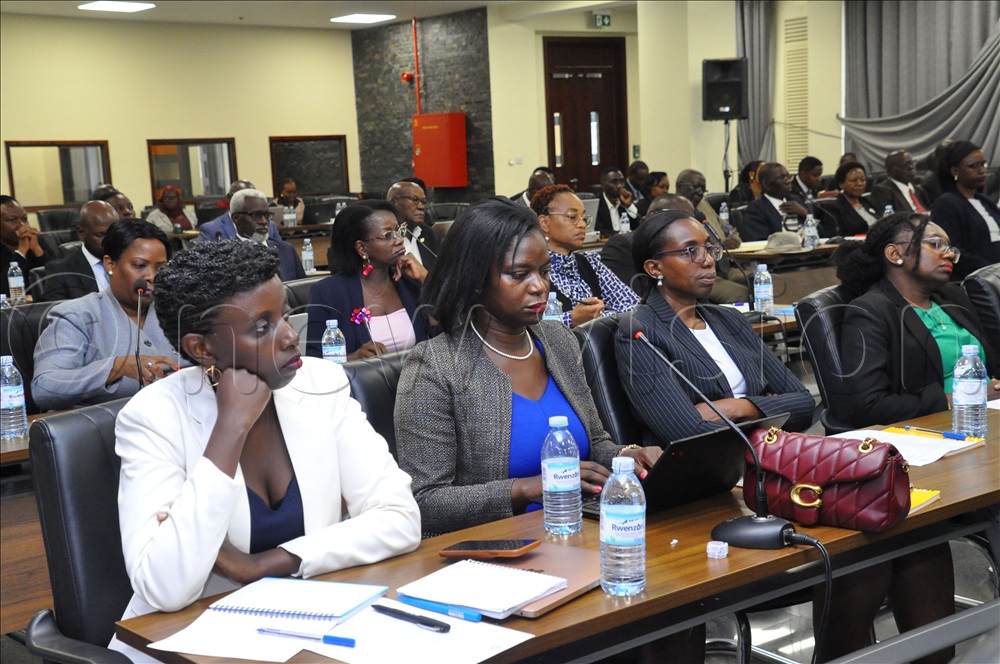
The court is faced with a caseload of about 8,414 unresolved cases, with 6,495 already allocated to the judges for handling. However, Mugenyi said the parties are free to opt for mediation even for the cases already allocated to the judges.
“We cannot force anyone to embrace mediation, but if a party opts for mediation, we welcome it,” Mugenyi said.
In order to ensure professionalism in the mediation processes, Mugenyi said they have since identified suitable mediators, such as retired judges, to mediate the parties.
“We, therefore, ask the stakeholders to embrace compromise because a dispute resolved today costs less than years of litigation,” Mugenyi said.
Atingi-Ego commended the judiciary for coming up with the initiative, saying the delayed disposal of commercial disputes is hurting the economy.
“I commend the judiciary for this timely, forward-looking initiative because it is a clear path to translating policy statements into practical statements,” Atingi-Ego said.
Atingi-Ego observed that the banking sector depends on the timely resolution of disputes.
Atingi-Ego said the mediation settlement for the banking disputes is critical for the central bank and the financial institutions it supervises.
Prof. Andrew Khaukha, the executive director of the Judicial Training Institute, urged the law firms to also establish ADR hubs to promote mediation.
Supreme Court Justice Mike Chibita, also the chairperson of the Judicial Training Governing Council, said ADR is a game-changer for the judiciary, and it is here to stay, imploring lawyers and stakeholders to embrace it.