
Judges cautioned against misuse of plea bargain
Abodo's warning comes amid long-standing concerns about congested prisons and delayed hearings which leave many accused persons in detention for years without their cases being heard.
Principal Judge Jane Frances Abodo. (Credit: Mpalanyi Ssentongo)
________________
Principal Judge Jane Frances Abodo has cautioned judicial officers against misusing plea bargain, saying the mechanism must never be turned into a shortcut for clearing case backlogs at the expense of justice.
Plea bargain is the process between an accused person and the prosecution in which the accused person agrees to plead guilty for a lesser punishment.
Abodo sounded the warning while presiding over a one-day training for judicial officers from western region on the plea-bargain techniques at the Judicial Training Institution headquarters in Nakawa on Wednesday (October 14).
“Plea bargain was designed for those who say they committed the offences they are charged with. It is not meant for suspects who have spent too long on remand waiting for a trial. So, if the suspect tells you that he or she never committed the offence but wants to enter into plea bargain, reject it,” she said.
Her warning comes amid long-standing concerns about congested prisons and delayed hearings which leave many accused persons in detention for years without their cases being heard.
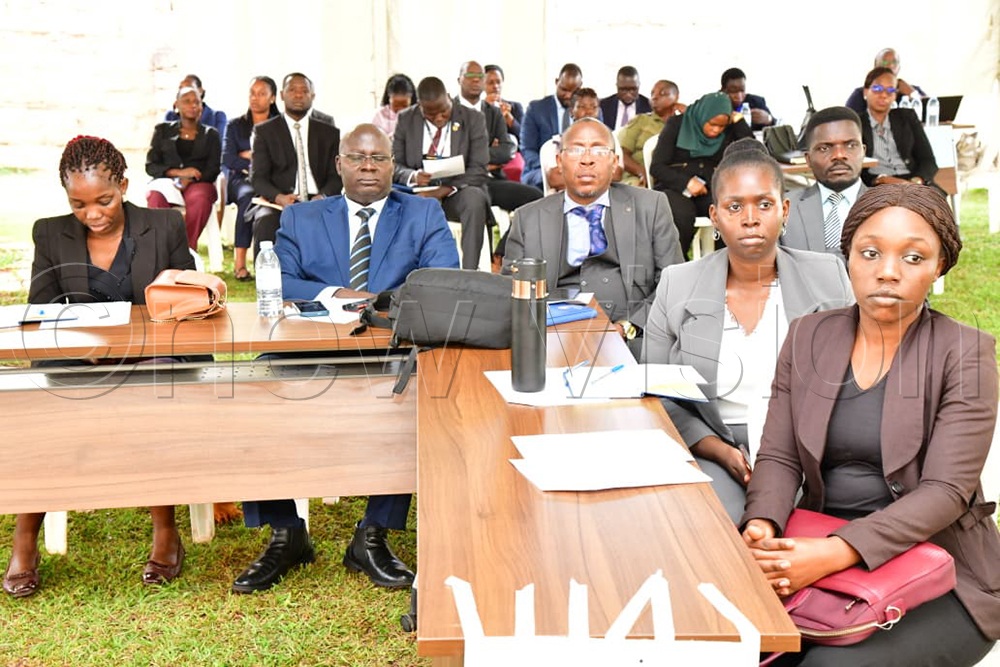
(Credit: Mpalanyi Ssentongo)
While some of the accused persons may feel pressured to accept a plea deal not because they committed the offences but because it offers the quickest route to freedom, Abodo urged the judicial officers to ensure that only plea deals of those who voluntarily plead guilty are entertained.
According to her, entertaining plea deals of those who never committed the offences defeats the very purpose of the plea-bargain.
“A person who is innocent but pleads guilty to escape prolonged detention has in effect been punished before being tried."
Judicial officers were urged to acquaint themselves with rule 12 of the plea bargain rules, which requires courts to be satisfied that an accused person is entering the agreement voluntarily and with full understanding of its consequences.
“Plea bargain must be applied with care. As judicial officers, your role is not only to dispose of cases but to protect the integrity of the justice system,” said Abodo.
Long stays on remand, she added, should be addressed through speedy trials, bail where appropriate and better case management.
“We must ensure that every plea bargain deal reflects genuine admission of guilt, freely given and that no accused person is forced to surrender their innocence for the sake of their liberty,” said the Principal Judge.
“By nature, plea bargain is institutionalised corruption, therefore you must keep the records and ensure that the accused understands the consequences of entering into a plea bargain deal."
In a keynote address, High Court judge Jane Okuo Kajuga appealed to the judicial officers to ensure that the facts of the case speak to the ingredients of the offence to which the accused is pleading guilty to deter appeals.
Prof. Andrew Khaukha, the executive director of the Judicial Training Institute, said the training was aimed at equipping the judicial officers with the required skills to speed justice in a fair and efficient manner.