
Hydrocephalus families struggle with costly care, stigma
“You have to use this medication every time to avoid further complications.”
(L-R) Rtn. Emma Onoha Past Assistant District Governor, Rotarian Garvin Joshua Wanume, the President of Rotary Club of Kampala Muyenga Breeze and Rtn. Roger Semwanga, the youth Service at Rotary Club of Kampala Muyenga Breeze matching with some of children with Hydrocephalus during Hydrocephalus awareness day at Kitala Health Centre in Entebbe on September 24, 2026. (Photos by Mary Kansiime)
________________
For families caring for children with hydrocephalus, getting surgery is only the beginning of a longer and often expensive journey.
At Kitala Health Centre II in Entebbe, Wakiso district, parents, children living with hydrocephalus, health workers, Rotary members and community leaders gathered on September 24, 2026, for Hydrocephalus Awareness Day, held under the theme “We Are Together in This.”
The event began with a street march through Kitala aimed at challenging stigma and encouraging families to seek medical attention early.
For mothers such as Joyce Nandawula, whose son underwent surgery for hydrocephalus at CURE Children’s Hospital in Mbale, the procedure was supposed to mark the end of one of the most difficult chapters of their lives.
Her son was barely three months old when she noticed something was wrong. He cried excessively and vomited, prompting a visit to hospital, where he was referred to Mbale for specialised treatment.
The surgery was eventually performed free of charge. But years later, Nandawula says the costs of keeping her son well remain overwhelming.
Medication to control his convulsions, she says, can cost between sh450,000 and sh480,000 a month.
“You have to use this medication every time to avoid further complications.”
Joyce Nandawula, a parent speaking during the Hydrocephalus awareness day at Kitala Health Centre in Entebbe on September 24, 2026.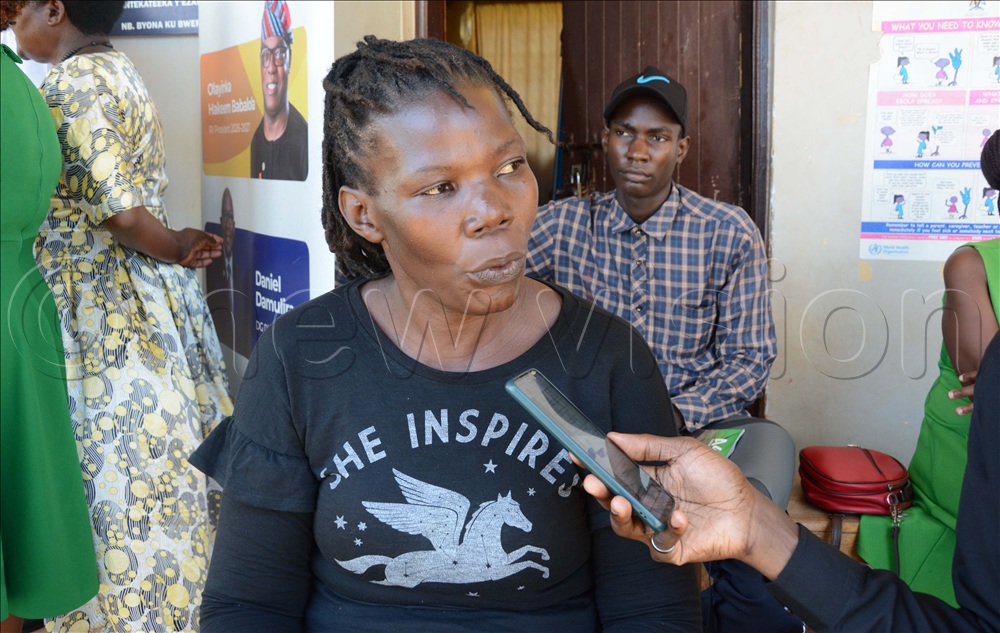
The burden forced Nandawula to leave her teaching job to care for her son. She says her husband left after learning about the child's condition, leaving her to depend largely on her siblings.
At one point, she survived by doing laundry for people in her village.
Her experience captures a wider challenge facing families of children with hydrocephalus: getting a child through surgery is only one part of the journey.
Families may still need medication, physiotherapy, transport and constant care, while stigma can make even ordinary journeys difficult.
‘We can only touch a few’
Rotary Club of Kampala Muyenga Breeze has made hydrocephalus and spina bifida surgery one of its signature projects.
Club president Joshua Gavin Wanume said the club has supported about 210 children over eight years, working with CURE Children’s Hospital in Mbale to facilitate surgery and follow-up care through its annual Cowboy Night fundraising events.
The club also supports families with basic needs and economic empowerment initiatives, including training mothers in soap making and supporting piggery projects.
But Wanume acknowledges that the need is far greater than what the organisation can provide.
“There are many people out there that need this help. We can only touch a few people,” he said.
That gap, organisers say, makes awareness important: identifying children early, getting them into care and ensuring families are not left alone once surgery is over.
‘We cannot accommodate them all’
Cynthia Baitwa, patron of the Hydrocephalus and Spina Bifida Initiative in Katabi, said the organisation supports more than 120 children but cannot accommodate them at its current facility.
The centre operates from a rented two-bedroom house, which is too small to accommodate all the children and families seeking support.
“We want to put up a centre for these children,” Baitwa said.
The proposed facility, she said, would include a physiotherapy centre, accommodation and opportunities for mothers to earn an income while remaining close to their children.
Baitwa said many children living with hydrocephalus experience difficulties with movement, sight and mobility and require continued rehabilitation.
But physiotherapy is expensive, while transport to health facilities can be difficult.
“There are no helmets that can fit these children because of the size of their heads,” she said, describing one of the practical difficulties families face when using boda bodas.
From stigma to university graduation
Yet, amid the stories of financial hardship, the event also offered a glimpse of what is possible when children receive support.
Patience Mbabazi, who lives with hydrocephalus, has completed university and is due to graduate in December after studying social work on a government scholarship.
She said there were days when her condition made attending classes difficult, but she continued.
“I don't see myself as a disabled person because I can do things other people cannot do,” Mbabazi said.
Her achievement is part of the message Baitwa wants communities to hear: children with hydrocephalus should not be hidden or written off.
Baitwa said some mothers previously hid their children because of stigma, but community sensitisation is helping families understand that hydrocephalus is not something they should be ashamed of.
“They didn't ask for this disease, and so we want to show them that it is not their fault,” she said.
Early treatment remains critical
Paul Mulumba, senior health inspector for Katabi town council, said lack of information remains one of the biggest barriers to early treatment.
He said some community members still attribute hydrocephalus to witchcraft, causing families to delay seeking medical care.
“Some of them think it is out of witchcraft. That's why they take a long time to come and seek medical attention,” he explained.
He urged parents to seek medical attention if they notice an unusually large head or developmental delays, particularly difficulties with movement.
But access to specialised treatment remains a challenge.
Mulumba said only a limited number of health facilities handle hydrocephalus and spina bifida, while specialists are also few.
“If the government can have regional centres in every district to handle spina bifida and hydrocephalus, it would be of great importance to the community members,” he said.