
How refugees are transforming host communities in three districts
“I have been in Uganda for almost 20 years. I came here when I was very young. We have refused to remain stuck in a refugee mindset. We have decided to stand on our own feet and move forward with our lives,” Hakiza said.
Reflecting on his early years in Uganda, Marot recalled how host communities helped refugees survive beyond the assistance provided by humanitarian agencies. (Credit: Rhyman Agaba)
For many refugees in Uganda, the support they received from host communities during their most difficult moments has inspired a commitment to give back.
Among them is Simon Marot Touloung, a South Sudanese refugee who arrived in Uganda in 2000 and now lives and works in Kampala as Team Lead of the African Youth Action Network (AYAN), a refugee-led organisation operating in Kyaka II Refugee Settlement in Kyegegwa district, Kiryandongo Refugee Settlement, and Rhino Camp in Madi Okollo district.
Reflecting on his early years in Uganda, Marot recalled how host communities helped refugees survive beyond the assistance provided by humanitarian agencies.
“I came to Uganda in 2000, and I can confirm what the Hon. Member from Terego mentioned. We used to go to the host community and dig an acre of land for them. In return, they would give us an acre to cultivate for ourselves,” he said.
According to Marot, the arrangement supplemented the food rations provided by humanitarian agencies, which often ran out before the end of the month.
“The food would be over by midmonth. It was the communities around us that helped us survive,” he said.
Marot added that the support extended beyond food and livelihoods, enabling refugees to access education and opportunities that transformed their lives.
“Even for me to be standing here and speaking to this forum, it is because of the support I received. If I had not been given access to education, I would not be here today,” he said.
As a way of expressing gratitude to Ugandan communities that have hosted refugees for decades, AYAN has established innovation centres in Kiryandongo, Madi Okollo and Kyegegwa districts. The organisation plans to open another centre in Terego District.
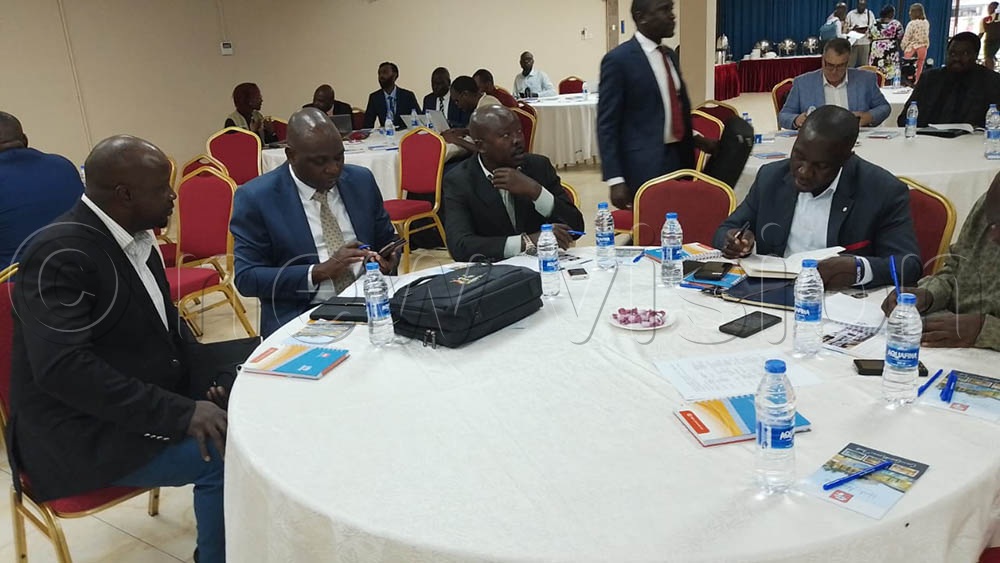
“We are soon coming to Terego,” Marot told participants during an orientation workshop for more than 30 Members of Parliament at Hotel Africana in Kampala city. The event was organised by the Norwegian Refugee Council (NRC).
He said the innovation centres are designed to support both refugees and host communities through skills development, entrepreneurship and peacebuilding initiatives.
“We want to support our communities, including host communities, to change mindsets and contribute to peace across the continent,” he said.
“Our first trained peacebuilders are now back in Burundi working with peacebuilding organisations. One has started a peacebuilding organisation in South Sudan, while another is working with a ministry in Somalia,” he said.
He called on Parliament to work closely with refugee-led organisations to mobilise resources and strengthen support for both refugees and host communities.
“How can we work together to thank the Government of Uganda and the people who have hosted us for so long? Let us work together,” he said.
Two decades in Uganda
Another refugee leader, Robert Hakiza, originally from the Democratic Republic of Congo (DRC), shared a similar story. Hakiza arrived in Uganda nearly two decades ago and is now the Executive Director of Young African Refugees for Integral Development (YARID).
Having fathered and raised five children in Uganda, Hakiza said he and many other refugees have deliberately rejected a dependency mindset.
“I have been in Uganda for almost 20 years. I came here when I was very young. We have refused to remain stuck in a refugee mindset. We have decided to stand on our own feet and move forward with our lives,” he said.
Hakiza said refugee-led organisations are encouraging the same spirit of self-reliance among the more than one million refugees living in Uganda.
“I have travelled across East Africa, Europe and America. I have never seen a better country for refugees than Uganda,” he said.
Hakiza revealed that several years ago he was offered an opportunity to relocate to Sweden under a resettlement programme but chose to remain in Uganda.
“They told me I qualified to go to Sweden, but I said no. As long as there is peace and I can earn a living, I am okay here. That shows how hospitable Uganda is and how supportive its refugee policy has been,” he said.
Facing challenges
The workshop brought together government officials, refugee leaders and legislators, including Charles Bafaki from the Office of the Prime Minister, Buliisa County
MP Allan Atugonza, Buhaguzi East MP Stephen Aseera Itaza and Jinja Southwest Division MP Timothy Batuwa Lusala, also Shadow health minister.
During the discussions, Atugonza highlighted concerns from refugee-hosting communities, noting that they often face significant pressure as refugee populations continue to grow.
“Colleagues from refugee-hosting districts understand these challenges more clearly. For those of us representing host communities, we feel the pressure and sometimes struggle to see the benefits,” he said.
Atugonza also questioned refugee intentions to return, expressing scepticism about figures from the United Nations High Commissioner for Refugees (UNHCR), which indicate that most refugees would be willing to return home if conditions improved.
“The stories we hear on the ground are different. We need more information and engagement so that Parliament can better understand the realities facing both refugees and host communities,” he said.
Meanwhile, Michael Wells, the UNHCR Representative in Uganda, announced that the agency, in partnership with the Government of Uganda, plans to conduct a nationwide refugee census this year.
The exercise is expected to establish the current number of refugees living in Uganda and determine their geographical distribution, providing updated data to support planning, service delivery and policy decisions.