
Hoima set to host next National Cleaning Day as Uganda steps up AFCON preparations
“The next epicentre for the National Cleaning Exercise will be in Hoima City. As you are aware, we are preparing to host AFCON in that part of the country,” Nabbanja said. The government used the Kyaliwajala exercise to combine the national sanitation campaign with the launch of AFCON-related activities in Kira Municipality, one of the areas expected to support activities around Mandela National Stadium, Namboole.
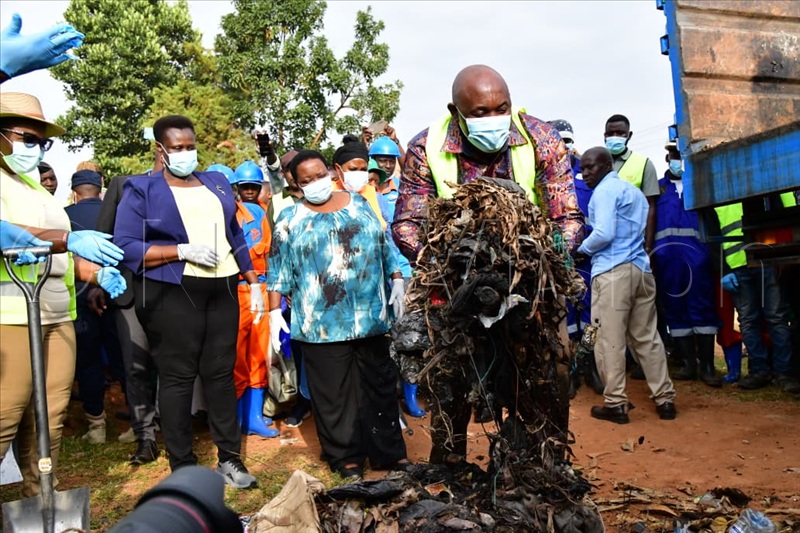
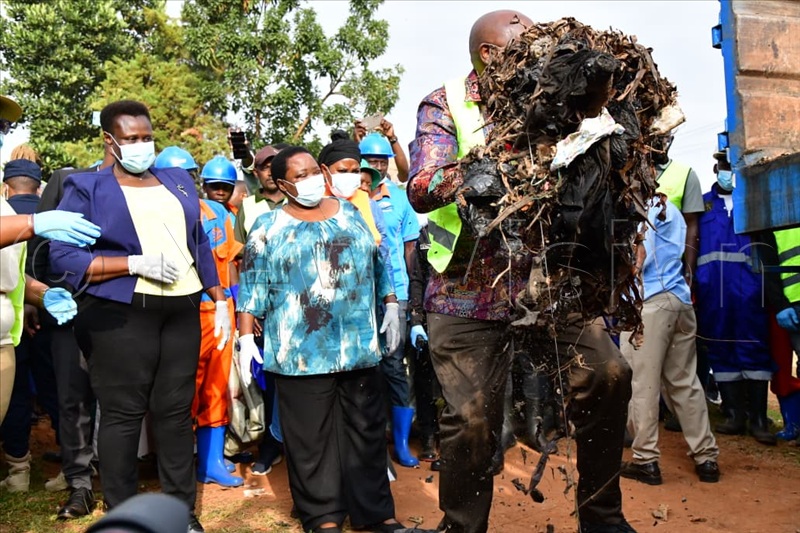
Vice President Jessica Alupo, who presided over the event, officially launched the second National Cleaning Day, whereas Prime Minister Robinah Nabbanja said waste should be stored properly and taken to designated collection points for removal by authorised waste collectors. (Credit: Mpalanyi Ssentongo)
WAKISO - Government has announced that Hoima City will be the next epicentre for the third National Cleaning Day next month as Uganda intensifies preparations to host the 2027 Africa Cup of Nations (AFCON).
Prime Minister Robinah Nabbanja, the chief coordinator of the national cleaning programme, announced the decision on Saturday (August 29, 2027) during the launch of the second statutory National Cleaning Day at UMEA in Kyaliwajjala, Kira Municipality, Wakiso District.
The event at Kyaliwajjala attracted senior government officials including ministers, Members of Parliament, Permanent Secretaries, chief executives of government entities, Wakiso leaders and residents.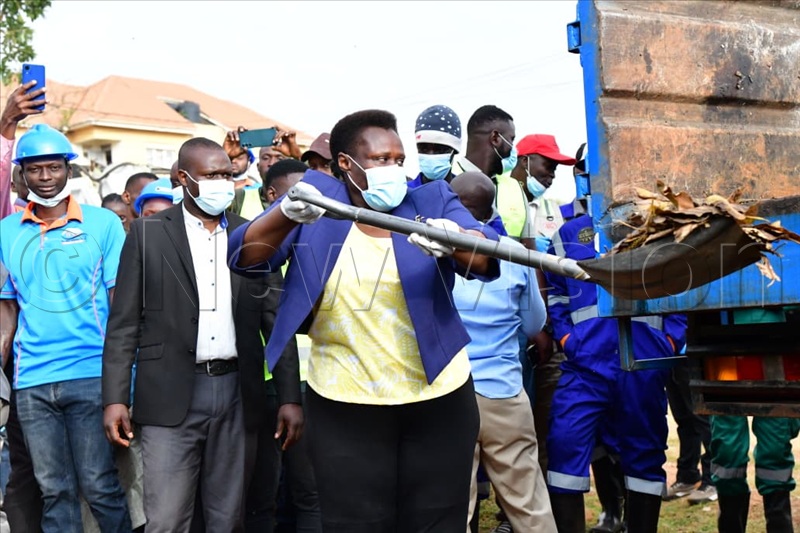
Vice President Jessica Alupo, who presided over the event, officially launched the second National Cleaning Day and directed Ugandans to treat cleanliness as a permanent responsibility rather than an activity limited to the three-hour monthly exercise. (All Photos by Mpalanyi Ssentongo and Eria Luyimbazi)
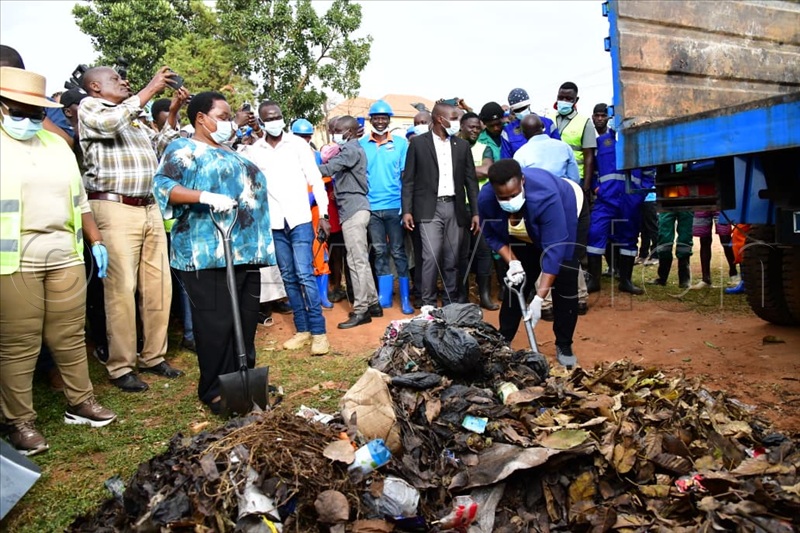
Nabbanja said the choice of Hoima was linked to the city's role in Uganda's preparations for the continental football tournament, which Uganda will co-host with Kenya and Tanzania in 2027.
“The next epicentre for the National Cleaning Exercise will be in Hoima City. As you are aware, we are preparing to host AFCON in that part of the country,” Nabbanja said.
The government used the Kyaliwajala exercise to combine the national sanitation campaign with the launch of AFCON-related activities in Kira Municipality, one of the areas expected to support activities around Mandela National Stadium, Namboole.
The Prime Minister similarly warned residents against dumping waste in drainage channels, roadsides, wetlands and other public spaces.
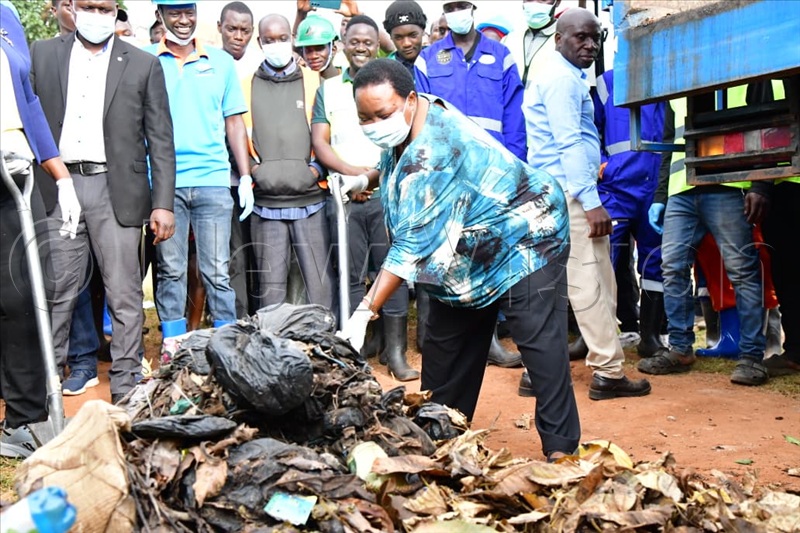
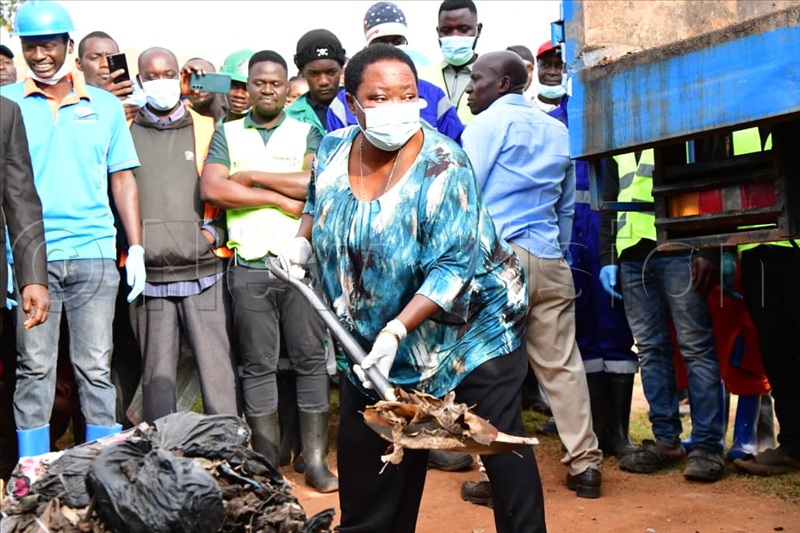
Nabbanja said waste should be stored properly and taken to designated collection points for removal by authorised waste collectors.
“Waste is not simply rubbish. Much of it is a resource,” she said, urging Ugandans to view waste as a source of employment, recycling and business opportunities.
The Prime Minister said maintaining a clean environment was not solely the responsibility of the government, but required the participation of households, communities, local governments and private waste collectors.
Per the statutory guidelines, National Cleaning Day is observed every last Saturday of the month between 7 a.m. and 10 a.m.
Alupo said the campaign was critical to Uganda's preparations for AFCON 2027 because the tournament would expose the country to millions of visitors from across Africa and beyond.
“AFCON 2027 will place Uganda in the international spotlight,” Alupo said, adding that visitors should find a country that is “clean, organised, safe, welcoming and proud of its environment.”
She challenged host cities, districts and local governments to prepare their communities alongside the stadiums to take advantage of business opportunities expected to arise from the tournament.
The Vice President said cleanliness was also fundamental to Uganda's wider socio-economic transformation, warning that poor sanitation exposes communities to preventable diseases.
She urged households to properly sort waste, saying plastics, paper, glass and metals could be recycled while organic waste could be converted into compost and used as fertiliser.
Alupo called for a shift from what she described as a waste-disposal mindset to “waste for value” thinking.
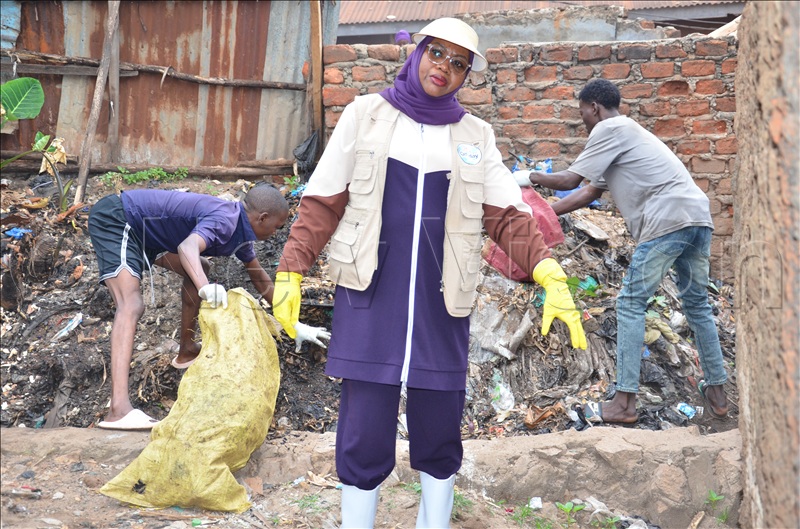
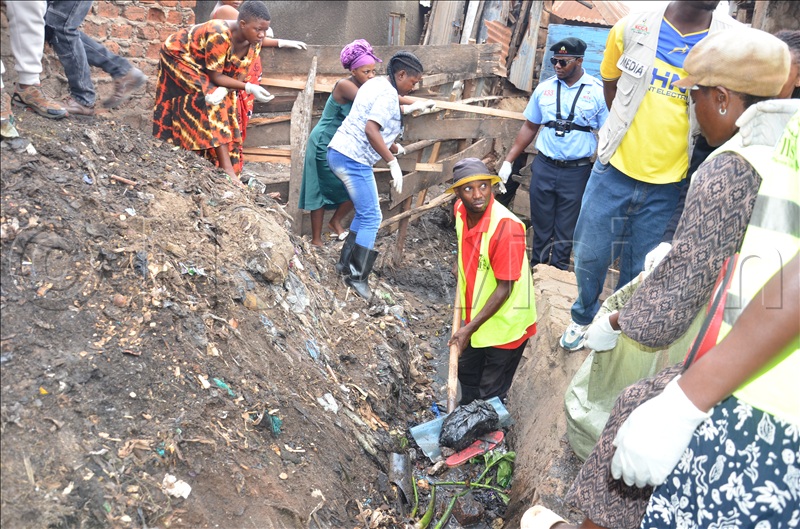
She also called on government and private waste-management companies to invest in modern equipment capable of sorting and processing waste during collection.
Alupo said the government had also made special arrangements for Seventh-day Adventists whose Sabbath falls on Saturday. Members of the faith are permitted to conduct their cleaning activities on Sunday.
Cabinet approved the National Cleaning Day programme in August 2025, with the exercise scheduled for every last Saturday of every month from 7 a.m. to 10 a.m.
The government has said the initiative is intended to create a sustained culture of cleanliness rather than rely solely on government agencies to manage waste.
The exercise is also backed by movement restrictions during the designated three-hour period, with police allowing exemptions for essential services and specified categories of people, including those seeking medical attention, emergency workers, security personnel, diplomats, tourists and people travelling to or from international terminals.
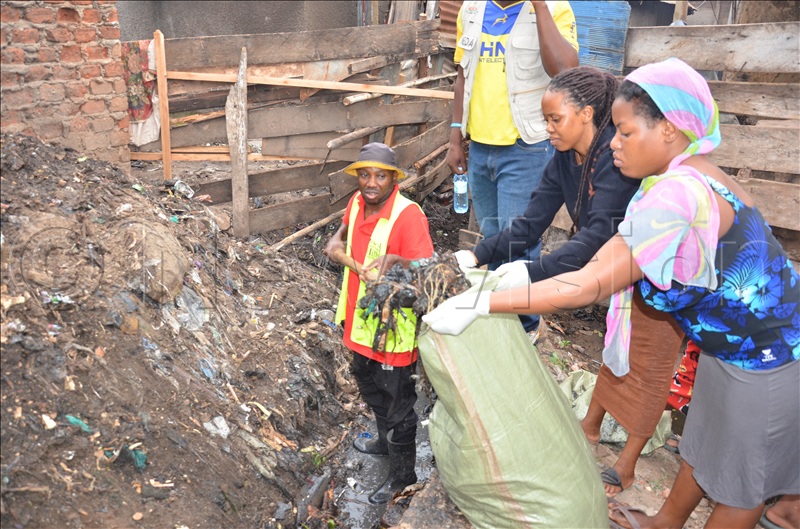
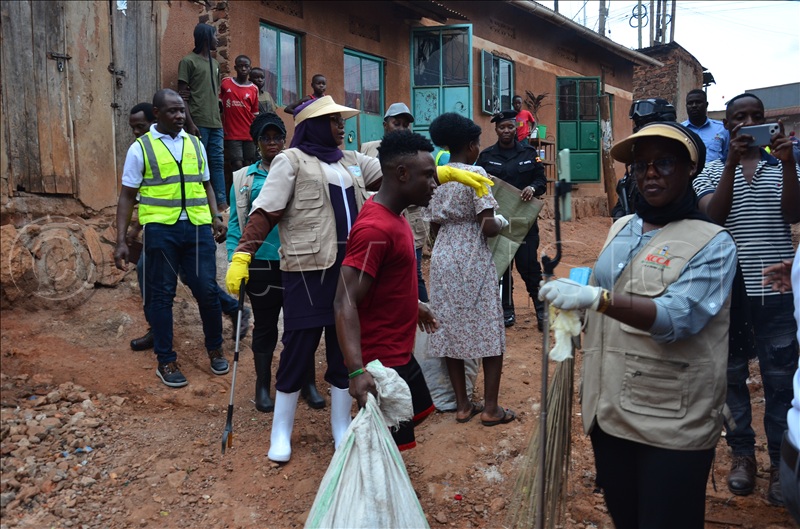
The exercise attracted Kira Municipality residents, local leaders and senior government officials, who participated in cleaning activities in the area.
Wakiso district LC5 chairperson Eng. Ian Kyeyune said the district's rapid population growth had made garbage management an increasingly difficult challenge.
He said Wakiso’s cleanliness efforts were targeting garbage generated at household level as well as waste dumped along streets.
“We shall empower sanitation committees, and everybody is required to register with these committees,” Kyeyune said.
He also commended the government for the Greater Kampala Metropolitan Area road infrastructure projects, saying improved infrastructure was transforming Wakiso.
Wakiso Woman Member of Parliament, Betty Naluyima, said residents should not wait for the government to clean their communities.
She said the presence of Namboole as an AFCON venue made cleanliness particularly important for Wakiso.
“We all know that Namboole is one of the major venues which will host AFCON next year; therefore we need to emphasise cleanliness,” Naluyima said.
ICT and National Guidance Minister Kasule Lumumba urged residents to clean their communities and separate waste according to whether it is biodegradable or non-biodegradable.
Third Deputy Prime Minister Rukia Isanga Nakadama called for greater cleanliness within households, urging residents to remove items they no longer use and either dispose of them properly or give them to people who need them.