
Gov’t to link resource allocations to districts on performance, accountability
“Too often, funds are released, but works start late, are completed poorly, or deteriorate soon after handover,” Minister Mukalazi said, asking the units to initiate procurement early, supervise contractors rigorously, control costs and budget explicitly for routine maintenance.
The minister, Hajati Aminah Mukalazi, revealed that the government last year provided sh13.2b for the induction of political leaders, sh32b for vehicles for accounting officers, sh16.05b to strengthen planning units and sh64b for physical planning and coordination of public infrastructure. (Credit: Eddie Ssejjoba)
The Government has issued directives to districts, cities and municipalities, strictly linking resource allocations to performance, accountability and service delivery results.
According to the state minister for finance, planning and economic development, in-charge privatization and investment, Hajati Aminah Mukalazi, local government performance assessments and audit findings would increasingly inform how grants are allocated to the various local government units.
She said the government was committed to addressing outstanding and emerging priorities in each respective local government unit in a phased manner.
But warned that resources remained limited and that not every request would be met, and asked the leaders and technical staff to convert every shilling provided into results.
“As Government increases resources to local governments, these resources must translate into better services for our people. Your performance in using these resources will strengthen the case for further allocations,” she emphasised.
Mukalazi was Thursday addressing leaders and heads of departments from Agago, Lamwo, Karenga, Abim, Arua, and Arua City during the 2027/2028 budget consultative meeting held at Bomah Hotel in Gulu City.
The state minister for Northern Uganda, Beatrice Akello Akori, attended the meeting.
She said the allocations followed requests from local government units for stronger leadership, planning and administrative capacity.
In addition, she indicated that the Government continued the phased salary enhancement for selected local government staff to attract and retain critical skills.
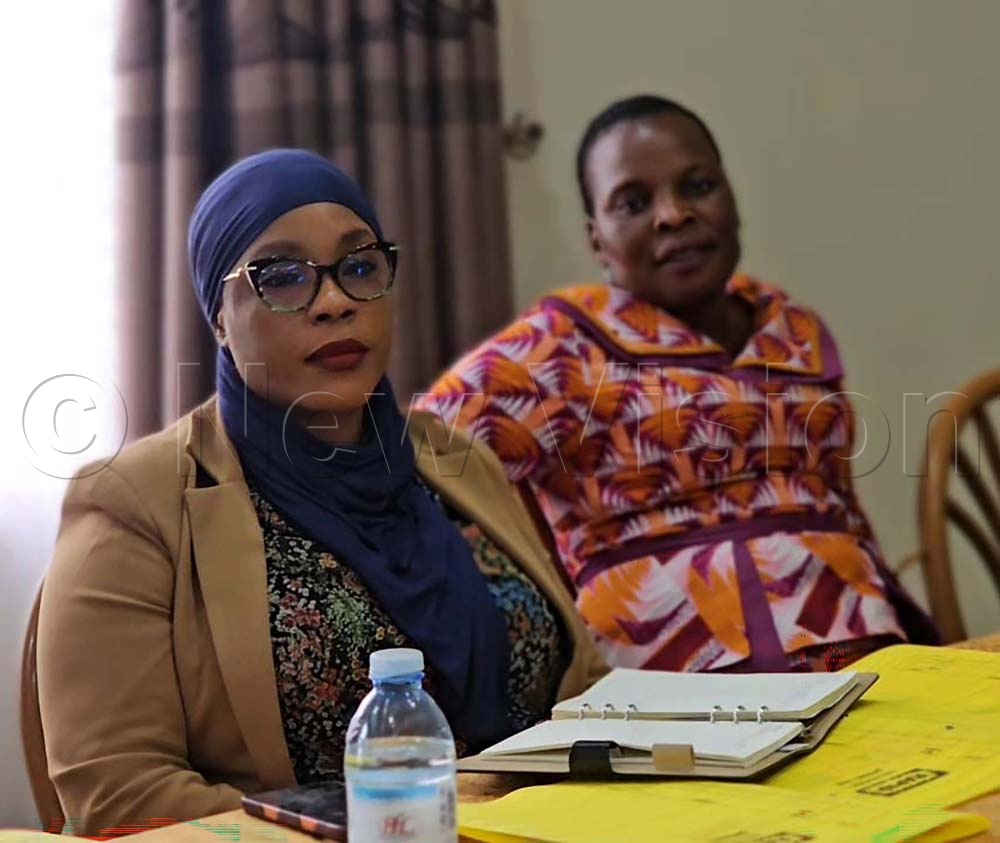
Mukalazi also asked the accounting officers to avoid committing Government beyond approved budgets, but instead verify domestic arrears, and account fully and on time for all funds received, including funds under the Parish Development Model. (Credit: Eddie Ssejjoba)
The units also raised concerns about frontline services and infrastructure.
In response, she stated that the Government provided shs15.8b to equip extension workers, shs20b for ambulances, shs9.5b for tourism development and shs250b for infrastructure in the Greater Kampala Metropolitan Area.
It also offered shs59.5b for urban roads and drainage under the Uganda Cities and Municipalities Infrastructure Development (UCMID) programme sh6b for road maintenance in the six largest districts.
The minister, however, pointed out that several persistent weaknesses were still standing in the way of effective service delivery.
She noted that there was concern that some local governments often return unspent wage funds to the consolidated fund while critical posts remain vacant, which she said was unacceptable.
“Accounting officers must fill approved positions promptly, enforce attendance and performance management, and clean up the payroll,” she stated.
She also cautioned the accounting officers against delayed procurement, weak contract supervision, cost overruns and poor maintenance, which she said were eroding value for money.
“Too often, funds are released, but works start late, are completed poorly, or deteriorate soon after handover,” she said and asked the units to initiate procurement early, supervise contractors rigorously, control costs and budget explicitly for routine maintenance.
Mukalazi also asked the accounting officers to avoid committing Government beyond approved budgets, but instead verify domestic arrears, and account fully and on time for all funds received, including funds under the Parish Development Model.
During the meeting, Akello ordered the Uganda Wildlife Authority (UWA) to resolve a land dispute that has stalled the installation of an electric fence around Kidepo Valley National Park.
She revealed that the government had set aside sh2 billion for the fencing project, but the project had not commenced in parts of Agago and Kitgum because of disagreements between local communities and UWA over land, which she said was undermining efforts to address the growing human-wildlife conflict.
The theme was “Full monetisation of Uganda’s economy through commercial agriculture, industrialisation, expanding and broadening services, digital transformation, and market access.”