
Govt targets 25% reduction in drowning cases in latest national prevention strategy By Stuart Yiga Government has geared up new plans to reduce the number of deaths registered in the country as a resu
“You cannot believe, our country loses between eight and nine people on a daily basis, which is about 3000 deaths per year,” Siriba said.
Ambrosoli International School learners participating in drowning prevention swimming skills. (Photos by Stuart Yiga)
________________
Government has geared up new plans to reduce the number of deaths registered in the country as a result of drowning in water bodies.
According to the National coordinator of the Uganda National Drowning Prevention Programme in the Ministry of Internal Affairs, Senior Superintendent of Police Bashir Siriba, in its latest strategy, the government intends to reduce the number of deaths on water bodies by at least 25 percent in the next five years.
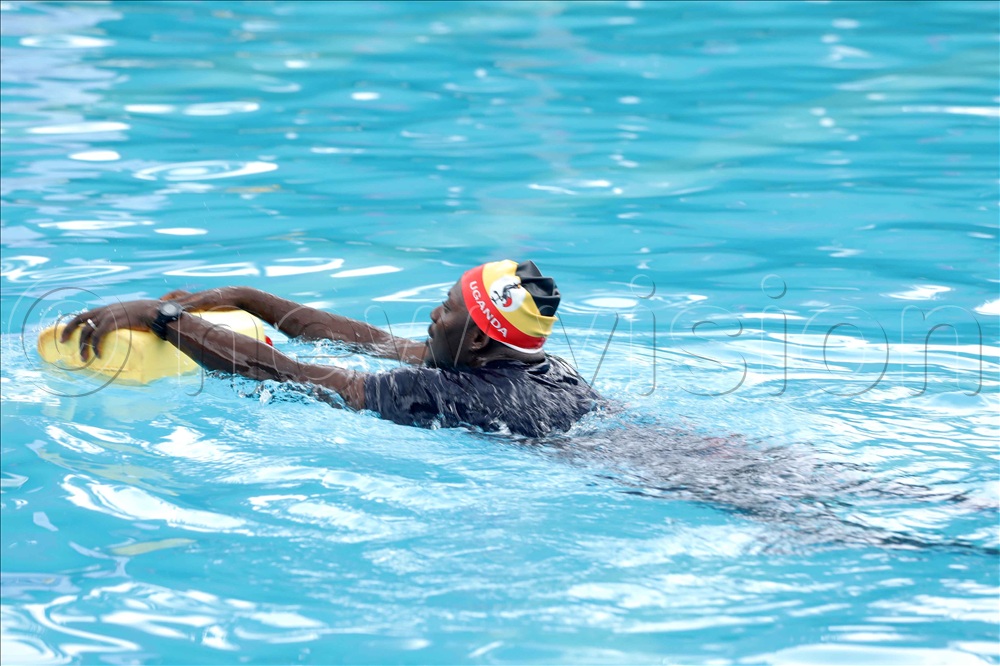
He (Siriba) contends that through different stakeholders, the government has kickstarted awareness and hands-on training activities among the fishermen, passengers on boats, and school going children who depend on boats to access education.
“You cannot believe, our country loses between eight and nine people on a daily basis, which is about 3000 deaths per year,” he said.
Otto Busingye, an assistant research officer from the Makerere School of Public Health, disclosed that annually, Uganda alone loses about 3,000 people as a result of drowning, which is about eight deaths every day.
Moses Kalanzi, the Executive Director of Swim Safe Uganda, disclosed that the campaign seeks to equip local fishermen, boat passengers and schoolchildren who depend on water transport with hands-on, practical skills to survive water emergencies.
“As a non-government umbrella body, we have stepped up efforts to prevent drowning occurrences among Ugandan communities who live on islands, especially in Buvuma, on Lake Victoria,” Kalanzi added.
He noted that through basic survival training, and rescue techniques, Swim Safe-aims at improving access to life jackets at different designated collection centres to enable boat operators, including the passengers who may wish to borrow them (life jackets) and leave the them at another landing site for subsequent use.
Additionally, Allan Kiiza, a public health and water safety expert, who worked along with Joseph Kabogoza, demonstrated several ways on how one would protect himself from drowning.
The duo said that besides wearing a life jacket, a victim can use simple items like a jean trouser, small bottle, jerrycans, or a rope, to save life in case of any emergency.
“The Heat Escape Lessening Position (HELP), which involves fixing the legs together and keeping the body intact, is equally important because it helps the victim to avoid heat loss while floating with a life jacket,” Kiiza said.
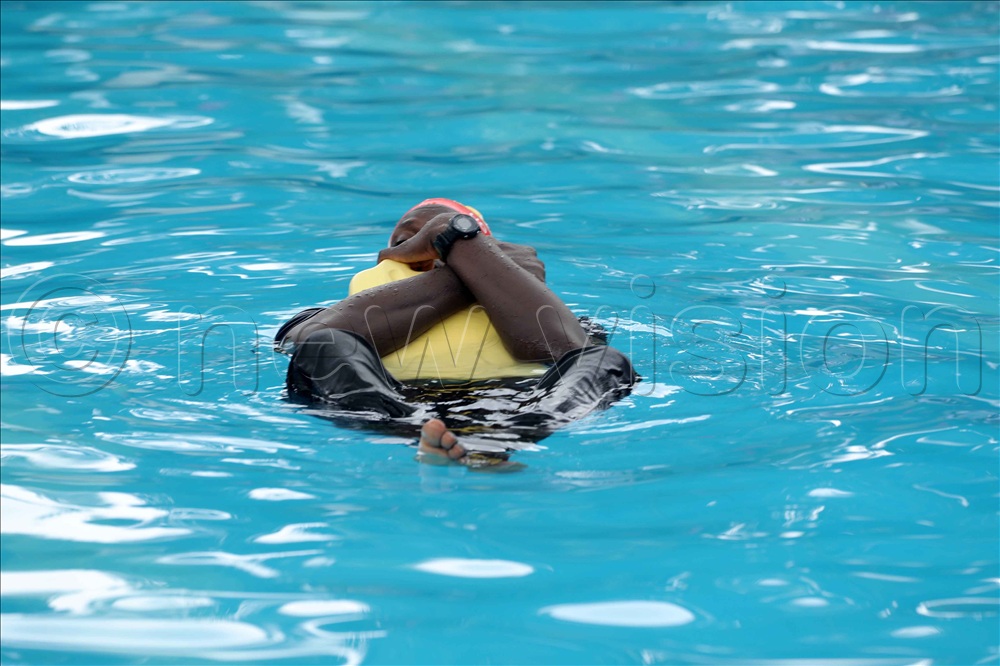
Allan Kiiza, a public health and water safety expert showcasing how a jerrican can be used to avoid drowning
WHO reports indicate that nearly 300,000 people die from drowning each year worldwide. This is attributed to climate change, that hypes the risks of extreme weather events such as floods, storms, and heatwaves.
WHO report on drowning
It should be noted that recently, World Health Organisation (WHO) launched a new global package of seven evidence-based strategies to prevent drowning, saying most drowning deaths are preventable if governments act together.
The package, known as PROTECT, was launched in Ghana by the WHO-hosted Global Alliance for Drowning Prevention. It translates the vision of the first-ever Global Strategy for Drowning Prevention, launched in 2025, into practical policy guidance for countries, focusing on: physical infrastructure that promotes safe interaction with water, rrescue and resuscitation capability for bystanders and professional responders, occupational safety for work around water, transport safety standards for water travel, education in basic swimming and water safety, child-care systems and safeguarding, and threat preparedness for floods and other multi-hazard emergencies.
According to Dr Tedros Adhanom Ghebreyesus, WHO Director-General, "The seven PROTECT strategies give countries practical, evidence-based approaches to prevent these tragedies, including making water transport safer, teaching school kids to swim, and preparing for floods.