
Govt outlines long-term irrigation plans for Karamoja
Karamoja affairs state minister Esther Davinia Anyakun outlined the plans at the Uganda Media Centre on November 9, 2026, while receiving 6.5 tonnes of maize flour donated by the Sudanese community in Kampala to support vulnerable households in Moroto District.
Sudanese team lead for the Nafeer Karamoja initiative, Ramia Rahama (left) and Minister of State for Karamoja Affairs, Esther Davinia Anyakun, flagging off a consignment of food to Karamoja during a handover ceremony of food relief donated by the Sudanese community living in Kampala. (Photo by Alfred Ochwo)
________________
The government is pursuing large-scale irrigation and water-harvesting projects in Karamoja as part of a long-term strategy to tackle recurring drought and food insecurity and reduce the region's dependence on emergency food aid.
Karamoja affairs state minister Esther Davinia Anyakun outlined the plans at the Uganda Media Centre on November 9, 2026, while receiving 6.5 tonnes of maize flour donated by the Sudanese community in Kampala to support vulnerable households in Moroto district.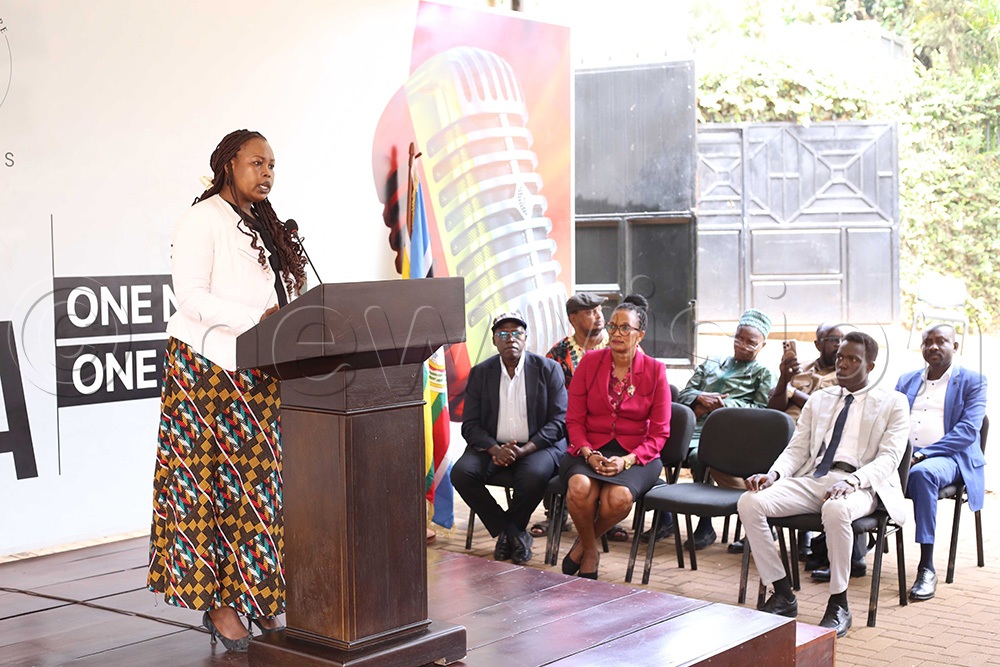
Sudanese team lead for the Nafeer Karamoja initiative, Ramia Rahama, speaking during a handover ceremony of food relief donated by the Sudanese community living in Kampala. (Photo by Alfred Ochwo)
The consignment, mobilised under the Nafeer Karamoja initiative, is expected to benefit 650 households, with each receiving 10kg of posho.
Ramia Rahama, team leader of Nafeer Karamoja, said the donation was motivated by gratitude towards Uganda for hosting Sudanese nationals who fled the war in their country.
"Uganda opened to us their hand, their heart, their schools, and everything to live after our war," Rahama said. "We are all the same African community, facing the same challenges—here it is climate change, and in Sudan, it is both climate change and war."
Nafeer is a Sudanese term referring to collective community mobilisation in times of crisis.
Rahama said the 6.5-tonne donation was the first phase of the initiative's support and called on civil society organisations and individuals across Uganda to partner with the Government to promote long-term self-reliance in Karamoja.
Receiving the donation, Anyakun said the gesture was particularly moving because it came from a community dealing with its own crisis.
She said President Yoweri Museveni had allocated more than sh45 billion for immediate food relief across Karamoja, but stressed that the government's priority was to find lasting solutions to the region's food insecurity.
Anyakun said recent climate shocks had destroyed crops across the sub-region, including those on her own farm. She noted that households without cattle to sell in exchange for grain were particularly vulnerable when the rains failed.
To reduce this vulnerability, the Ministry of Karamoja Affairs is working with the Ministry of Water and Environment under the Karamoja Regional Development Programme (KRDP) and the Parish Development Model (PDM) to develop water-for-production infrastructure.
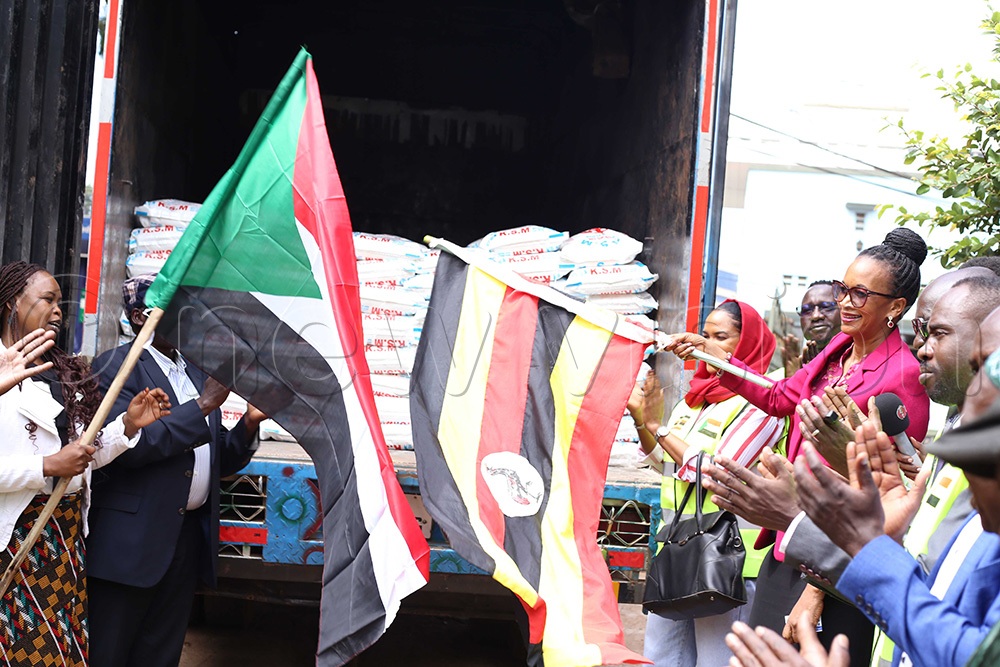
Sudanese team lead for the Nafeer Karamoja initiative, Ramia Rahama (left) and Minister of State for Karamoja Affairs, Esther Davinia Anyakun, flagging off a consignment of food to Karamoja during a handover ceremony of food relief donated by the Sudanese community living in Kampala. (Photo by Alfred Ochwo)
The planned interventions include the Namalu Irrigation Scheme in southern Karamoja, which is designed to support year-round farming for more than 3,000 farmers.
The government also plans to establish the Lopei man-made lake in Napak district, a large-scale water reservoir to be funded by the UK Government, and a water collection facility in Kotido aimed at increasing agricultural and livestock production in northern Karamoja.
Anyakun said reliable water infrastructure and alternative sources of income would help communities in Karamoja achieve sustainable development despite increasingly erratic weather patterns.