
Govt introduces system to track employment trends, workforce productivity
The assistant commissioner of industrial relations, Apollo Onzoma, said the system would strengthen the generation of administrative data, harmonise reporting processes and make labour information more timely, accurate and useful for decision-making.
Apollo Onzoma, the Assistant Commissioner for Industrial Relations at the Ministry of Gender, addressing participants. (Photos by Agnes Kyotalengerire)
________________
The Ministry of Gender, Labour and Social Development (MGLSD) is rolling out a new digital system to track employment trends, workforce productivity and labour administration across Uganda.
The Labour Administration Management Information System (LAMIS) is designed to provide a coordinated and reliable platform for managing labour administration information and supporting labour officers in carrying out their responsibilities.
The assistant commissioner of industrial relations, Apollo Onzoma, said the system would strengthen the generation of administrative data, harmonise reporting processes and make labour information more timely, accurate and useful for decision-making.
“It will also support employer reporting and strengthen the flow of labour inspection information from the district and local government level to the Ministry,” he added.
Onzoma, who represented Alex Asiimwe, commissioner of labour, industrial relations, and productivity, urged the trainees to confidently use the system, train other officers, guide users, support its rollout and provide informed feedback on areas that may require improvement.
“I encourage you to approach this training with that responsibility in mind by participating actively, asking questions, working through the different processes and modules, and raising any areas that may be unclear,” he said.
He also urged trainers and future users of LAMIS to promote proper data entry, consistent use of the system and adherence to agreed procedures.
Lucie Carlier, project manager, Decent Work and Social Protection Project at Enabel, reminded the trainees of the journey that began in March 2024 to modernise labour administration services through a digital platform.
Joshua Mpairwe, the lead consultant at Centric Solutions, the company that developed LAMIS02.
Carlier described the development of LAMIS as not only an ICT investment but also a strategic reform aimed at strengthening labour governance in Uganda.
“As Enabel, we are proud to have supported this initiative through the Decent Work and Social Protection Programme, reflecting our commitment to strengthening institutions that promote decent work, social dialogue, labour rights, and social protection in Uganda,” Carlier said.
She encouraged participants to actively engage in the practical sessions, ask questions, share experiences and provide constructive feedback, noting that their role as trainers and champions of the system would be critical in ensuring successful adoption and sustainability.
When asked when users should expect to start using the system, Joshua Mpairwe, the lead consultant at Centric Solutions, the company that developed LAMIS, said the system would be rolled out once he had addressed the issues raised during the training.
LAMIS is intended to provide a more coordinated, efficient and reliable platform for managing labour administration information and supporting labour officers in carrying out their responsibilities.
Ultimately, the system is expected to support evidence-based decision-making and strengthen labour governance across the country.
The remarks were made on October 2, 2026, during the closure of a five-day training organised by the gender ministry in partnership with Enabel at Fairway Hotel in Kampala.
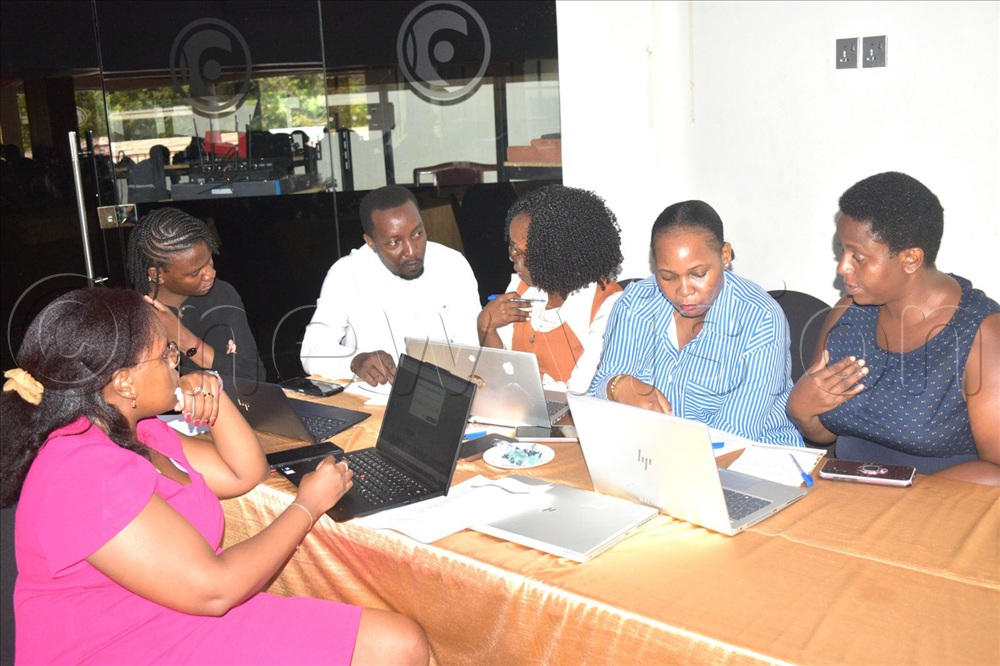
The training was organised to prepare a core team of trainers comprising selected labour officers who will train other users of the system across the country.
The training is part of the ministry's wider drive to modernise labour administration and improve how labour services are delivered, recorded, monitored and reported, while measuring jobs created, jobs lost and productivity levels across the country.
The initiative is linked to key national policy commitments. The Fourth National Development Plan (NDP IV) sets as its overarching goal “to achieve higher household incomes, full monetisation of the economy, and employment for sustainable socio-economic transformation,” under the theme of “Sustainable industrialisation for inclusive growth, employment, and wealth creation.”
NDP IV prioritises the creation of an average of about 900,000 jobs annually and places strong emphasis on the digital transformation of Government services and the development of a skilled, productive and competitive workforce.
By generating timely, accurate and harmonised labour data from the district level to the national level, LAMIS is intended to provide the evidence base required to track employment trends, enhance workforce productivity and guide policy decisions aimed at delivering NDP IV's employment and industrialisation targets.
The National Resistance Movement (NRM) Manifesto 2026-2031 makes an explicit commitment under its Labour and Employment section to “Develop a National Management Information System (MIS)/Database on Labour Force and Enterprise to provide reliable data to guide policy-making, monitor employment trends, assess skills gaps, enforce labour standards, and support investment and social protection planning.”
LAMIS is therefore presented as a step towards fulfilling this manifesto commitment.