
Government aims to fix parish-level service delivery gaps
The meeting brought together permanent secretaries from the ministries of Health, Local Government, Gender, Labour and Social Development, and Education and Sports, alongside officials from the Health Service Commission, the Social Services Committee and leaders from seven pilot local governments.
Speaking during the meeting, Ministry of Health Permanent Secretary Dr. Diana Atwine said the conversations were important for strengthening implementation of the Parish Development Model at community level.
KAMPALA — Uganda’s government and the World Health Organization are pushing to strengthen social services at the parish level, in what officials describe as a critical effort to make government programmes more visible, responsive and effective in ordinary communities.
On May 15, WHO Uganda convened senior government officials, local government leaders and development partners in discussions aimed at accelerating the operationalisation of Parish Social Services Committees, structures expected to improve coordination of public services closer to citizens.
The meeting brought together permanent secretaries from the ministries of Health, Local Government, Gender, Labour and Social Development, and Education and Sports, alongside officials from the Health Service Commission, the Social Services Committee and leaders from seven pilot local governments.
Although the discussions focused on administrative coordination, the bigger issue at stake is one that affects millions of Ugandans directly: whether government services actually reach communities efficiently and whether local citizens can hold public systems accountable when they fail.
For years, Uganda has expanded national programmes in health, education and social protection, yet many communities still struggle with weak coordination, delayed implementation and gaps between national policy and what people experience on the ground.
The Parish Social Services Committees are intended to address part of that disconnect.
The committees are linked to the Parish Development Model, commonly known as the PDM, government’s flagship programme designed to improve household incomes and strengthen service delivery through parish-level structures.
Officials say the latest discussions particularly focused on the programme’s fourth pillar, which deals with social services.
Speaking during the meeting, Ministry of Health Permanent Secretary Dr. Diana Atwine said the conversations were important for strengthening implementation of the Parish Development Model at community level.
In practical terms, the committees are expected to improve coordination between local leaders, health workers, education officials and community structures so that public services are monitored more effectively, and community concerns reach decision-makers faster.
Officials also emphasised the importance of citizen feedback.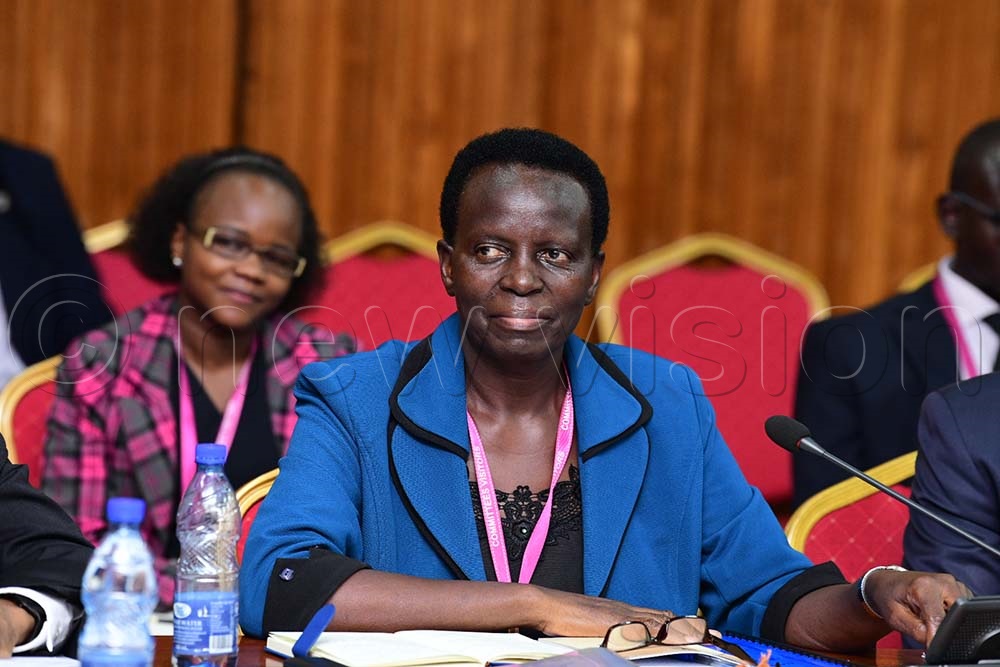
Kedrace Turyagyenda
The Ministry of Local Government called for what it described as a “whole-of-government approach,” including the use of community barazas to strengthen public awareness, accountability and communication between citizens and government institutions.
Barazas are public community meetings where citizens engage directly with government officials, raise concerns and receive information about public programmes and services.
That focus on accountability reflects growing recognition within government that service delivery challenges are often not simply about funding, but also coordination, communication and local oversight.
Permanent Secretary in the Ministry of Education and Sports, Kedrace Turyagenda, expressed confidence in national and sub-national leadership structures to improve outcomes within villages and communities.
Meanwhile, Aggrey David Kibenge, the Permanent Secretary in the Ministry of Gender, Labour and Social Development, said the seven pilot districts would provide lessons that could guide future national expansion of the programme and improve service delivery systems.
WHO Uganda also signalled continued technical support for the initiative.
Speaking on behalf of the organisation, Dr. Christine Chiedeza said WHO would continue supporting efforts to strengthen planning, coordination and monitoring systems across different levels of government.
The discussions highlighted the role expected to be played by parish chiefs, sub-county chiefs, Community Health Extension Workers, commonly known as CHEWs, and other local community structures in improving grassroots service delivery.
CHEWs are frontline community-based health workers trained to support disease prevention, health education and basic public health services within communities.
The meeting concluded with ministries and district leaders committing to appointing focal persons responsible for coordinating implementation efforts. Officials also scheduled a follow-up review meeting for September 9, 2026, to assess progress.