
Free airplay not a substitute for money – Musicians hit back at MPs
“I think the radio or television stations may benefit from playing these songs, but also the artiste benefits. If I don’t play the music of a certain artiste, I don’t know how that artiste will be able to organise a concert when his or her music is not known by the people."
Jeff Ekongot (holding a microphone) of Uganda Musicians Association addressing members of the press at National Theatre. (Photo by Ignatius Kamya)
________________
Stakeholders in the creative industry have hit back at comments a section of lawmakers recently made during the second reading of the Copyright (Amendment) Bill 2024.
Last Thursday, during a debate that was later adjourned due to lack of quorum, Members of Parliament (MPs), including Kassambya County’s David Kabanda, questioned the rationale behind radio stations paying royalties to artistes. And yet, it is broadcasters who do the donkeywork of propelling these artistes to stardom by according their songs airplay. He warned that the latter stand to lose by imposing a charge on radio stations.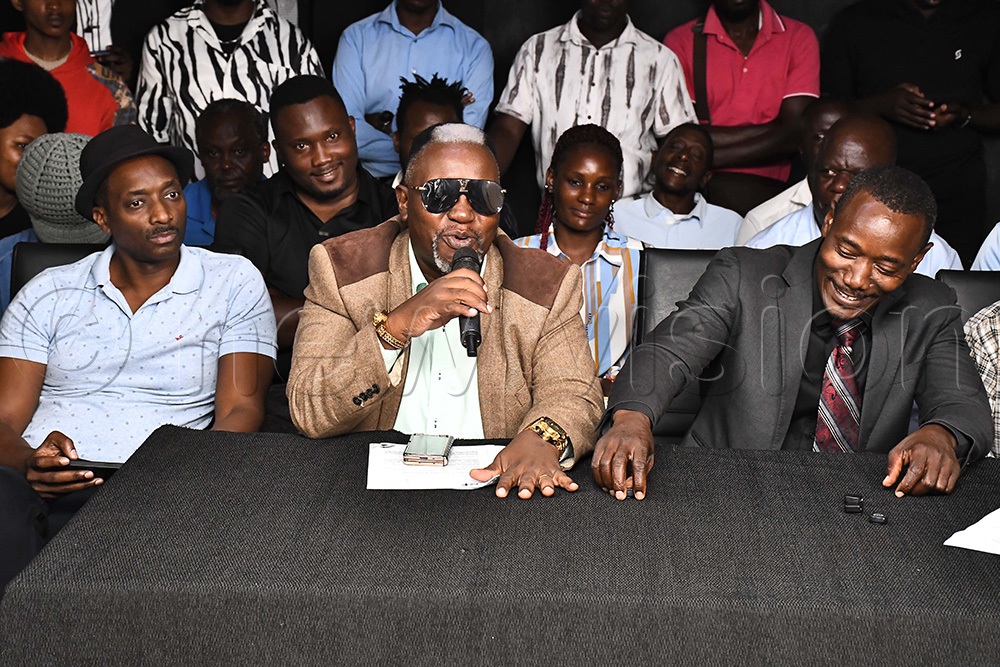
Ragga Dee (middle) along with Mathew Nabwiso and Yoyo while addresing media during a press conference held at National Theatre about copyright. (Photo by Ignatius Kamya)
“I think the radio or television stations may benefit from playing these songs, but also the artiste benefits. If I don’t play the music of a certain artiste, I don’t know how that artiste will be able to organise a concert when his or her music is not known by the people," Kabanda raised.
He was backed by Terego Woman MP Rose Obigah (NRM), who said that while the current law needed recalibration to bring it up to speed with global changes, taking such a direction would be devastating to bubble gum musicians.
“There are these songs, which are not songs. People are talking, and then they want you to pay. During my campaigns, it was hell (blackmail). Someone would insist to be paid for a song you don't like, or else you would fail,” Obigah argued.
Speaker Anita Annet Among concurred before shelving the discussions for another day. “You will take note of it. When we reach clause 9, we will discuss it exhaustively,” Among ruled at the time.
Clause 9 of the Bill provides for an additional pay to producers and performers of a sound recording or audio-visual fixation for every commercial use of such works, including broadcasting and public performances.
The Backlash
However, while addressing the media at the National Theatre on Monday, March 16, 2026, some creatives led by Geoffrey Jeff Ekongot, the executive director of Uganda Musicians Association (UMA), pushed back.
Saying that promotional value does not cancel out a broadcaster’s obligation, Ekongot added that when radio stations play music, they are using an asset they did not create while selling advertising to generate revenue.
He said this demonstrates that benefits to both parties occur simultaneously.
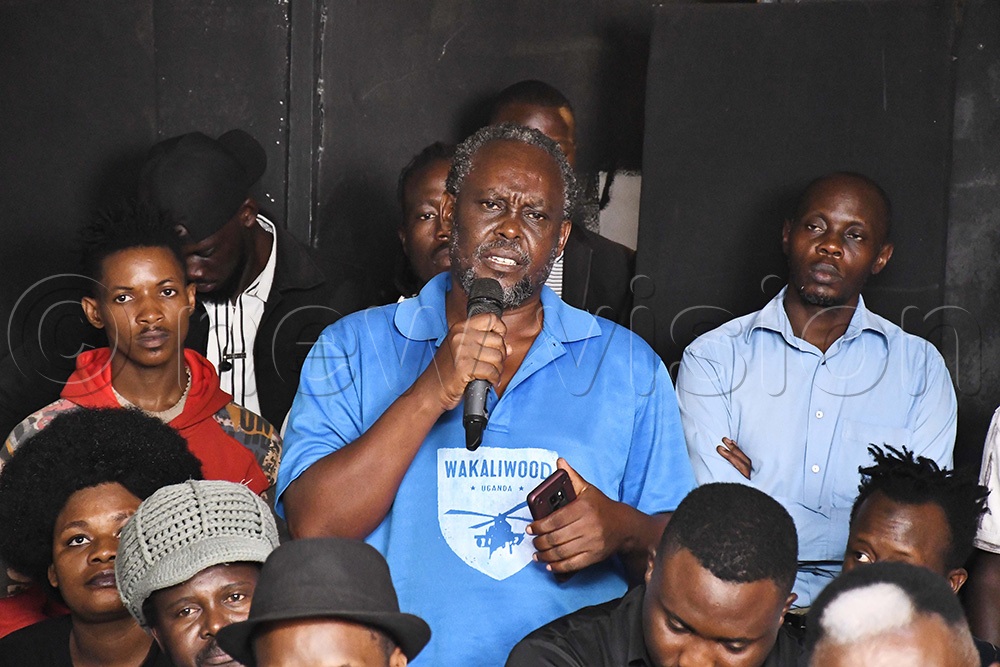
Isaac Geoffrey Nabwaana of Wakaliwood making his remarks during a press conference held at National Theatre about copyright. (Photo by Ignatius Kamya)
“Under the existing blanket licensing, even the highest paying broadcaster pays a fraction of a shilling per song. There is no incremental cost of paying an unknown artiste. The fee covers all repertoire. The claim that royalties will kill emerging artistes' exposure is economically unfounded under blanket licensing,” Ekongot contended.
Ekongot alleged that most MPs who were opposed to the amendments own radio stations and are therefore conflicted.
Artistes respond
Speaking at the presser, Martin Nkoyoyo aka Yoyo, the CEO of Uganda Performing Rights Society (UPRS), allayed fears that compelling broadcasters to pay for artiste’s content risks crippling radio and television stations.
“We do not simply set rates arbitrarily. We consider whether a station is commercial or non-commercial, whether it is rural or urban-based,” Nkoyoyo explained.

Moses Kyeyune commonly known as Wembly Mo addresing remarking during a press conference held at National Theatre. (Photo by Ignatius Kamya)
According to Nkoyoyo, the amount of music played by a station determines the charges. "Radio Maria (Catholic faith-based station) spends less time playing music and cannot be compared to many others. We therefore cannot issue the same license to all of them, because that would not be fair,” Nkoyoyo added.
What they say
Frank Nabwiiso (Actor): When you look at intellectual property, this is property just like land or a building. What you are trying to do is telling a landlord that you cannot collect rent anymore. For instance, if I am an actor today and got incapacitated, and then you say, royalties are abolished, how am I going to survive going forward.
Bruno Sserunkuuma (Painter/scholar): I think you have heard of prominent artists like Michelangelo. They produced very good work, which is now recognised. It is important that someone comes up with an idea and then makes a painting or comes up with a sculpture, and his work should be recognised. That is his intellectual property, which should be paid for, because he has to survive.