
For three hours in Mukono, streets belonged to 'cleaners'
The nationwide directive, announced by the government days earlier, requires all Ugandans to pause ordinary activities every last Saturday of the month so communities can clean their surroundings. In Mukono, the order was enforced with unusual firmness.
Mukono Municipality Mayor Robert Peter Kabanda participates in a community clean-up exercise at Ggunga Village during Uganda's National Cleaning Day. (Photo by Eric Yiga)
________________
At the stroke of 7am on Saturday, the streets of Mukono town that normally bustle with matatus, boda-bodas and traders fell unusually silent. Security personnel sealed off the main routes. No vehicles moved. The first National Cleaning Day had begun.
The nationwide directive, announced by the government days earlier, requires all Ugandans to pause ordinary activities every last Saturday of the month so communities can clean their surroundings. In Mukono, the order was enforced with unusual firmness.
District Police Commander SP Joseph Isabamana and head of operations ASP Dison Ngobi led the security deployment. Residents joined the effort, helping stop anyone who tried to force a way through. Vehicles queued along the roads. Some drivers climbed onto their roofs to watch the unusual scene unfold.
In Wantoni, the mood was even stricter. Locals linked arms with police and refused passage to every vehicle, including official ones. A Judiciary car found itself trapped. Its occupants locked the doors and made frantic calls to senior security officials for rescue that never came. The residents would not yield.
While the town stayed locked down, cleaning teams fanned out.
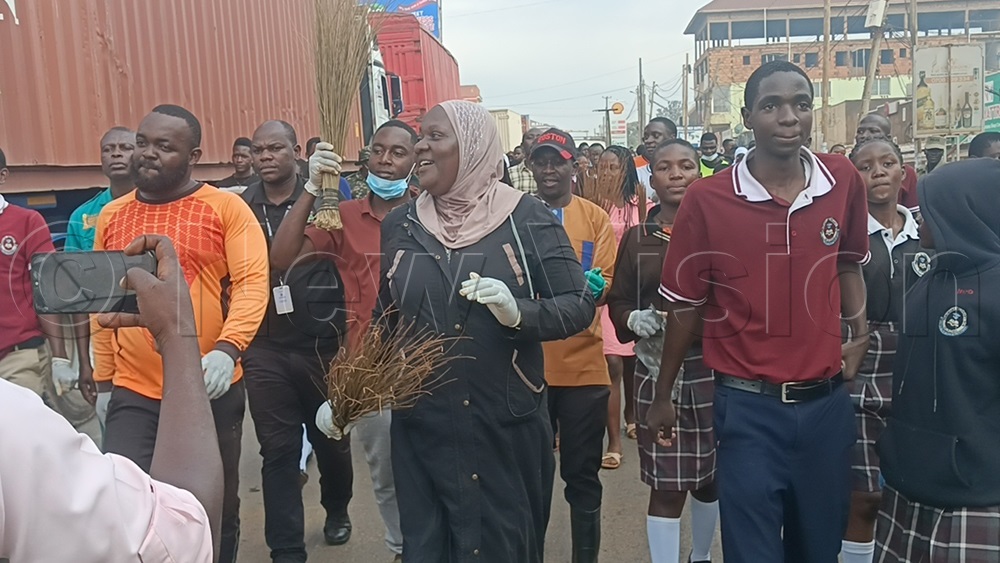
Mukono Resident District Commissioner (RDC) Hajjati Fatumah Ndisaba leads the district's general cleaning campaign during Uganda's National Cleaning Day. (Photo by Eric Yiga)
Nabittaka did not mince words. She condemned the filth, especially in health facilities and around food vendors, and thanked the district leadership for organising the exercise.
“Every person who has neglected these places will now be held accountable,” she said, calling for the monthly clean-ups to continue without fail.
The turnout cut across every section of society. Security officers worked beside religious leaders, Buganda Kingdom representatives, politicians from different parties, ordinary residents and schoolchildren.
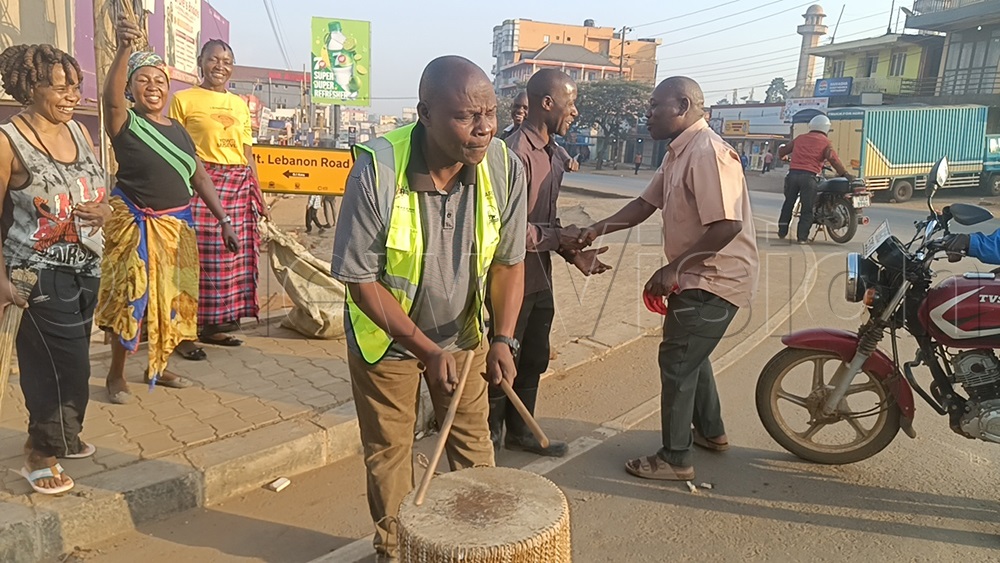
Bishop Dr Samuel Lwandasa, chairperson of the Greater Mukono Interfaith Forum, beats a drum to rally residents to take part in the National Cleaning Day exercise. (Photo by Eric Yiga)
Bishop Dr Samuel Lwandasa, the chairperson of the Greater Mukono Inter Faith Forum, praised both the central government and Buganda Kingdom for reviving the practice. “This system will help keep our areas clean,” he said, urging people to stop dumping rubbish indiscriminately.
Village leaders were blunter. Joachim Sendi of Lweza and Harriet Nankya called for the exercise to be enforced every last Saturday and for penalties against those who refuse to join. Their suggestion: at least ten strokes of the cane for absentees.
Buganda representative Ann Kiggudde Namayanja reminded residents that community cleaning is not new. “It dates back to the time of our grandparents. We must return to that culture," she said.
Some residents who showed up with brooms and sacks voiced frustration of their own. They decried the dirt that has long covered markets and drainage channels, and complained about “big people” who preach cleanliness but stay away when the work begins.
By late morning, the queues of stranded vehicles began to clear and the town slowly came back to life. The next National Cleaning Day is scheduled for August 29. In Mukono, at least, the message of the first one was clear: for three hours every last Saturday, the streets belong to the cleaners.