
Echoes of Entebbe airport raid return after 50 years
"When that tragedy happened, I ceased being a girl and immediately turned into an adult who learned to take care of everything and everyone. So, coming back to Uganda is also one way of recollecting myself as a girl," Tzipi expressed. "After 50 years of that tragic incident, I decided to reconnect to my old self; of an 8year-old girl saying goodbye to her father by lighting a candle," Tzipi stated during her visit on June 14.
The Jews stand at the apex chamber of the tower at the old terminal of Entebbe airport from where the hostages were held before the rescue operation was conducted in 1976. (Credit: Julius Luwemba)
Fifty years after one of history's most daring hostage-rescue missions, survivors of the 1976 Entebbe raid returned to Uganda in June this year, not to relive the horror but to seek peace with memories that have haunted them for half a century.
The operation, also known as 'Operation Thunderbolt' (later renamed Operation Yonatan), unfolded on the night of July 3-4, 1976, when Israeli soldiers launched a surprise raid to rescue hostages held by a group of Germans and Palestinian hijackers who had diverted Air France flight 139 to Uganda, with the support of Idi Amin, then the president of Uganda.
On June 14, this year, three Israeli nationals stepped onto the tarmac of Entebbe airport- the same ground where they had stood 50 years ago as frightened children caught in a crisis that changed their lives forever.
Tzipi Gonen was eight years old when she lost her father, Dr. Pasco Cohen, during the crossfire on the night of July 3, 1976.
"For a very long time, I've not had the courage to return to Uganda because of the dark history that has clogged my mind and heart for the last 50years," the teary Tzipi expressed.
She had been travelling with her dad, mum and the 13-year-old brother when the aeroplane (Air France 139) was hijacked on June 27, 1976.
During the rescue endeavour that subsequently followed on July 3, three hostages succumbed to the gunshots. Among them was Dr. Cohen 52years, Ida Borochovitch 56years, Jean-Jaques Mimouni 19years and Col. Yonatan Netanyahu, the commander of the rescue operation.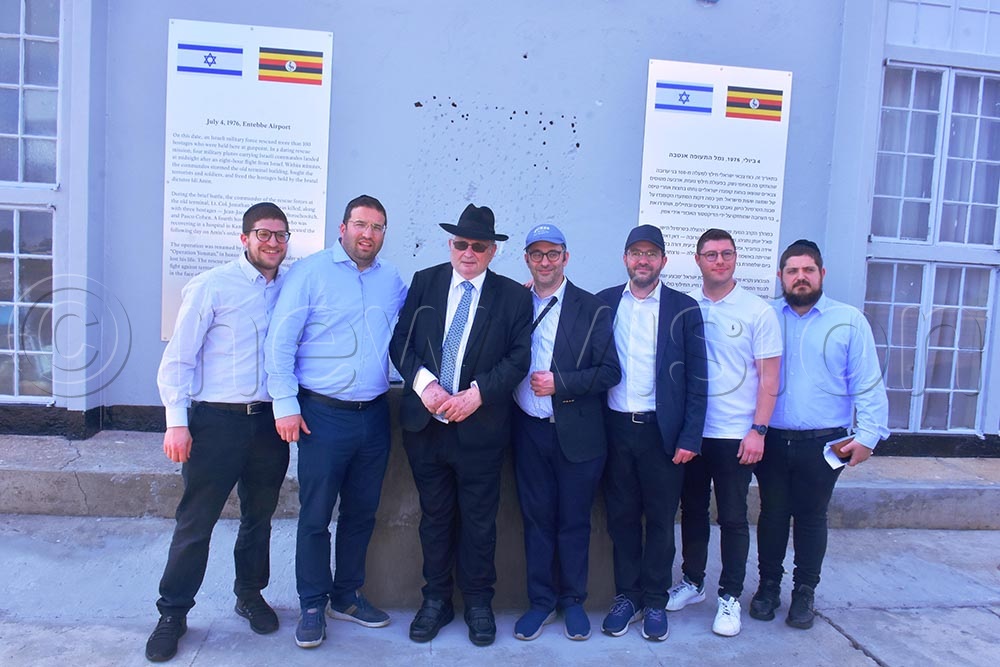
Gilbert Weill (3rd left) together with his sons and grandsons during their visit to Entebbe old airport where he and wife were held hostage following a plane hijacking situation. (Credit: Julius Luwemba)
Another hostage, Dora Bloch, 75 years old, who had been taken to Mulago hospital before the rescue raid, was also later killed by Amin soldiers.
"When that tragedy happened, I ceased being a girl and immediately turned into an adult who learned to take care of everything and everyone. So, coming back to Uganda is also one way of recollecting myself as a girl," Tzipi expressed. "After 50 years of that tragic incident, I decided to reconnect to my old self; of an 8year-old girl saying goodbye to her father by lighting a candle," Tzipi stated during her visit on June 14.
She was accompanied by Benny Davidson and Shay Gross, who were 13 years and 6 years, respectively, during the hijack in 1976.
Gilbert Weill
Gilbert Weill, a 78-year-old French with Jewish heritage, is among the survivors of the 1976 Air France hijack which culminated in the Entebbe airport attack that saw the Israeli army rescue the hostages.
Weill, together with two of his children, Eliezer Weill and Samuel Weill, plus other family members, Ephraim Weill, Jozef Weill and Avraham Ben Arrous, also visited Entebbe Old Airport a week after Tzipi, Benny and Shay's visit this year.
Weill revealed that whereas he has severally talked about the 1976 incident, his wife remained traumatised about the same, until her demise last year. "Ever since we were rescued, my wife only talked about that incident once. And whereas I always wanted to return to Uganda to visit this place, my wife was strongly against it," he intimated.
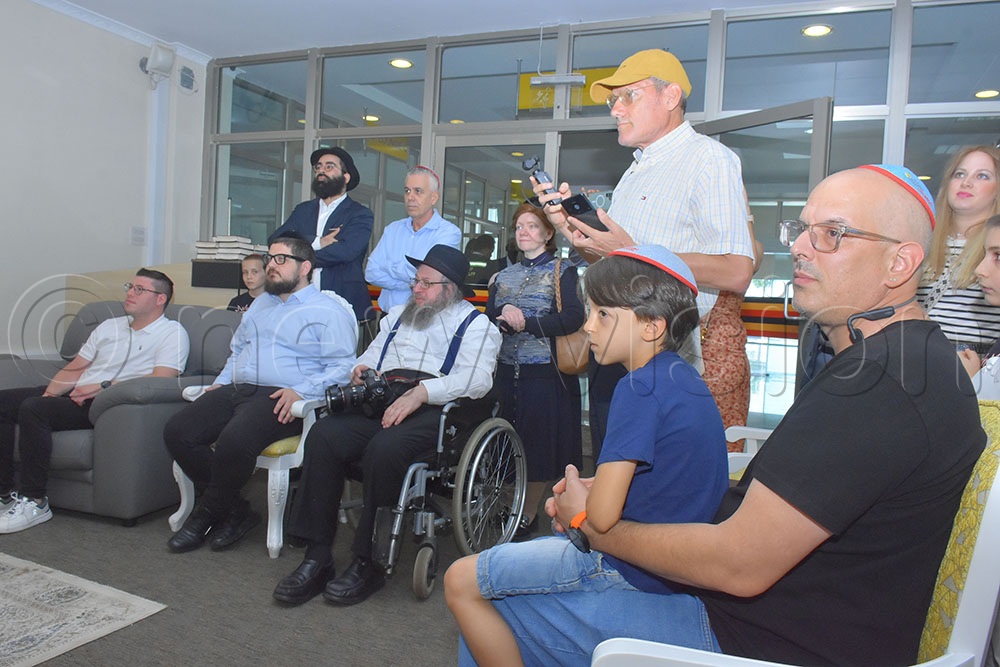
Some of the Jews who turned up at Entebbe airport, listening to the emotional story of Gilbert Weill who was among the hostages of Air France in 1976. (Credit: Julius Luwemba)
Falling Victim
Weill recounts his ordeal in June 1976 when returning from Israel with his wife Helene.
The couple were scheduled to take a different flight which had been delayed for two hours. "We couldn't wait for those two hours because we had to first go to Metz in France and pick up our children, before proceeding back to Belgium," he narrated.
Boarding Air France 139, which first taxied in Athens, Greece, the Weills had taken a decision which they'd later regret the rest of their lives, but remain thankful that they were among the survivors of the hijack.
Two minutes after the plane had resumed its flight from Athens, Weill noticed two of the passengers who had just boarded spring out of their seats in Economy class and move swiftly towards the first class.
"Suddenly, there was a ruckus in the front before all the passengers seated in the first class were ordered to converge at the back and sit on the floor," the 78year-old recounts.
The visiting group, and several Jews who live in Uganda, were later taken around the old tower from where the fracas took place 50 years ago during the rescue operation.
They conducted prayers and lit candles at the site before retiring back to the waiting lounge, expressing a sense of peace and emotional closure.
Led by Mirjam Blaak Sow, Uganda's ambassador in Belgium, the Netherlands and Luxembourg, Weill and his family, plus some of their friends and a journalist, were later hosted by President Yoweri Museveni at State House, Entebbe.
Several members of the Jewish community in Uganda attended the emotional historic welcome of one of the survivors, who decided to return to Uganda 50 years after he and his wife, Hellen Weill, among other hostages, were rescued from the fangs of hijackers.
To mark the 50th anniversary, a larger delegation of Israeli and Jewish visitors had planned to gather at Entebbe's old airport terminal to light candles in memory of those who suffered during the week-long ordeal.
However, the commemorative event was postponed because of Ebola concerns, with plans to reschedule it in the presence of senior officials from both Uganda and Israel.
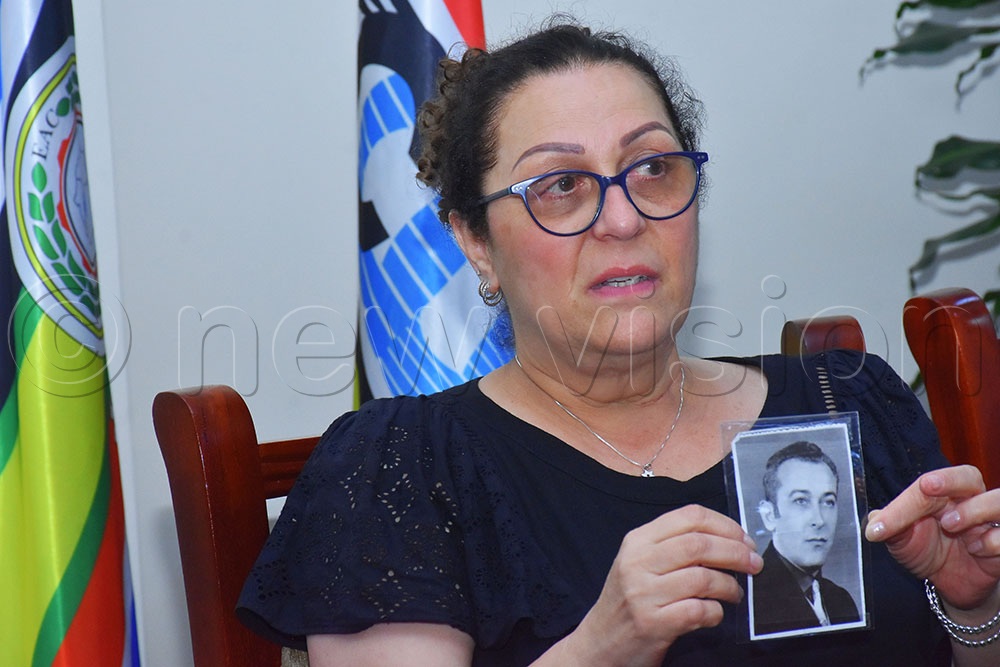
Tzipi Gonen displaying a picture of her late father Dr Pasco Cohen who was killed in a crossfire during the Entebbe raid in 1976. (Credit: Julius Luwemba)
Preserving a living history
Convenient for arriving civil servants, Entebbe was the capital of Uganda protectorate, with the offices of the British administration, before it surrendered its mantle to Kampala in the 1960s. Some of the old structures within Entebbe are not just buildings.
They carry a historic significance and remain a living history. Among these is the first passenger terminal at Entebbe Airport, which was upgraded in 1951 and remains a living history, especially for the historic Entebbe raid of 1976.
This towering building remains under the management of the Uganda Civil Aviation Authority and the Special Forces Command because of its VVIP status.
Several tourism stakeholders and leaders in Entebbe municipality have intensified calls and appeals to make the old airport more accessible, especially to tourists.
Early this year, Cheryl Myra Tusiime, a tour operator with Olive Safaris, had a group of tourists who wished to visit the old terminal. "But I didn't know where to start from, because I understand that is also an area of security significance," she stated.
Andrew Otage, the chairman for Entebbe Tourism Association, acknowledged that following the successful rescue mission of 1976, the old terminal at Entebbe airport became a world-renowned site that many visitors inquire about.
"We've had past engagements with the Uganda Tourism Board to foster the call of having the site among Uganda's tourism products, but we remain cognisant of the fact that it is also a VVIP section which not only our president uses, but also several other heads of state who visit Uganda," Otage remarked.
Meanwhile, Fabrice Rulinda, the municipality mayor, said there is an ongoing conversation between the municipal authorities and several other key stakeholders to have the area accessible to tourists on scheduled arrangements.
“So far, we are not faring well due to the security nature of the place, but we have given a few proposals and pray that this can be considered in the near future," Rulinda expressed.
Col. Chris Magezi, the acting director defence public information under the Uganda People's Defence Forces (UPDF), assured that tourists can be granted access to the site if they communicate early enough for arrangements to be made.
"We also have plans of erecting a statue for Col. Yonatan Netanyahu, the Israeli commander who was shot dead during the rescue operation," Col. Magezi noted.
The Entebbe raid of July 1976, officially known as Operation Thunderbolt (later renamed Operation Yonatan), followed the hijacking of Air France 139 en route from Tel Aviv to Paris.
The aircraft was diverted to Entebbe airport, where passengers were held hostage. Israeli soldiers later launched a long-range rescue operation at Entebbe, freeing most of the hostages in a dramatic mission that later became one of the most widely studied hostage-rescue operations in modern history.
The deceased hostages and the commander of the operation leave memories that continue to echo through generations.