
Deputy Chief Justice Kawumi raises concern over congestion in prisons
The Deputy Chief Justice called for practical interventions to improve access to justice, reduce case backlogs and safeguard the rights of suspects, particularly juveniles.
Justice Kawumi with other judges during the session. (Photos by Nelson Ahimbisibwe)
________________
Deputy Chief Justice Moses Kazibwe Kawumi has raised concern over the backlog of criminal cases, delayed trials of juveniles and overcrowding in Uganda’s prisons.
These challenges, he says, require urgent intervention.
Kawumi made the remarks on Thursday while opening a two-day Court of Appeal session at Kabale High Court, where a three-member panel is scheduled to hear 30 criminal and civil appeals.
The panel comprises Justice Geoffrey Kiryabwire, Lady Justice Cornelia Kakooza Sabiiti and Justice Musa Ssekaana.
Kawumi said despite efforts by the Judiciary to clear pending cases, a significant number of prisoners were still awaiting trial, raising concerns about delays in the administration of justice.
He said the Judiciary needed to establish the underlying causes of the backlog and develop practical measures to ensure cases are concluded within reasonable timelines.
“One of the issues we are looking at is the big number of prisoners who are yet to be tried. Despite the good effort being made in clearing these cases, quite a number still remain untried,” Kawumi said.
The Deputy Chief Justice also expressed concern about juveniles who remain in detention without trial, particularly in the wider Ankole region.
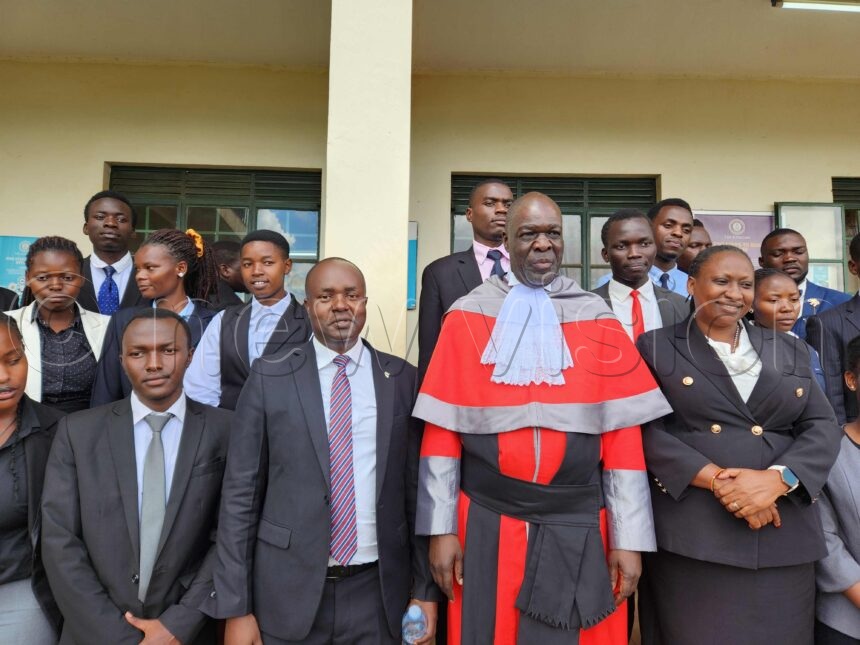
Kawumi said his visit to the region would provide an opportunity to engage with justice sector stakeholders and explore possible solutions to the challenges.
He also raised concern about overcrowding in smaller prisons, saying some facilities were holding inmates beyond their designated capacities.
He said prison congestion was a widespread problem requiring a coordinated response from the Judiciary, police, prosecution and correctional authorities.
The Deputy Chief Justice called for practical interventions to improve access to justice, reduce case backlogs and safeguard the rights of suspects, particularly juveniles.
The concerns came as the Court of Appeal began hearing several appeals, including that of Kamazima Tophus, Bangirana Adonia and Nansamba Hawa, who are challenging their convictions and sentences over the 2016 murder of Atujune Frank Matama in Sheema District.
According to court records, Kamazima, who was married to Matama, had domestic disagreements with her husband over property.
The prosecution alleged that in March 2016, Kamazima withdrew Shs1m from a bank and gave the money to Hawa, her friend and cousin, to facilitate the killing of her husband.
Hawa reportedly contacted Adonia, her boyfriend, who agreed to carry out the attack.
On April 4, 2016, Matama was attacked at his village home in Rweicumu, Masheruka Sub-county, but survived. He was treated at Mayanja Memorial Hospital in Mbarara before being transferred to Mulago Hospital in Kampala.
Court records indicate that on April 28, 2016, Adonia returned to Matama’s residence in Kabwohe at night and attacked him with a small hoe.
The High Court convicted the three of murder. Kamazima was sentenced to life imprisonment, while Adonia and Hawa were sentenced to 50 and 40 years in prison, respectively.
The three have appealed against the convictions and sentences.
Adonia and Hawa argue that the trial court erred by failing to deduct the three years they had spent on remand from their sentences.
Kamazima is challenging her conviction, arguing that the prosecution relied on circumstantial evidence that did not prove her guilt beyond reasonable doubt. She is also challenging the severity of her sentence, arguing that mitigating factors were not considered.
Meanwhile, Kabale Deputy Resident District Commissioner Michael Muramira Kyakashari called on police and state prosecutors to expedite investigations and sanction case files involving suspects accused of attacking residents in Kabale town with pangas.
Kyakashari said delays in processing the files were frustrating residents who felt that insufficient action was being taken against the suspects.
He said some of the suspects arrested over the attacks were repeat offenders who had previously been released from prison.
The RDC urged police and prosecutors to work together to ensure that case files supported by sufficient evidence are promptly taken to court.
Counsel Justus Muhangi, an advocate of the High Court and managing partner at Muhangi Justus & Partners Advocates, welcomed the Court of Appeal session, saying it would enable residents in the region to access justice without travelling long distances.
The two-day session is expected to contribute to efforts to clear the backlog of appeals and ensure that victims, accused persons and convicted prisoners receive timely justice.
Judgment in the Kamazima, Adonia and Hawa appeal will be delivered on notice.