
Cultural leaders, clerics lauded for mentoring young fathers
“REAL Fathers helped me understand that being a good father is not only about providing for children. It is also about loving them, caring for them, supporting my wife and being involved in their daily lives,” said Okella.
The mentorship programme runs for seven months and is delivered through five sessions. (Photos by Rhyman Agaba)
________________
Cultural and religious leaders are being credited with helping young fathers embrace responsible parenting, strengthen family relationships and reduce intimate partner violence (IPV), with a new study showing improvements in behaviour among men aged 18 to 25 who participated in a mentorship programme.
The study, conducted across several regions, including Bunyoro, Buganda, Toro, Lango, Busoga and Teso, highlights the role of faith-based institutions, cultural organisations, clan leaders and community leaders in promoting positive fatherhood.
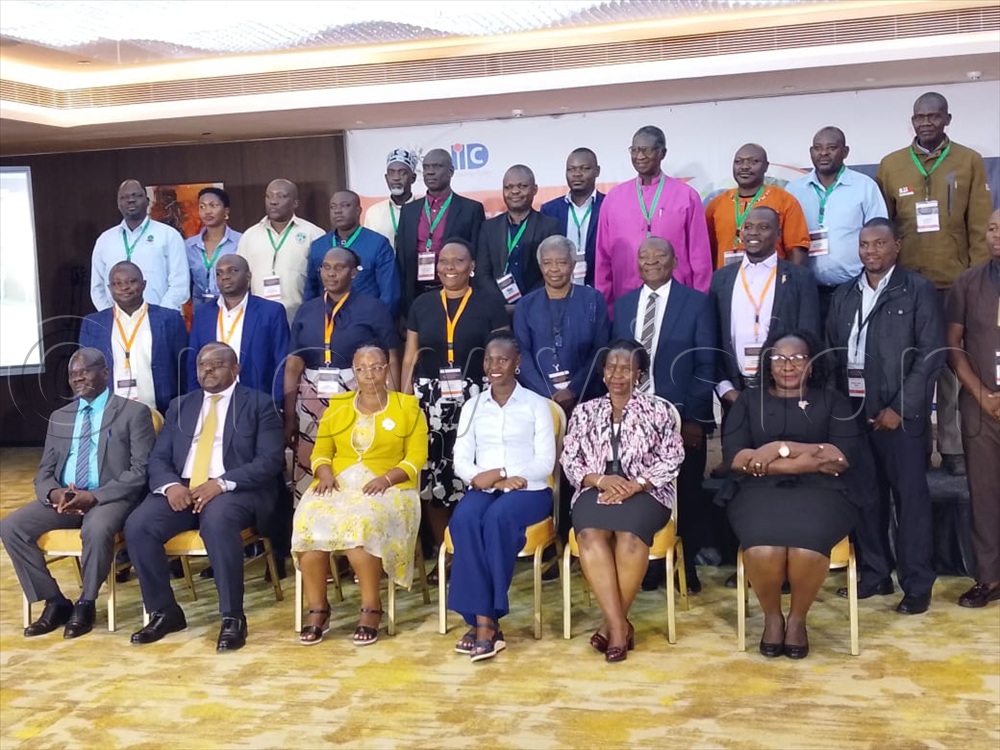
The findings were presented at the second annual learning convening of the Responsible, Engaged and Loving (REAL) Fathers programme, held at Bamus Sarovar Portico Hotel in Kampala on Tuesday under the theme, Scaling and Sustaining Outcomes of the REAL Fathers Programme in Uganda. The programme is supported by the LEGO Foundation.
Implemented over four years by 10 non-governmental organisations (NGOs) in partnership with the Ministry of Gender, Labour and Social Development, REAL Fathers seeks to improve communication between couples and reduce intimate partner violence in families with young children.
Organised by the Impact and Innovations Development Centre (IIDC), the convening brought together stakeholders to review the programme's achievements and discuss how its gains can be sustained.
IIDC executive director Deo Yiga said the programme had expanded to 71 districts, crediting government leadership for supporting its implementation.
“At the centre of these efforts is leadership. We sincerely appreciate the Ministry of Gender, Labour and Social Development for the oversight leadership provided in the scaling of the REAL Fathers Program over the past four years,” Yiga said.
He said the oversight was provided through a Multisectoral Advisory Committee comprising government ministries, departments and agencies, including the gender ministry, Office of the Prime Minister, and the ministries responsible for education, health and local government, as well as the National Planning Authority.
The state minister for youth and children's affairs, Mercy Faith Lakisa, who is also the Alebtong district Woman MP, presided over the meeting.
“I am happy to note that as Government we have sufficient evidence to create a sustained road map,” Lakisa said.
However, she urged stakeholders to openly assess implementation challenges and draw lessons from the programme.
Lakisa also called for evidence from the programme to be translated into budgetary commitments, with affordability and continuity taken into account. She said local governments would be central to the next phase, particularly in sustaining interventions that support maternal and child health.
The meeting was told that 153,579 fathers had graduated from the programme, while another 122,500 were expected to complete their mentorship the following month.
Cultural and religious leaders drive change
Among those recognised for their contribution was Sheikh Ismail Ogwal, a 60-year-old Khadi and community leader from Dokolo district, who has incorporated REAL Fathers messages into efforts to promote safer homes and communities.
Ogwal said alcoholism, drug abuse and gang-related conflicts had been widespread in his community, with persistent domestic and street violence eventually prompting national security operations.
He said he had served as a faith-based leader for six years as County Khadi before his superior, the Supreme Khadi of Greater Lango, introduced him to the programme and nominated him for a Training of Trainers session.
The training changed his understanding of fatherhood and equipped him with skills to guide young men on childcare and healthier family relationships.
“I was able to identify and train Imams on the REAL Fathers model and how to share these messages during Juma prayers,” he said.
Following the training, Ogwal began working with cultural leaders across the Lango sub-region to incorporate messages on responsible fatherhood and family relationships into the Islamic community.
Godfrey Okello, 64, a father of six and husband to Sarah Okello, also said the programme had reshaped his understanding of fatherhood. He is the Iteso Cultural Union district chairperson.
Okello said that although he was a respected cultural leader, he had come to appreciate that responsible fatherhood involved more than providing for children financially. It also required love, care, participation in family life, equity and peaceful relationships.
“REAL Fathers helped me understand that being a good father is not only about providing for children. It is also about loving them, caring for them, supporting my wife and being involved in their daily lives,” he said.
Other leaders recognised for their contribution included Nelson Mwesigwa, a REAL Father of Trainers and representative of the Church of Uganda from Kigarama Church in Ibanda district, and Reverend Father Pius Mandebe, also from Ibanda.
Both said the programme had deepened their understanding of positive fatherhood and the role communities can play in supporting fathers and families.
The mentorship programme runs for seven months and is delivered through five sessions.
Beyond changing attitudes towards fatherhood, the four-year study, which cost sh50b, found a reduction in intimate partner violence among wives of men who participated in the programme.
The proportion of wives reporting intimate partner violence declined from 53.3% before the intervention to 34.4% afterwards.
Physical IPV fell from 27% to 16.9%, while sexual IPV declined from 23.2% to 9.8%. Verbal IPV also reduced, with the study reporting a decline from 26%.
One wife of a programme participant in Mbarara district told New Vision that her husband's behaviour had changed, including his willingness to share household responsibilities.
“He stopped beating me and he no longer spends a lot of time in the trading centre; these days, he returns home by 6pm to support me with domestic work,” she said.
The findings also showed a decline in violence experienced by male participants at the hands of their female partners.
According to IIDC, reported female-to-male IPV among male participants fell from 42.4% to 21%.
Verbal IPV declined from 35.1% to 16.5%, while physical violence fell from 16.5% to 6.7%. Sexual IPV also dropped from 13.7% to 3.4%.
A young father from the Lango sub-region said the programme had helped him abandon destructive habits and learn to resolve disagreements peacefully.
“I drank heavily, constantly quarreling with my wife ... at times, I even chased my wife and children out of the house, forcing them to sleep outside,” he said.
He said he had since stopped drinking and fighting with his family, crediting the programme's lessons with helping him manage disagreements.
“I stopped drinking and fighting, and now whenever we face any disagreement in our marriage, we resolve it peacefully using the yellow card method we were taught during sessions,” he said.
Another young father from the Bunyoro sub-region said his relationship with his wife had improved after they participated in the programme. Their frequent quarrels had given way to better communication and cooperation.
“We do things together,” he said.
The findings point to the potential of community-based mentorship, particularly through cultural and religious institutions, to influence men's attitudes towards fatherhood, improve family relationships and address intimate partner violence.