
Chinese govt to train RDCs on poverty alleviation
This three-week training program, fully sponsored by the Government of China, aims to equip the president’s representatives with the skills and knowledge necessary to address poverty in the country.
The secretary to the president's office Haji Yunus Kakande (centre), and special presidential advisor on diaspora, Florence Kiremerwa (fourth left), pose for a group photo with RDCs after a meeting on RDCs China's trip at the President's Office in Kampala on Friday, October 23, 2026. (Photo by Francis Emorut)
_________________
The Government of China is set to train Resident District Commissioners (RDCs) in its capital, Beijing, to help combat poverty in Uganda.
This three-week training program, fully sponsored by the Government of China, aims to equip the president’s representatives with the skills and knowledge necessary to address poverty in the country.
The RDCs on Sunday (October 25) departed from Entebbe International Airport after receiving a briefing from Haji Yunus Kakande, the Secretary to the President's Office, and Florence Kiremerwa, the Special Presidential Advisor on Diaspora.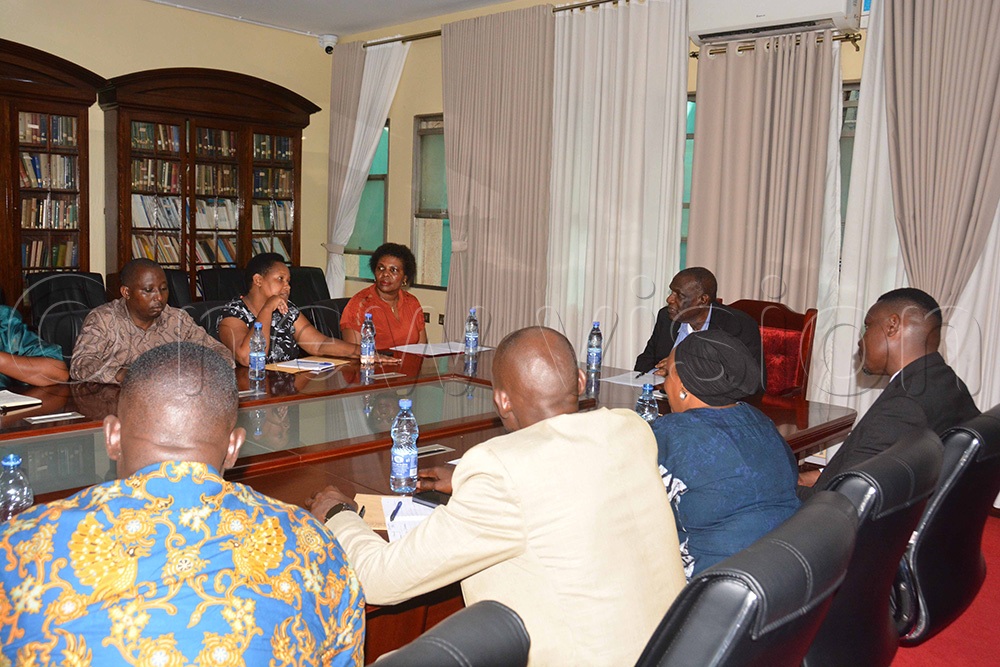
The Secretary to the President's Office Haji Yunus Kakande (centre), and special presidential advisor on diaspora, Florence Kiremerwa (third left), address RDCs during a meeting on RDCs China's trip at the President's Office in Kampala on Friday October 23, 2026. (Photo by Francis Emorut)
According to the Uganda Bureau of Statistics (UBOS), the prevalence of poverty in Uganda shows that absolute poverty has decreased to 16%, down from 20.3% in 2019/2020. This indicates that approximately seven million Ugandans are still living below the national poverty line.
In contrast, the Multidimensional Poverty Index (MPI) reveals that 53.1% of Ugandans are experiencing multidimensional poverty, facing deprivations in areas such as education, health, basic needs, and living standards.
Kakande urged the RDCs to focus on their training rather than using the opportunity to visit tourism sites in China. He emphasised the importance of studying how China has effectively reduced poverty in their country.
“I appeal to you, this is not a tourism program. Please prioritise your training. Avoid going for tourism or medical check-ups unless necessary. Don’t waste your time seeking better medical facilities,” Kakande advised the RDCs.
He urged Resident District Commissioners (RDCs) to study China's economy and understand how the country has managed to reduce income inequality.
He highlighted that both China and Uganda share similarities, as they were colonised by Japan and Britain, respectively. However, China has made significant progress toward becoming self-reliant by engaging in industrialisation across various sectors, including agriculture.
“They are producing a wide variety of goods and services and selling them to both developed and developing countries. China serves as an excellent model for leaders like the RDCs to examine how they have tackled poverty,” Kakande stated.
“It’s up to you to introduce innovative ideas as change agents and implement them in your local areas to realise a multiplicative effect,” he emphasised.
Kakande commended President Yoweri Museveni for supporting the RDCs and fostering stronger ties with the Government of China.
The study trip aims to improve poverty alleviation mechanisms and reduce income inequality in developing countries.
The theme of the RDCs' training program is "Improving the Targeted Poverty Alleviation Mechanism and Narrowing the Income Inequality Gap," focusing on strategic deployment, policy measures, and practical outcomes of implementing targeted poverty alleviation to narrow the income inequality gap.
About IPRCC
The poverty reduction program was developed by the International Poverty Reduction Centre in China (IPRCC) in May 2005, as a result of the Shanghai Global Conference on Scaling Up Poverty Reduction in 2004.
The IPRCC was jointly initiated and established by the Chinese government, the United Nations Development Programme (UNDP), and the World Bank. It serves as an international platform for research, training, exchange, collaboration, and knowledge sharing related to poverty reduction.
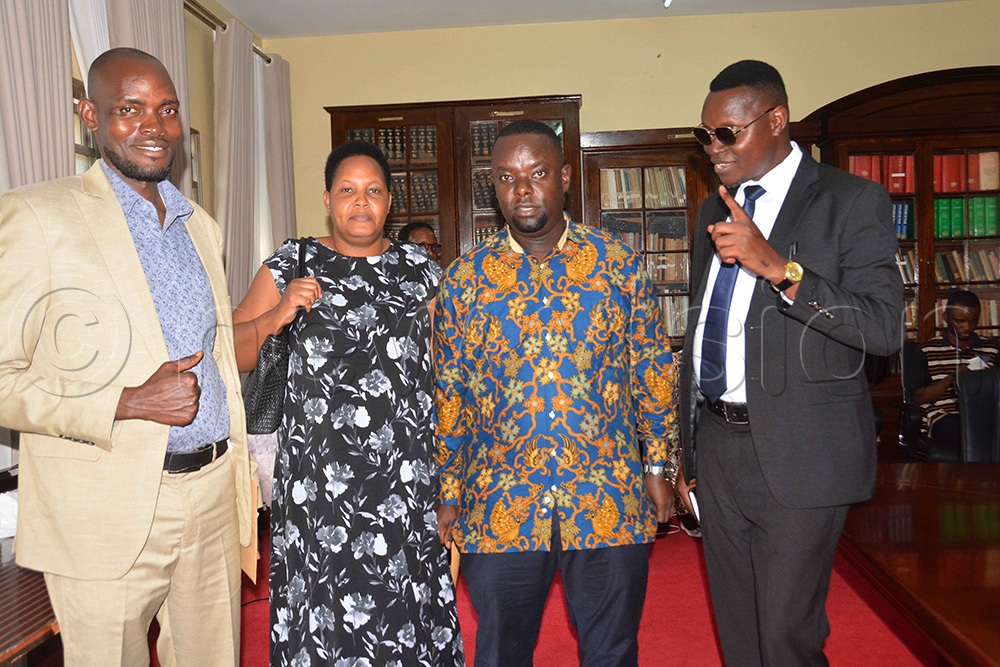
The RDC of Buyende District, Paul Mwidu (right), talks to his counterparts after a meeting with the Secretary to the President's Office about the trip to China at the President's Office in Kampala on Friday, October 23, 2026. (Photo by Francis Emorut)
IPRCC is dedicated to internationalising China’s experiences in poverty reduction while also localising global knowledge to create a comprehensive platform for poverty alleviation and development.
From 2005 to 2025, the IPRCC organised a total of 233 international poverty reduction seminars, providing specialised training to 15,808 government officials and poverty alleviation workers from 141 countries and regional organisations.
During the program, trainers required the Regional Development Councils (RDCs) to deliver country-specific presentations and engage in discussions about poverty reduction issues.
The President's representatives were asked to prepare relevant materials in advance, which included an overview of the country's national conditions, the current state of poverty and its causes (such as poverty standards, incidence, and the number of people living in poverty), as well as strategies, measures, and the challenges faced in poverty reduction.
Kiremerwa praised the President for providing the RDCs with the opportunity to study in China and apply their experiences to develop the country. She stated, "The President has done a lot for this country, and we expect the RDCs to return and train the people on how to combat poverty."
She also noted that the study trip was fully funded by the Government of China.
RDCs speak out
The RDC of Mpigi, Sarah Nannono, expressed her humility at being chosen as a representative of the president.
She stated that she will use the knowledge and skills gained from this opportunity to combat poverty, especially since she is involved in animal husbandry.
Janet Mulindwa, the RDC of Masaka, extended her gratitude to the Government of Uganda for maintaining a positive relationship with the Chinese Government.
She pledged to apply what she has learned to multiply the effects of poverty reduction in her area upon her return.
“I thank the government for fostering good relations with the Chinese Government. If it hadn’t been for this relationship, we would not have had the opportunity to undergo this training. I also thank the President and do not take this for granted,” Nannono said.
Paul Mwidu, the RDC of Buyende district, mentioned that he plans to draw inspiration from China regarding social and economic transformation.
He aims to implement the approaches he learned to improve the livelihoods of his constituents.