
News
Bus operators given 60-day grace period for voluntary vehicle inspection
The Transport Ministry met with the leadership of bus operators, with the end goal of strengthening road safety and improving compliance within the public transport sector.
Nile star bus being inspected at Namanve. (Courtesy)
By: Charles Etukuri, Journalists @New Vision
__________________
The Ministry of Works and Transport says it is prioritising the roll-out of mandatory vehicle inspection services as a key intervention to enhance safety on Uganda’s highways.
Under Ugandan law, public service vehicles (PSVs) must undergo inspection annually, while private vehicles are to be inspected every two years.
Inspections ensure roadworthiness and safety.
On Wednesday (March 18), the transport ministry met with the leadership of bus operators, with the end goal of strengthening road safety and improving compliance within the public transport sector.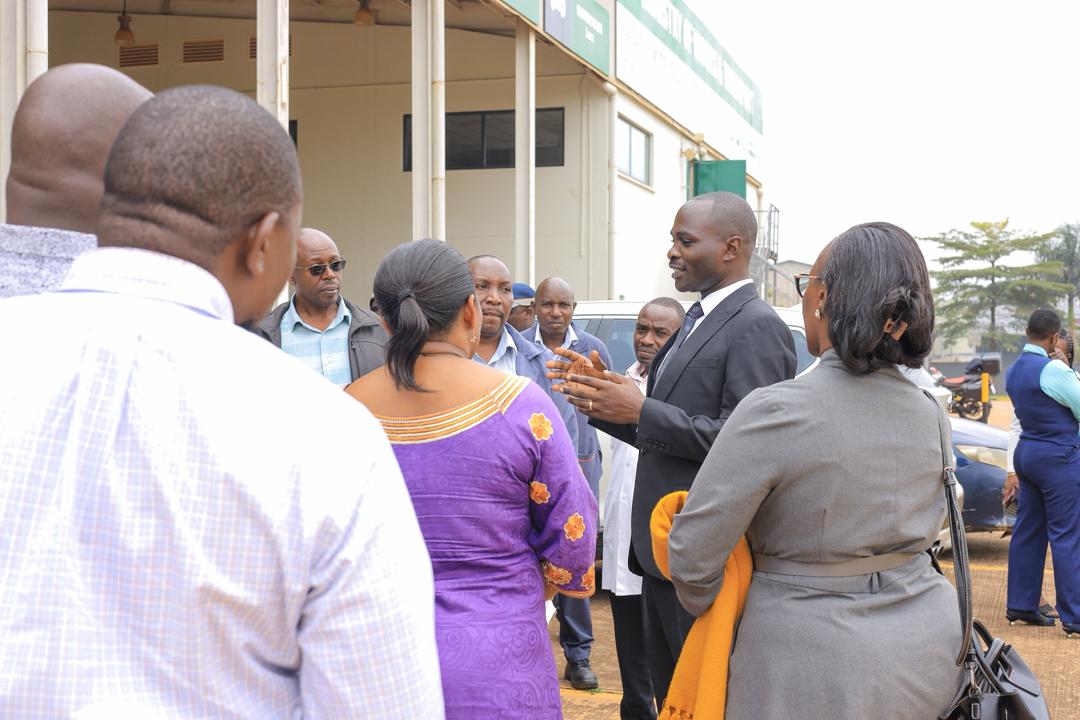
Byabakama speaking to the stakeholders at MVIS. (Courtesy)
The meeting came against the backdrop of a series of road crashes recorded over the past months.
Transport state minister Fred Byamukama said a coordinated approach is essential in addressing challenges on the road.
“We are here to move at the same pace with you,” he told bus operators.
“We are giving bus owners a voluntary window to assess the condition of their vehicles for their own good and for the safety of the general public."
Byabakama said bus operators have been granted a 60-day grace period, from April 8 to June 8 this year to voluntarily present their vehicles for inspection.
The exercise will initially focus on buses operating along the northern and eastern routes, with buses expected to return to the road only upon receiving a valid inspection sticker.
The inspection exercise will later be extended to trucks and trailers, a category the minister described as a growing concern on national highways.
Last December, the Under Secretary for the transport ministry, Barbara Namugambe, appealed to motor vehicle and motorcycle owners to take advantage of voluntary inspection before the government starts enforcing mandatory inspection.
Speaking at the Namanve Motor Vehicle Inspection centre, she said the inspection fees had been reduced to ensure "all Ugandans can afford this service".
It is not just about safety on the road. Vehicle inspection is also about the environment and safeguarding the health and well-being of the public.
Winstone Katushabe, the commissioner for transport regulation and safety, said the transport ministry has since acquired seven motor vehicle stations previously owned and operated by Société Générale de Surveillance (SGS).
They are located in Kawanda, Namanve, Namulanda, Nabbingo, Mbale, Gulu and Mbarara.
The race is on to halve road traffic injury deaths by the end of this decade.
In this context, the health ministry is responsible for post-crash response, the fifth pillar of the United Nations’ Decade of Action for Road Safety (2021-2030).
The other pillars are road safety management, safer roads and mobility, safer vehicles and safer road users.
“These aim to create safe systems for everyone, especially vulnerable users, by integrating infrastructure, vehicle standards, user behaviour, and emergency care," said Dr Marion Nakyeyune, who represented Dr John Baptist Waniaye, the commissioner of emergency medical services at the health ministry.
She said the post-crash response is greatly impacted by the other four pillars' inaction.
Costly
According to the Global Status Report on Road Safety (GSRRS), the case fatality rate in Uganda has reduced by close to 45% from: 29/100,000 in 2018 to 16/100,000 (2023), with men being four times more affected than women.
“81% of the men end up in the orthopaedic units or the neuro wards because many are people who are affected and lose limbs. They also get head injuries," said Nakyeyune.
"Bodaboda cyclists contribute 56% of these injuries that we are reporting in our hospitals, and about 18% are motor vehicle users and other pedestrians."
Four people are admitted due to motorcycle-related injuries every hour, according to the health management information system.
"It costs us about sh3.6m to treat a critically injured person per day, and if we engage in any surgical intervention, it will cost us about sh13m to sh14m per person per day," said Nakyeyune.
"In a space of about nine months, the health ministry has been able to respond to about 10,000 [crash] victims by our ambulance system, and these are people who have survived."
She said the ministry has deployed 21 ambulances in hotspot areas, and for this festive season, five ambulances have been additionally placed on standby to ensure crash victims are responded to in time."
Short code 912
Nakyeyune said emergency units across the different referral hospitals had been equipped and are operational 24 hours a day to ensure rapid response within the first hour.
Health workers have also been trained to handle emergency cases, and a short code has been created.
“The Ministry of Health is going to pilot the 912 short code. This is the emergency medical number, which you can try. It’s an alternative to what we all know, 999 for the police. The 912 directly connects you to an ambulance for any critical or urgent need. During this festive season, this number is available for anyone to reach out."
Demo
Wednesday's meeting featured a demonstration of the forthcoming motor vehicle inspection exercise.
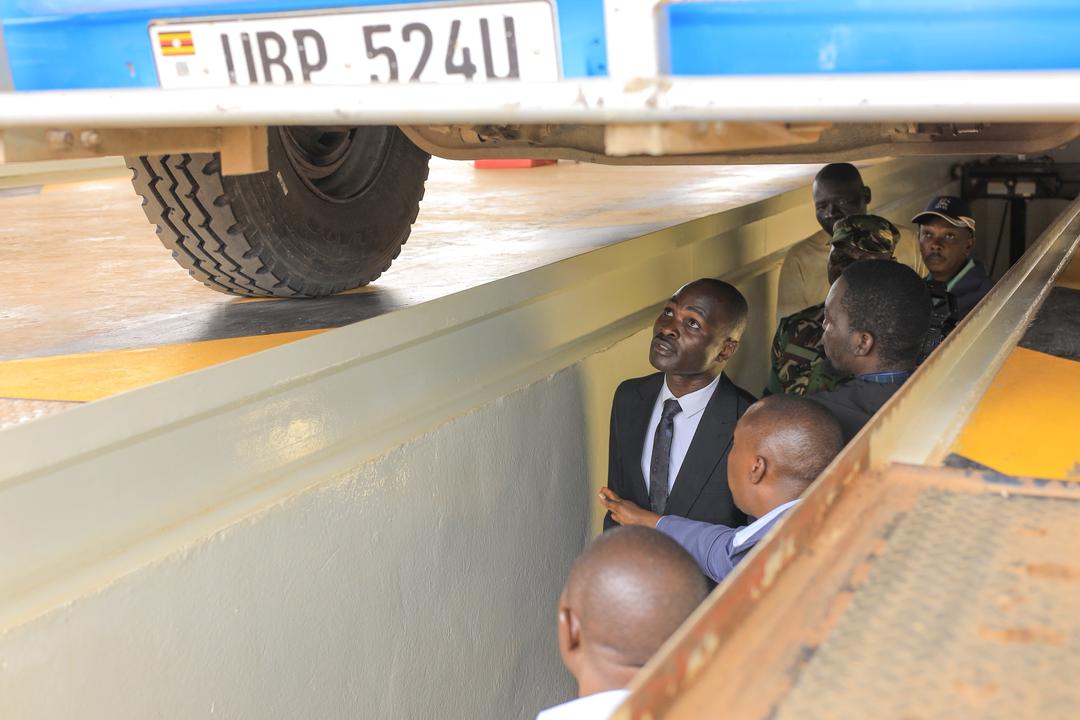
Byabakama checking one of the vehicles being inspected. (Courtesy)
Eng. Kharim Kibuuka, the head of motor vehicle inspection at the transport ministry, conducted the demo.
He inspected a vehicle which was below 3.5 tonnes and in the category of light vehicles. He checked the alignment, suspension, braking performance and efficiency, balance, and emission.
He then checked the underbody of the vehicle using a detector to see whether there were any loose bolts, leakages and whether the chassis was modified and the general integrity of the vehicle.
A headlamp test was also done to check its compliance and the intensity of the headlight.