
Jinja city council budget shrinks by sh7.7b as revenue gaps bite
The council, presided over by speaker Bernard Mbayo, on March 17, 2026, tabled a budget of sh57.7b for the financial year 2026/27, down from sh65.5b in 2025/26, reflecting a reduction of sh7.7b.
Juma Ssozi, the secretary for finance and administration presenting the budget estimates for Jinja City. (Credit: Doreen Musingo)
_________________
Jinja City Council is grappling with a significant drop in its budget estimates, a situation authorities have attributed to systemic weaknesses in property tax administration.
Juma Ssozi, the secretary for finance and administration, while presenting the budget estimates for the financial year 2026/27, said performance has been undermined by failure to identify and register rightful owners of several occupied premises, many of which continue to operate without paying property tax.
“The gap has denied the city a critical source of locally generated revenue, forcing departments to scale down planned activities,” he said.
The council, presided over by speaker Bernard Mbayo, on March 17, 2026, tabled a budget of sh57.7b for the financial year 2026/27, down from sh65.5b in 2025/26, reflecting a reduction of sh7.7b.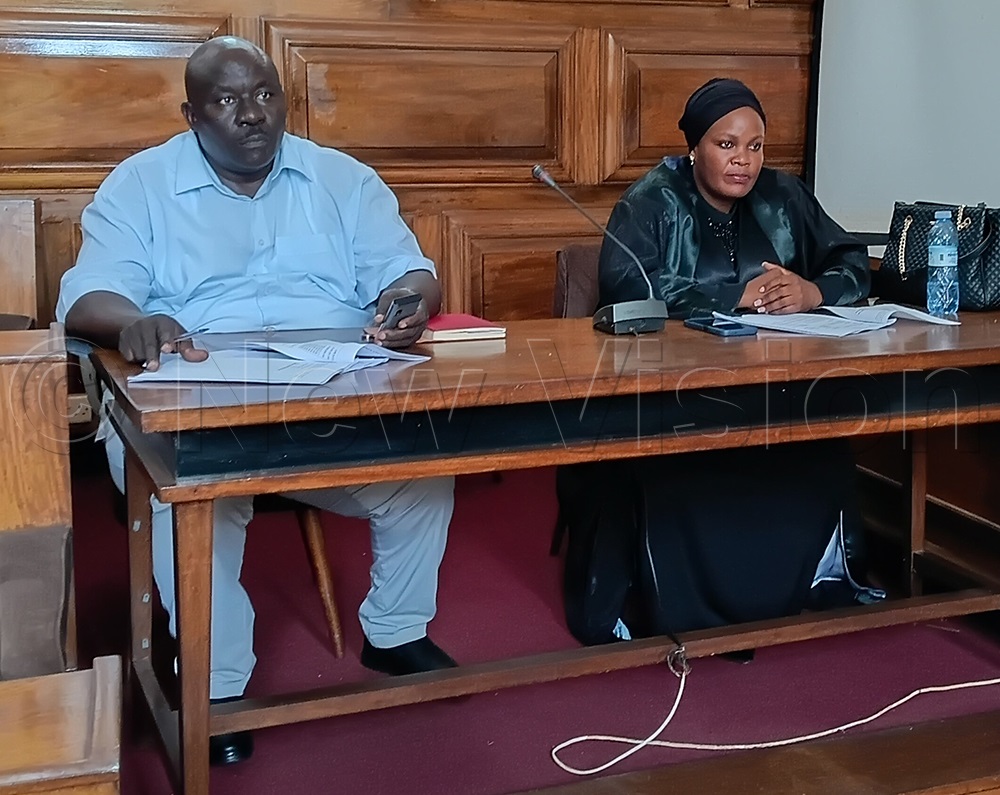
Jinja city outgoing councilors, Richard Mbazira of Jinja South and Shamira Khan of Bugembe. (Credit: Doreen Musingo)
Ssozi explained that a number of buildings across the two divisions of Jinja Northern and Southern remain either unassessed or wrongly classified, while some property owners exploit loopholes to evade tax obligations.
“We have many properties that are occupied, but ownership is not clearly established in our records. Without proper identification, billing becomes a challenge. Others occupy premises whose ownership remains unclear, making enforcement difficult,” he said.
He noted that the situation is worsened by the exemption of some properties from taxation without clear justification, raising concerns about accountability and transparency in revenue administration.
He added that the city is also losing potential income due to poor tracking of earnings in the hospitality sector, including hotels and lodges.
He acknowledged that authorities have failed to effectively track visitors staying in hotels and guest houses, which has affected the collection of hotel tax and related levies.
“Jinja is a major tourism and business hub, but the data on visitors is not fully captured. This means we are not maximising revenue from hotel occupancy,” he noted.
He also cited delays in central government transfers and suggested that the city should adopt fully digitised data and revenue collection systems.
Speaker Mbayo said Jinja’s status as a tourism and events hub, driven by its proximity to the Source of the Nile, has not translated into optimal revenue due to weak monitoring systems and limited enforcement.
John Muweema, councillor for the elderly, said the financial strain has been worsened by delays from the Ministry of Finance in releasing funds, particularly park user fees, which have disrupted service delivery and stalled key infrastructure projects.
“We depend on timely releases from the ministry to supplement our local revenue. When these funds delay, it affects the implementation of planned activities,” he noted.
Irene Nakato Wakabi, female councillor for Jinja South Division, said the council is also burdened by arrears owed by some tenderers operating in city markets, taxi parks and other revenue points. She said that despite holding contracts, some operators have reportedly defaulted on payments, further widening the revenue deficit.
Jinja city mayor Alton Kasolo said efforts are underway to address the challenges, including updating property registers, strengthening enforcement mechanisms and improving coordination with stakeholders in the hospitality industry.
Kasolo said that despite the setbacks, he remains optimistic that ongoing reforms will restore financial discipline and support the city’s development agenda.
“We are committed to sealing all loopholes and ensuring that every eligible taxpayer contributes to the city’s growth,” he noted.
The declining budget performance comes at a time when demand for urban services such as garbage collection continues to rise, placing additional pressure on city authorities.