
Nnabagereka cautions Church on pre-marital counselling
Speaking at the opening of the 28th Provincial Assembly of the Church of Uganda at Uganda Christian University in Mukono on Wednesday (August 5), the Nnabagereka said some couples complete counselling without receiving sufficient guidance on the realities of married life.
Nabagereka Sylvia Nagginda (left), Archbishop Stephen Kaziimba Mugalu and the Vice Chancellor of Uganda Christian University, Prof. Aaron Mushengyezi, having a chat after the official opening of the 28th Provincial Assembly. (Photo by Henry Nsubuga)
__________________
The Nnabagereka of Buganda, Sylvia Nagginda, has criticised the Church of Uganda for what she described as treating pre-marital counselling as a mere formality, warning that inadequate preparation of couples is weakening marriages and contributing to a breakdown of families.
Speaking at the opening of the 28th Provincial Assembly of the Church of Uganda at Uganda Christian University in Mukono on Wednesday (August 5), the Nnabagereka said some couples complete counselling without receiving sufficient guidance on the realities of married life.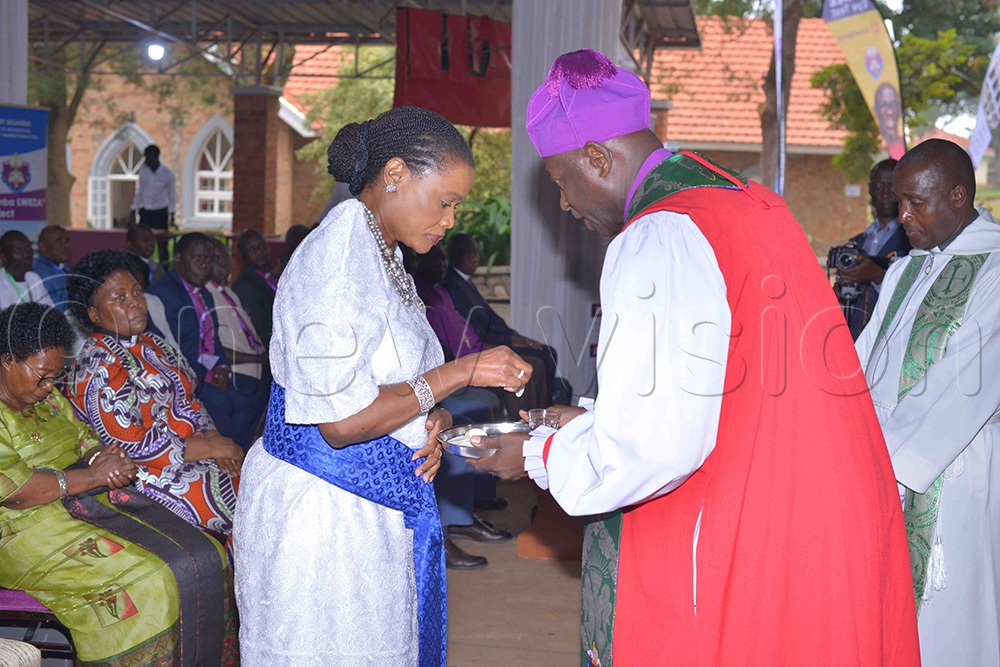
Archbishop of the Church of Uganda, Stephen Samuel Kaziimba, serving the Nnabagereka of Buganda, Sylvia Nagginda, with the Holy Communion. (Photo by Henry Nsubuga)
"It is believed that pre-marital counselling in Church of Uganda is often treated as a formality, like a rubber stamp for a marriage certificate, because it may be too brief or rushed, and sometimes exceptions are made. Couples leave without enough knowledge or guidance for married life. As a result, some enter marriage when they are not well informed, which weakens the foundation of their relationship. Counselling should be given proper time and seriousness to prepare couples and strengthen marriages," Nagginda said.
She was delivering the keynote address as Guest of Honour at the assembly, which runs from August 4 - 7 under the theme, "Anchored in Christ for Unity, Stability and Peace."
The Nnabagereka urged the Church to strengthen advocacy against gender-based violence, establish safe spaces for survivors and organise regular seminars for married couples to promote stable families.
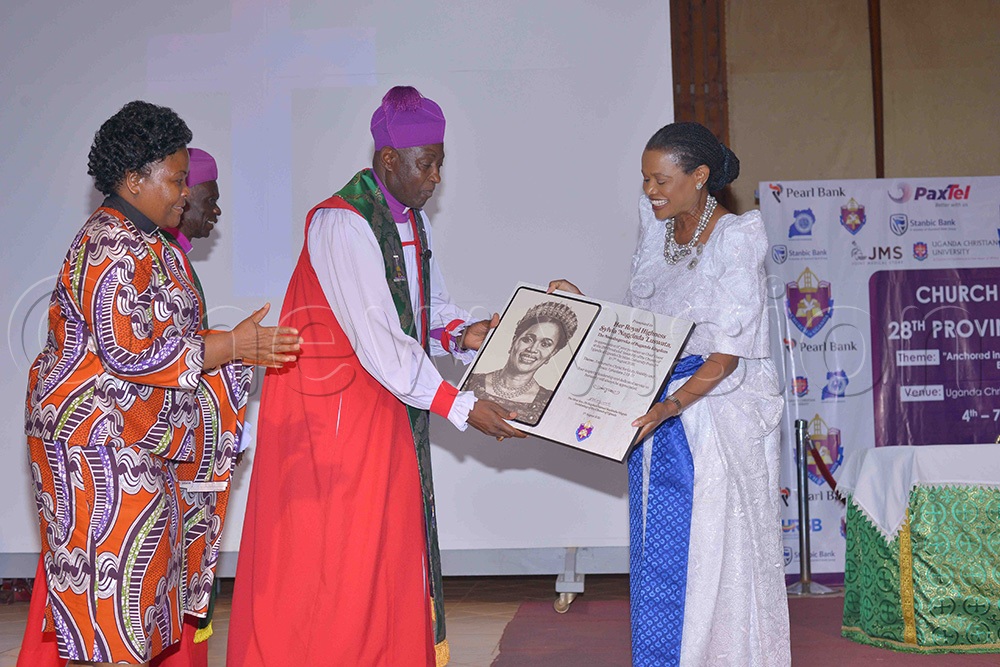
Archbishop of the Church of Uganda, Stephen Samuel Kaziimba, handing over a portrait to the Nnabagereka of Buganda, Sylvia Nagginda, as the Vice Chancellor of Ndejje University, Prof. Olivia Nassaka Bbanja (left), looks on. (Photo by Henry Nsubuga)
Beyond family issues, Nagginda challenged the Church to become financially self-sustaining by reducing reliance on Sunday collections and foreign donors and instead invest in income-generating projects.
"We all know that donor fatigue is real. The world now prefers mutual partnerships over dependency," she said, urging dioceses, archdeaconries and parishes to embrace prudent stewardship and build sustainable sources of income to support the church ministry.
She commended the Church of Uganda for maintaining what she described as a firm biblical stand on sexuality and called for the appointment of leaders who uphold Christian values.
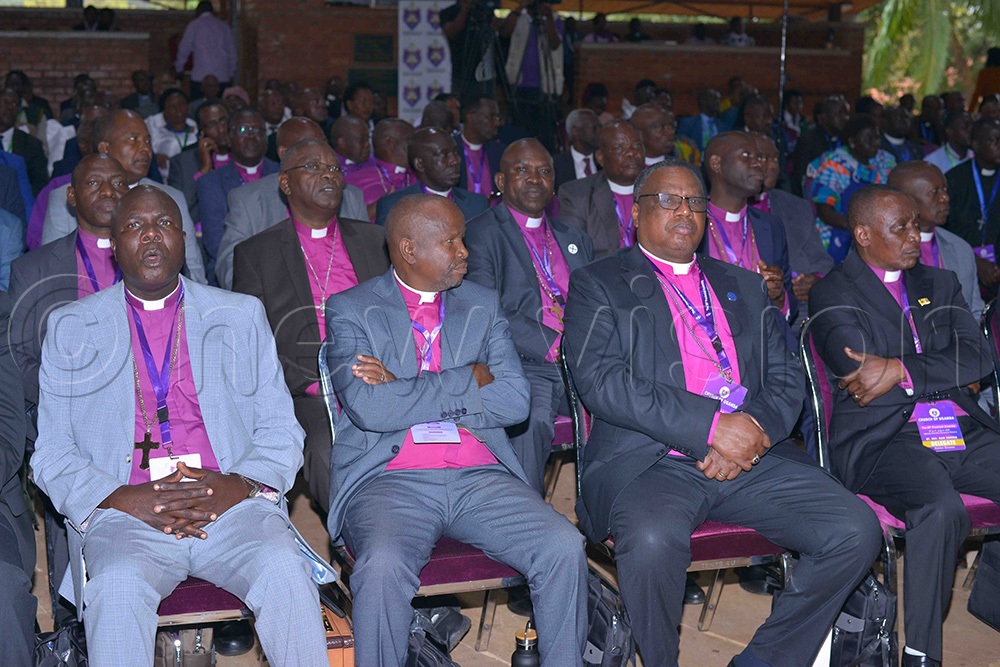
Some of the members of the House of Bishops attending the 28th Provincial Assembly at Uganda Christian University. (Photo by Henry Nsubuga)
On education, the Nnabagereka said Church-founded schools should prioritise character formation alongside academic excellence, arguing that many social challenges stem from weak moral foundations.
She cited the impact of the Ekisakaate kya Nabagereka programme, which marks its 20th anniversary next year, saying it continues to nurture integrity, discipline and the values of Obuntubulamu (good behaviour) among young people.
She also called on the Church to lead environmental conservation efforts through tree planting, wetland restoration, rainwater harvesting, climate-smart agriculture and the adoption of renewable energy.
Earlier, the Archbishop of the Church of Uganda, Stephen Samuel Kaziimba, urged Christians to use the Church's forthcoming 150th anniversary celebrations to renew their commitment to evangelism and national transformation.
Kaziimba said the Church of Uganda currently oversees about 5,200 Church-founded schools, including 630 secondary schools, 50 vocational institutions and several universities, achievements he attributed to the partnership between the Church and Buganda Kingdom that started after Kabaka Muteesa I invited missionaries in 1875.
He applauded Kabaka Ronald Muwenda Mutebi II and the Nnabagereka for supporting education, youth empowerment and moral formation through the Nnabagereka Foundation and the Ekisakaate kya Nabagereka initiative.
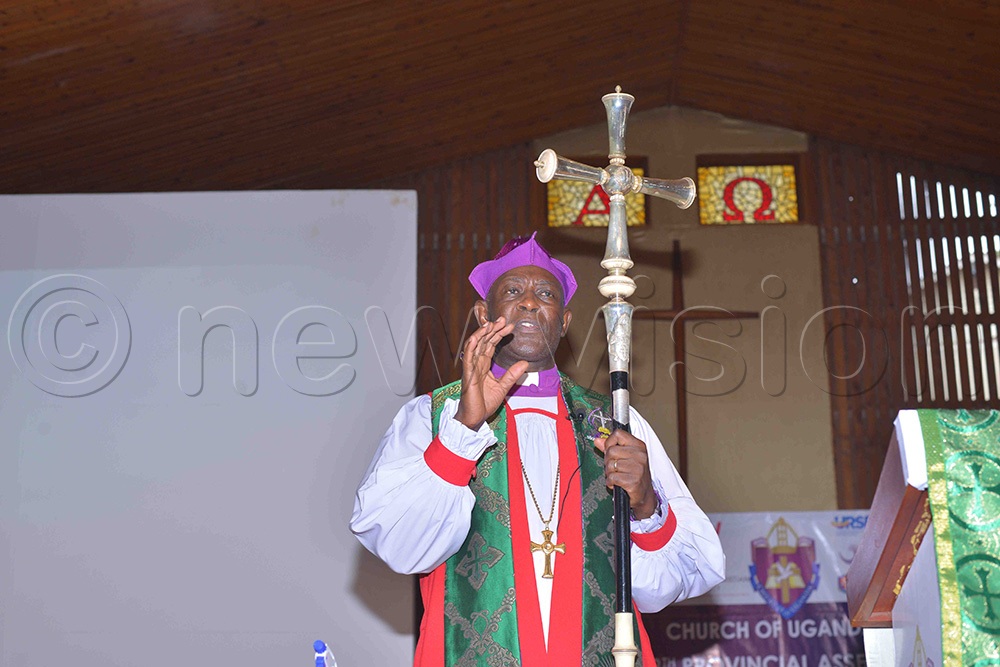
Archbishop of the Church of Uganda, Stephen Samuel Kaziimba, addressing the assembly. (Photo by Henry Nsubuga)
Uganda Christian University Deputy Vice Chancellor for Finance and Administration, Dr David Mugawe, said universities should strengthen their curricula to equip future clergy and other graduates with the skills to support stable marriages and families.
Equity Bank Uganda Managing Director Gift Shoko said poverty remains one of the major drivers of gender-based violence and family breakdowns, noting that the bank is working with the Church to improve household incomes through education financing and ensuring access to business credit.
"We have programmes that support parents with school fees and provide credit to start or expand businesses. When families have enough income to meet their basic needs, many of the challenges affecting homes can be reduced," Shoko said.