
US, Uganda launch $2.3 billion health partnership
In practical terms, the partnership is designed to support Uganda’s ongoing battle against diseases that continue to place enormous pressure on hospitals and communities, including malaria, HIV/AIDS, tuberculosis and polio, while also improving maternal and child healthcare services.
The Joint Health Steering Committee, commonly referred to as the JHSC, will act as the main oversight and coordination body for the programme. It will be co-chaired by US Ambassador to Uganda William W. Popp and Health Minister Dr Jane Ruth Aceng Ocero.
KAMPALA — Uganda and the United States have formally launched a new Joint Health Steering Committee, a high-level body expected to oversee one of the largest health partnerships currently operating in the country, a five-year collaboration worth $2.3 billion aimed at strengthening Uganda’s health system and fighting infectious diseases.
The initiative, announced in Kampala on May 8, marks the first major implementation step following the signing of a Health Memorandum of Understanding between the two governments in December 2025.
The agreement brings together more than $1.7 billion in planned U.S. support and $577 million in Ugandan government co-investment over the next five years.
In practical terms, the partnership is designed to support Uganda’s ongoing battle against diseases that continue to place enormous pressure on hospitals and communities, including malaria, HIV/AIDS, tuberculosis and polio, while also improving maternal and child healthcare services.
The Joint Health Steering Committee, commonly referred to as the JHSC, will act as the main oversight and coordination body for the programme. It will be co-chaired by US Ambassador to Uganda William W. Popp and Health Minister Dr Jane Ruth Aceng Ocero.
For ordinary Ugandans, the announcement matters because it signals both continuity and change in how foreign-funded health programmes will operate.
For years, Uganda’s health sector has depended heavily on international donor funding, particularly from the United States through programmes targeting HIV/AIDS, malaria and epidemic preparedness.
But under the new arrangement, officials say the focus is shifting beyond emergency interventions toward long-term system strengthening and greater government ownership.
The first year alone is expected to mobilise $410 million in U.S. health assistance, alongside Uganda’s own financial contribution.
Officials say the committee will supervise how the money is spent, monitor results and ensure programmes align with Uganda’s national health priorities and legal frameworks.
“This partnership represents Uganda's determination to build a sustainable, resilient health system that serves all Ugandans,” Dr Aceng said. “Through the Joint Health Steering Committee, we will ensure transparency, accountability, and alignment with our National Development Plan IV and Vision 2040.”
The structure of the partnership reflects a broader shift taking place globally in international health financing.
Rather than simply funding isolated projects, donors increasingly want recipient governments to take greater responsibility for planning, implementation and accountability.
In Uganda’s case, this means the government is expected to gradually assume stronger control over health systems that have historically relied heavily on external technical and financial support.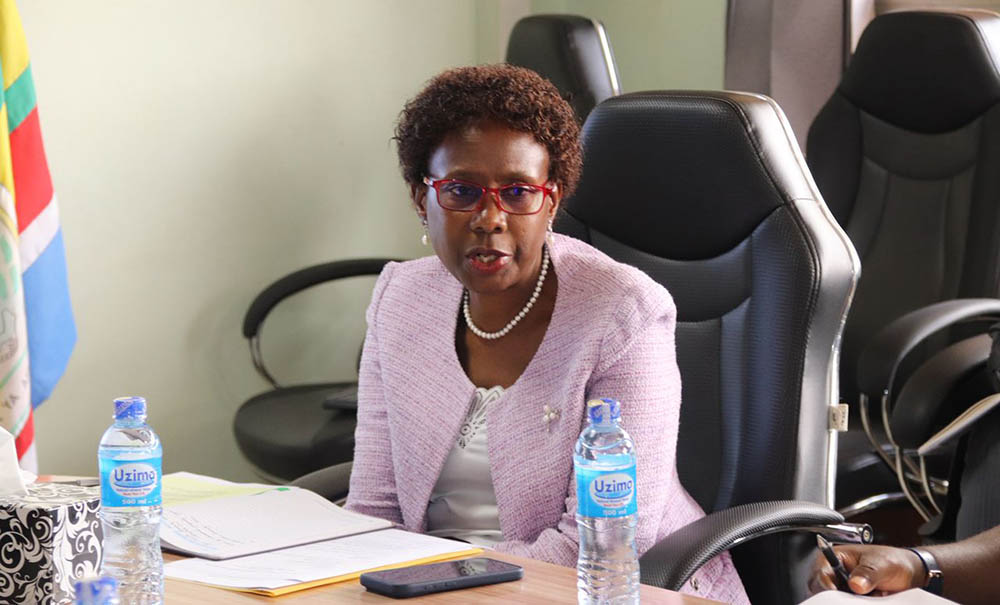
Health Minister Jane Ruth Aceng
The United States says the partnership also aligns with what it calls the “America First Global Health Strategy,” which focuses on containing disease threats at their source while strengthening bilateral cooperation.
“The Joint Health Steering Committee underscores the strategic importance of this partnership,” Ambassador Popp said. “It advances the Trump Administration’s America First Global Health Strategy by addressing disease threats at their source, strengthening bilateral cooperation, promoting American innovation, and building sustainable local health systems that can graduate to self-sufficiency.”
One of the most significant changes under the arrangement will be the transition from direct U.S.-managed clinical support toward more government-led systems.
According to the statement, technical assistance will increasingly shift from supporting individual clinical sites to strengthening national government functions and institutional capacity.
That shift is important because it moves attention away from short-term emergency responses and toward building systems that can continue functioning even if donor priorities change in the future.
The committee will also focus on improving health data systems, strengthening disease surveillance, ensuring medicines and supplies reach frontline health workers, and linking future support to measurable performance targets.
In simpler terms, funding will increasingly depend on whether agreed health goals are actually achieved.
Officials say the broader aim is not only to reduce disease burdens, but also to improve Uganda’s long-term preparedness against future outbreaks and health emergencies.
The partnership comes at a time when many African countries are under pressure to build more self-reliant health systems following lessons learned from COVID-19, supply chain disruptions and fluctuating donor funding.
For Uganda, the stakes are particularly high.
The country continues to face one of the region’s heaviest malaria burdens, while HIV/AIDS, maternal mortality and underfunded public health infrastructure remain major challenges in many districts.
What happens next will depend largely on implementation.