
UN invests sh25b in Uganda’s water, sanitation and menstrual health
The three-year project, which started in April 2023 and ended on September 30, 2026, aimed to strengthen Uganda’s water, sanitation and menstrual health sector, with the first phase focusing on rolling out the Sanitation Market Maturity Assessment Tool.
Some of the implementers and partners of the Water, Sanitation, and Menstrual Health project pose for a photo. (Photo by Jovita Mirembe)
________________
The United Nations Sanitation and Hygiene Fund (UNSHF) has invested sh25.13 billion (US$6.3 million) in Uganda’s water, sanitation and menstrual health sector, Dr Maggie Yu Clout, Global Technical Lead for Sanitation and Menstrual Health at the Sanitation and Hygiene Fund (SHF), has said.
Clout said the three-year project, which started in April 2023 and ended on September 30, 2026, aimed to strengthen Uganda’s water, sanitation and menstrual health sector, with the first phase focusing on rolling out the Sanitation Market Maturity Assessment Tool.
“We really wanted to invest in the sanitation and menstrual health sectors because currently, both sectors are heavily underfunded,” Clout said.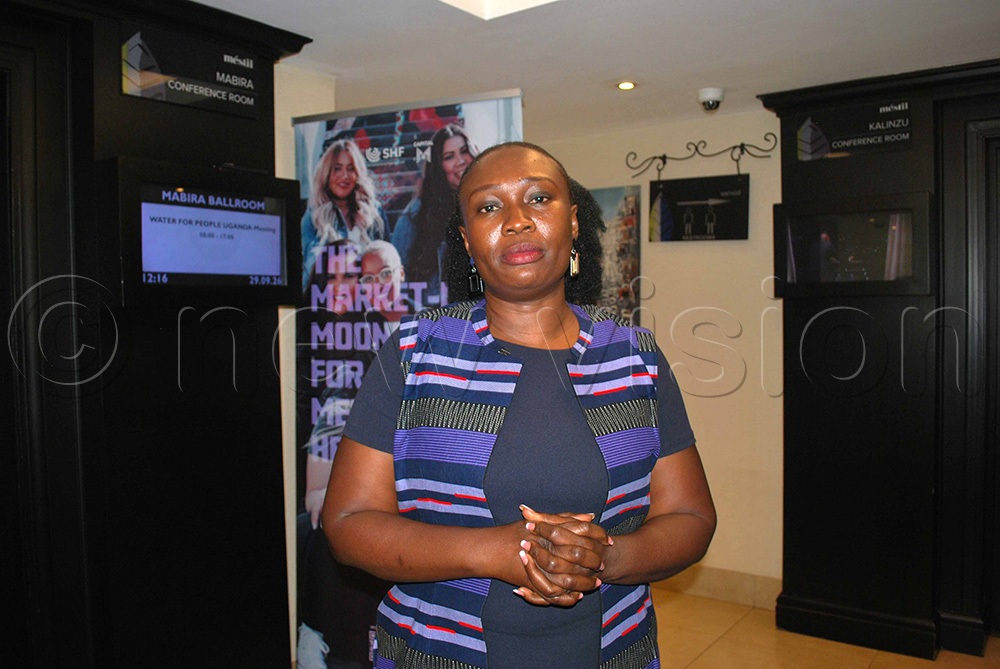
Brenda Achiro, the Country Director of Water for People Uganda. (Photo by Jovita Mirembe)
She said the fund also sought to create an enabling environment that would make sanitation financially viable and attractive to private-sector investment.
“We want to make sure we create an enabling environment that makes the sector financially sound, so that it can secure loans and investment and allow the private sector to become strong suppliers. We are aiming to put innovative initiatives and programmes in place going forward in 2027,” she said.
Brenda Achiro, Country Director of Water For People Uganda, said one of the key achievements of the project was increased private-sector participation in the sanitation value chain.
Brenda Achiro, the Country Director of Water for People Uganda. (Photo by Jovita Mirembe)
“We have reached approximately 2.4 million people through service delivery, systems strengthening, market development and public mobilisation in the districts of Buikwe, Kamuli, Kayunga, Kabarole, Kole, Buyende and Kampala,” Achiro said.
She said more than 198,639 people gained access to basic sanitation, including 109,227 women. About 69,985 people gained access to safely managed sanitation, while more than 180,883 people gained access to new or improved handwashing facilities.
The initiative also supported basic sanitation in 30 schools, reaching more than 61,051 learners, and improved sanitation access for 224,460 patients at 20 healthcare facilities.
Dr Herbert Nabaasa, Commissioner of Health Services, Environmental Health, at the Ministry of Health, said the project had helped accelerate sanitation and hygiene interventions across the country.
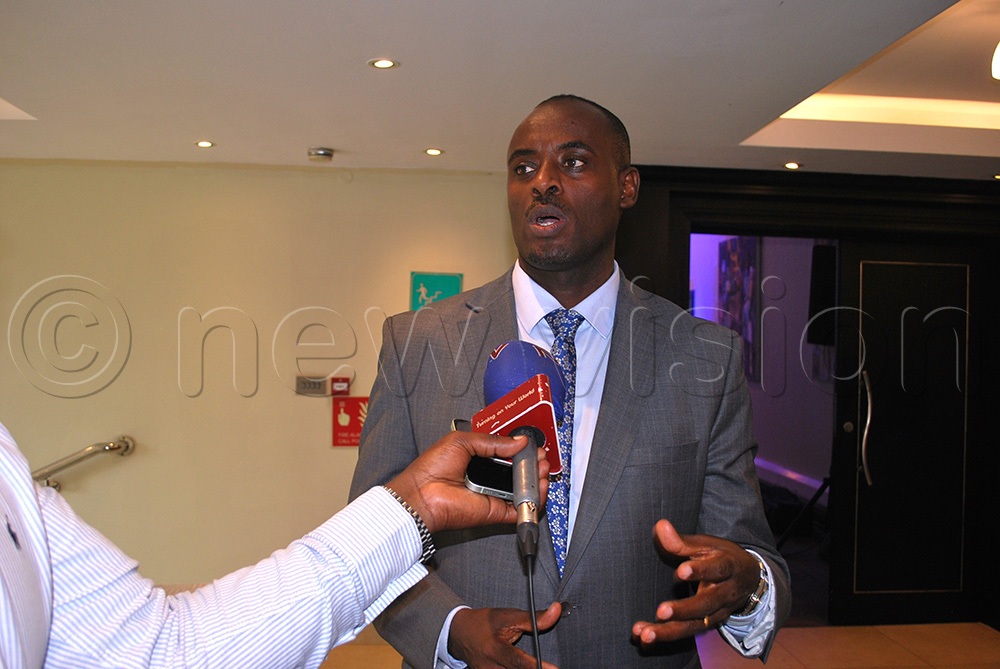
Dr Herbert Nabaasa, Commissioner of health services and environmental health, at the health ministry. (Photo by Jovita Mirembe)
He said several schools and health facilities had been supported to establish and improve toilet facilities, particularly to increase access to basic sanitation.
“As government, we have used this intervention to engage with local people and communities to understand the social determinants of health. Some of the disease burden we face, including diarrhoea, cholera and dysentery, is linked to poor sanitation and hygiene. We have therefore been able to accelerate and catalyse government interventions to reduce the burden of disease,” Nabaasa said.
Swaib Semiyaga, a senior lecturer in the Department of Civil and Environmental Engineering at Makerere University, said the first phase of the Sanitation and Hygiene Fund had delivered significant gains over the past three years.
He said progress had been made across the sanitation value chain, from containment in toilets and emptying to the transportation and treatment of faecal sludge, including increasing volumes reaching treatment plants.
The project was implemented by the Ministry of Health in collaboration with Water For People, the Ministry of Water and Environment, the Ministry of Education and Sports, the Uganda Water and Sanitation NGO Network (UWASNET), Kampala Capital City Authority (KCCA) and Finnish Mondial.