
Uganda, WHO agree on coordinated Ebola response as Tedros declares stable situation
The briefing, convened by Dr Tedros, focused on the Ebola outbreak in eastern DRC and Uganda, with WHO presenting the epidemiological situations in the two countries separately because of the different transmission contexts.
Dr Kyabayinze said Uganda’s response systems had already been fully activated, with rapid response teams deployed across priority districts and intensified surveillance ongoing at border points and health facilities.
Uganda and the World Health Organization have agreed to strengthen coordination and public communication on the ongoing Ebola/Bundibugyo Virus Disease outbreak as WHO Director-General Tedros Adhanom Ghebreyesus confirmed that the situation in Uganda remains stable.
The commitment was made during a high-level WHO briefing to member states in Geneva on May 22, where Uganda updated the international community on its response to imported Ebola cases linked to the Democratic Republic of Congo.
The briefing, convened by Dr Tedros, focused on the Ebola outbreak in eastern DRC and Uganda, with WHO presenting the epidemiological situations in the two countries separately because of the different transmission contexts.
A release issued by Government states that Uganda told member states that the country had so far registered only two imported Ebola Bundibugyo cases involving travellers from eastern Congo, with one death recorded, while the second patient has since recovered.
“Uganda has the experience, systems and capacity to respond effectively, having previously managed Ebola, Marburg, Mpox and other epidemic-prone diseases,” said Dr Daniel Kyabayinze, the Director of Public Health at the Ministry of Health.
Dr Kyabayinze said Uganda’s response systems had already been fully activated, with rapid response teams deployed across priority districts and intensified surveillance ongoing at border points and health facilities.
He added that Uganda had maintained transparency and continued information-sharing with international partners in line with the International Health Regulations.
“Our transparency should be supported, not misinterpreted,” Dr Kyabayinze told the WHO briefing.
Uganda also emphasised the need for coordinated communication among governments, international agencies and partners in order to avoid panic and maintain public confidence during the outbreak response.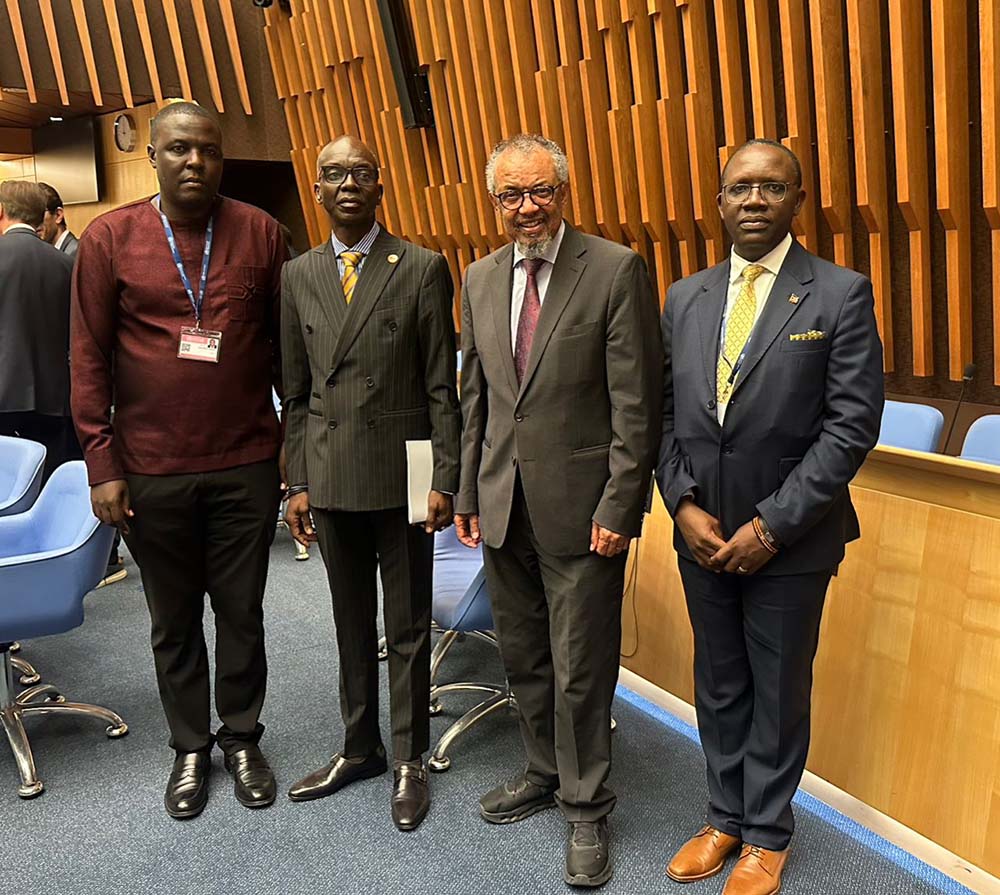
The Ministry of Health warned that inaccurate messaging and unnecessary alarm could negatively affect livelihoods, tourism, trade and regional movement despite the absence of local Ebola transmission in Uganda.
On the sidelines of the Geneva meeting, the Ugandan delegation held discussions with Dr Tedros and WHO Regional Director for Africa, Dr Mohamed Janabi, where both parties agreed to maintain coordinated communication and close collaboration throughout the response period.
Following the meeting, Dr Tedros publicly described Uganda’s Ebola situation as stable and credited the country’s aggressive containment measures for preventing wider spread of the virus.
“The situation in Uganda is stable, with two cases confirmed in people who travelled from DRC, with one death,” Dr Tedros said.
“The measures taken in Uganda, including intense contact tracing and cancelling the Martyrs’ Day commemoration, appear to have been effective in preventing the further spread of the virus,” he added.
Uganda welcomed the WHO clarification, saying it reflected the country’s position that the outbreak remains under control with no new confirmed cases or additional deaths reported since the imported infections were identified.
Kyabayinze said surveillance, contact tracing and screening operations remain active, especially in high-risk border districts and points of entry connecting Uganda to eastern Congo.
The government has already suspended public transport, including buses and flights, to and from the Democratic Republic of Congo as part of wider efforts to reduce cross-border transmission risks.
Uganda has also postponed this year’s Martyrs’ Day celebrations at Namugongo and issued strict Ebola prevention guidelines targeting schools, markets, places of worship and mass gatherings.
The Ministry of Health urged the public to remain calm, follow official health guidance, and immediately report any suspected Ebola symptoms through toll-free hotlines and local health teams as the country continues monitoring the situation closely.