
Uganda champions mental health integration in regional fight against SGBV
The meeting brought together over 50 government officials, civil society actors, development partners and technical experts from over 12 African nations and experts from European countries, including the Netherlands and Germany, to strengthen the prevention and response to sexual and gender-based violence (SGBV).
ICGLR deputy executive secretary, Amb. Yasir Ibrahim Ali Mohammed. (Photo by Rhyman Agaba)
__________________
Uganda has called on countries in the Great Lakes Region to urgently integrate mental health and psychosocial support (MHPSS) into peacebuilding and conflict response strategies, warning that untreated trauma continues to fuel cycles of violence and instability across the region.
The call was made by Dr Edith Namutebi, the head of regional peace and security at Uganda’s foreign affairs ministry, during a regional stakeholders’ meeting on Wednesday (January 28) at Onomo Hotel in Nakasero, Kampala. 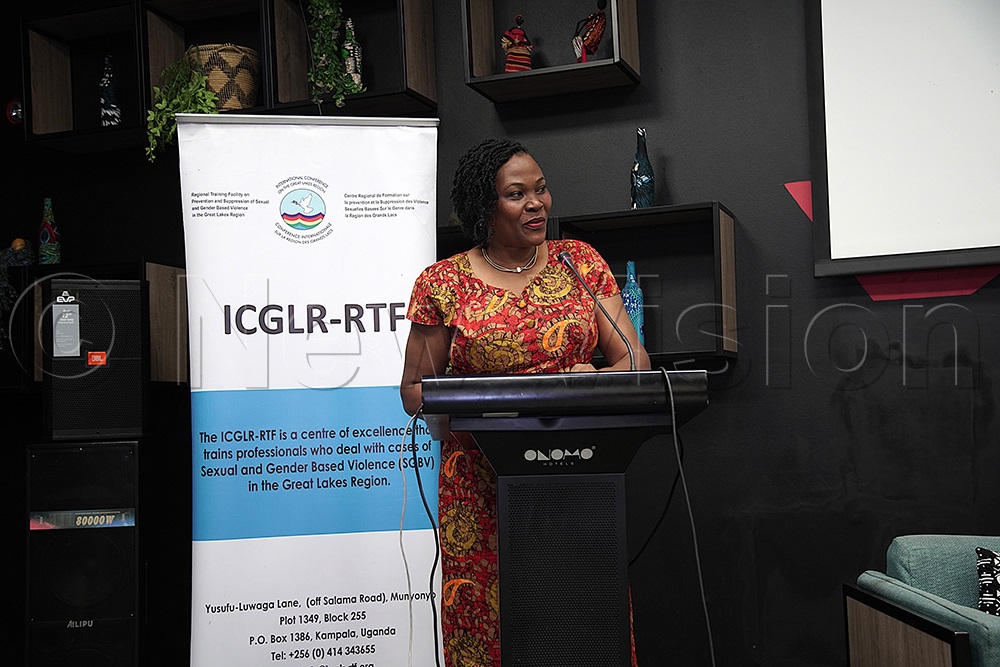
Dr Edith Namutebi, the head of regional peace and security at Uganda’s foreign affairs ministry. (Photo by Rhyman Agaba)
The trilingual international workshop that showcased presentations in Portuguese, French and English was convened by the International Conference on the Great Lakes Region (ICGLR).
The meeting brought together over 50 government officials, civil society actors, development partners and technical experts from over 12 African nations and experts from European countries, including the Netherlands and Germany, to strengthen the prevention and response to sexual and gender-based violence (SGBV).
Namutebi said many years of conflict in the region have left deep psychological scars, particularly among survivors of sexual violence, which are often ignored in traditional peace and security frameworks.
“Decades of conflict in our region have left a legacy of profound psychological trauma. Without addressing the mental health consequences of violence, peace agreements remain fragile, and we risk perpetuating intergenerational cycles of violence.”
She cited research showing that up to 40 per cent of women in conflict-affected areas have experienced some form of SGBV, yet only a small proportion can access integrated mental health services.
She also highlighted the acute shortage of mental health professionals in post-conflict countries, noting that in some settings there is fewer than one psychiatrist for every 100,000 people.
According to Namutebi, Uganda has taken deliberate steps to integrate mental health into national policy frameworks as part of its broader peacebuilding agenda.
These include the National Policy on the Elimination of Gender-Based Violence and the 2025 Mental Health and Psychosocial Support (MHPSS) guidelines developed under the Ministry of Education and Sports.
“These initiatives demonstrate how trauma-informed care can be embedded through gender-responsive budgeting and community-based approaches,” the ministry official said, pointing to northern Uganda as an example of how psychosocial healing can support recovery in post-conflict communities.
The regional meeting forms part of an ongoing ICGLR process that began in 2019 to align regional peace and security policies with the lived realities of conflict-affected communities.
Participants are reviewing and validating regional guidelines on integrating MHPSS into peacebuilding and SGBV response, alongside practical tools to support implementation.
'Holistic approach'
Dr Janviere Ndirahisha, the regional director of the ICGLR Regional Training Facility (RTF), said the integration of mental health is essential to addressing the root causes and long-term impacts of sexual violence in the region.
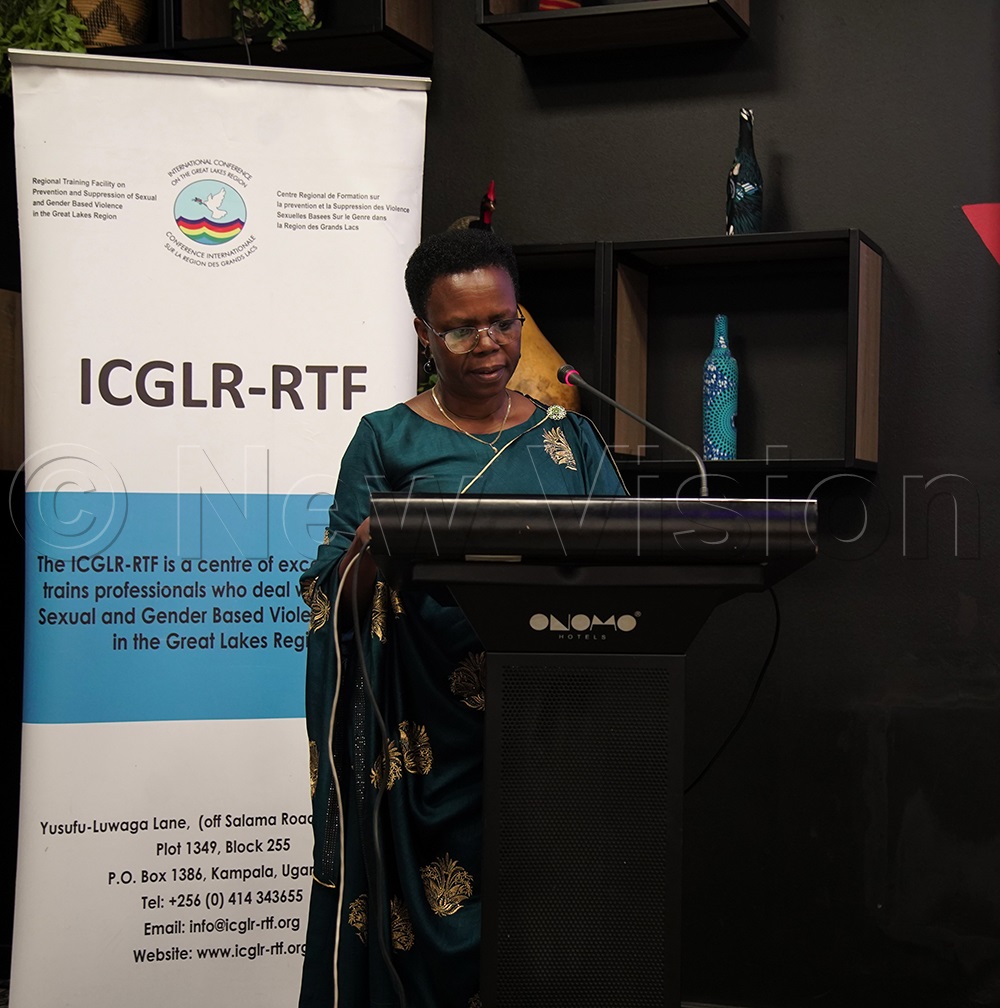
Dr Janviere Ndirahisha, the regional director of the ICGLR Regional Training Facility (RTF). (Photo by Rhyman Agaba)
“Our objective is to build a comprehensive and holistic approach to preventing and responding to SGBV by integrating mental health and peacebuilding into existing frameworks,” she said.
The Burundian added that the ICGLR-RTF has already conducted training programmes in Burundi, the Central African Republic, Rwanda, Uganda and Kenya since 2024, with plans to expand the initiative to all 12 ICGLR member states.
Also addressing the meeting, ICGLR deputy executive secretary, Amb. Yasir Ibrahim Ali Mohammed warned that peacebuilding efforts risk failure if the psychological effects of conflict are neglected.
“Unresolved trauma can undermine reconciliation, fuel hate speech and create new security risks, even after the signing of peace agreements,” he said.
“Mental health and psychosocial support are central to consolidating peace and stability in our region.”
The two-day high-level meeting is expected to culminate in the establishment of a regional network of SGBV, MHPSS and peacebuilding stakeholders to enhance coordination, information sharing and joint advocacy.
The ICGLR said it will monitor implementation of the agreed guidelines to ensure they lead to tangible improvements in the lives of SGBV survivors across the Great Lakes Region.
The 12 ICGLR member states are Angola, Burundi, the Central African Republic (CAR), the Republic of Congo, Democratic Republic of Congo, Kenya, Uganda, Rwanda, the Republic of South Sudan, Sudan, Tanzania and Zambia.