
Uganda becomes East Africa's hub for virus detection and research
“An EAC Regional Centre of Excellence is a specialised institution recognised by the Community to provide advanced expertise, research, training, innovation and technical support in an area of regional importance. These Centres ensure that scientific knowledge and specialised capabilities developed in one Partner State become a shared regional resource benefiting all East Africans,” he said.
(L-R) Kasonge Mwinga, WHO Representative; Andrea Ariik, Deputy Secretary General of the East African Community; Diana Atwine, Permanent Secretary, Ministry of Health, Uganda; Rebecca Alitwala Kadaga, First Deputy Prime Minister of Uganda; Robinah Nabbanja, Prime Minister of Uganda; Chris Baryomunsi, Minister of Health, with partner organisations and Ambassadors during the Uganda Virus Research Institute celebrating of 90 years at Uganda Virus Research Institute on July 22, 2026. (Credit: Mary Kansiime)
KAMPALA - Uganda has strengthened its regional leadership in infectious disease surveillance after the Uganda Virus Research Institute (UVRI) was officially designated the East African Community (EAC) Regional Centre of Excellence in Virology.
The Centre, launched in Entebbe on Wednesday, July 22, will serve as the region's hub for advanced virology research, specialised laboratory training, disease surveillance, diagnostics and knowledge sharing, supporting Partner States in responding to public health threats such as Ebola, Marburg and other emerging and re-emerging viral diseases.
The launch was officiated by Prime Minister Robinah Nabbanja, who represented President Yoweri Museveni during celebrations marking UVRI's 90th anniversary.
Nabbanja said the designation places greater responsibility on Uganda and the region to strengthen health security amid evolving disease threats.
"The world is changing rapidly alongside evolving health demands and policies. Through this journey, we have seen and learnt that a nation that studies its own pathogens is a self-reliant nation. We commit to increasing funding for research," she said.
She noted that the Centre would not only benefit Uganda but also strengthen regional collaboration in responding to disease outbreaks that easily spread across borders.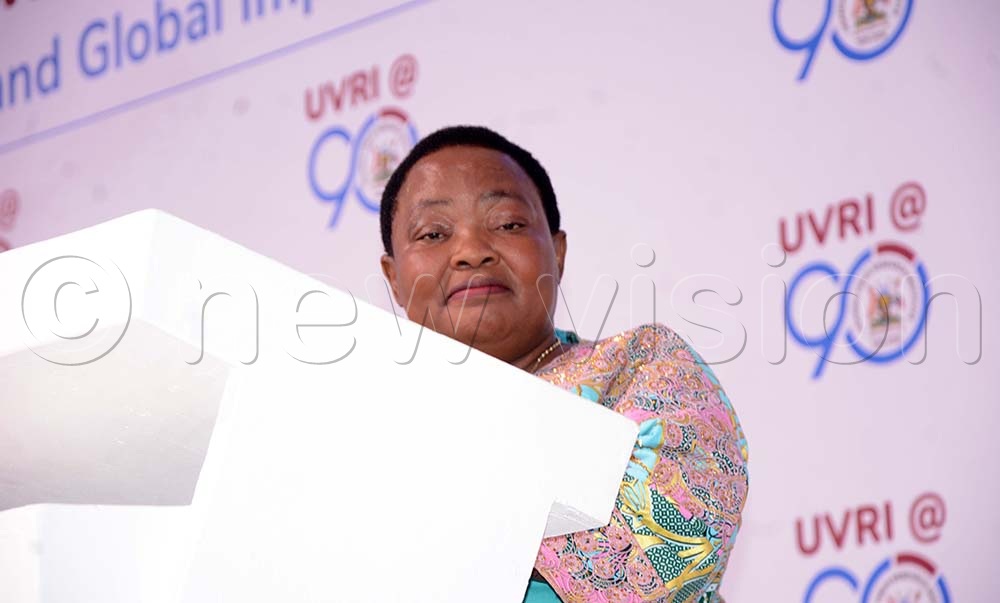
Nabbanja said the designation places greater responsibility on Uganda and the region to strengthen health security amid evolving disease threats. (Credit: Mary Kansiime)
During the launch, EAC Deputy Secretary General in charge of Infrastructure, Productive, Social and Political Sectors, Andrea Ariik, said the facility would ensure that scientific expertise developed in one country benefits the entire region.
“An EAC Regional Centre of Excellence is a specialised institution recognised by the Community to provide advanced expertise, research, training, innovation and technical support in an area of regional importance. These Centres ensure that scientific knowledge and specialised capabilities developed in one Partner State become a shared regional resource benefiting all East Africans,” he said.
Ariik added that Uganda earned the designation because of UVRI's decades-long contribution to virus research, disease surveillance and outbreak response, adding that the institute has built an international reputation in virology.
Ariik added that the Centre will further strengthen the EAC's One Health approach by promoting collaboration across human, animal and environmental health sectors to address emerging infectious disease threats.
The First Deputy Prime Minister and Minister for East African Community Affairs, Rebecca Alitwala Kadaga, said the Centre comes at a critical time when the region continues to face threats from infectious diseases.
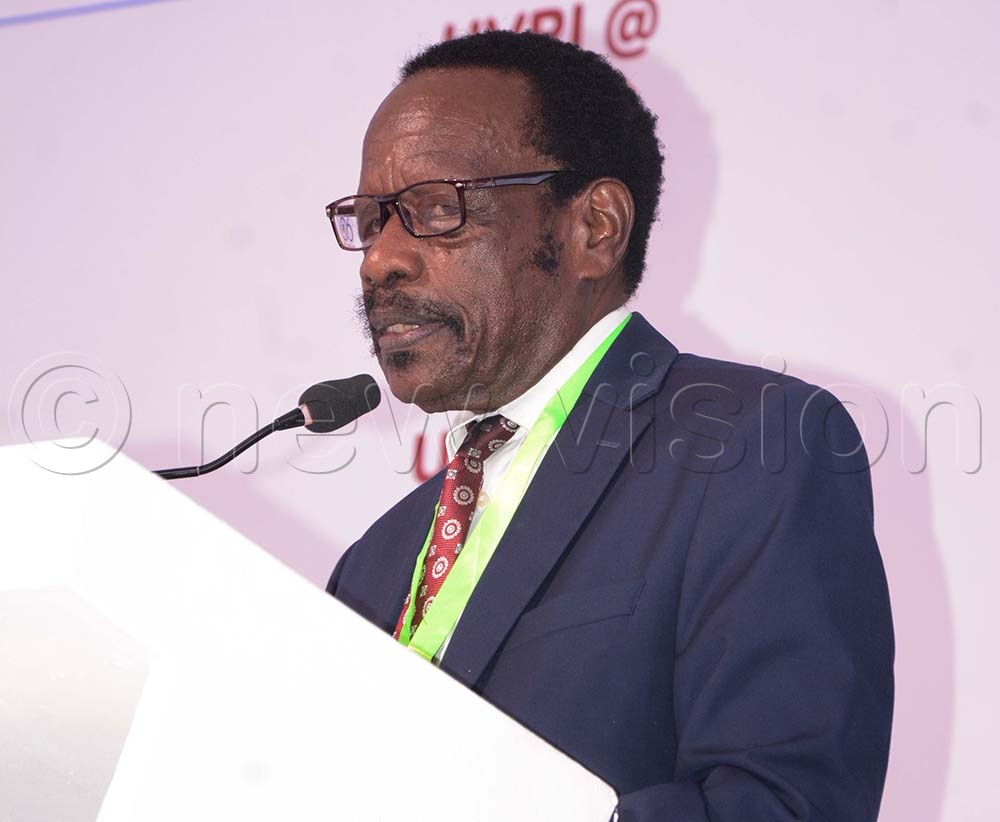
During the launch, EAC Deputy Secretary General in charge of Infrastructure, Productive, Social and Political Sectors, Andrea Ariik, said the facility would ensure that scientific expertise developed in one country benefits the entire region. (Credit: Mary Kansiime)
“The COVID-19 pandemic demonstrated that diseases do not respect borders, and an outbreak emerging in one Partner State can quickly become a regional concern,” Kadaga said.
She noted that while EAC countries have made significant progress in strengthening laboratory systems, differences in technical capacity, expertise and resources remain.
The operationalisation of the centre has been supported through the EAC Regional Network of Reference Laboratories for Communicable Diseases Project with funding from the Government of Germany through KfW Development Bank and technical support from the Bernhard Nocht Institute for Tropical Medicine.
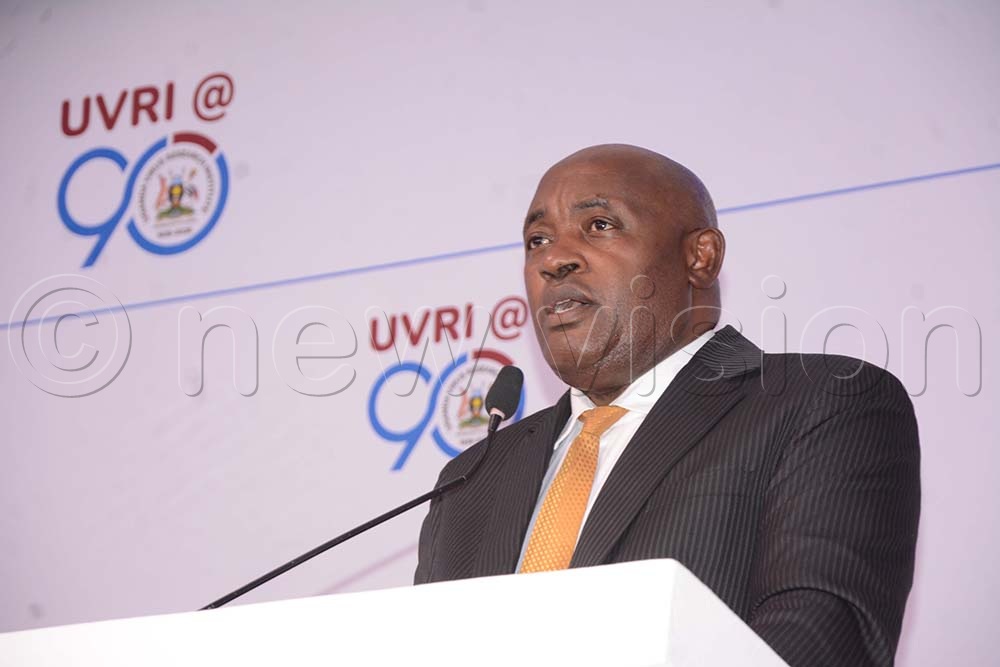
Health Minister Chris Baryomunsi. (Credit: Mary Kansiime)
To UVRI Director Prof. Pontiano Kaleebu, the institute would use its new regional role to strengthen laboratory networks and scientific collaboration across East Africa.
“As a regional hub, UVRI will support advanced virology research, specialised laboratory training, diagnostics, surveillance and knowledge sharing across the EAC region,” Kaleebu said.
He explained that the Centre will improve the ability of Partner States to detect, confirm and respond to viral diseases through stronger laboratory systems and coordinated scientific expertise.
Kaleebu reported that UVRI already plays a critical regional role by confirming samples referred from neighbouring countries before disease outbreaks are officially declared, ensuring public health decisions are based on scientific evidence.
The centre builds on achievements made under the EAC Regional Network of Reference Laboratories for communicable diseases project through the EAC Mobile Laboratory Network, established in 2017.
Laboratory turnaround time for detecting dangerous viral diseases has been reduced from approximately 72 hours to just eight hours, allowing health authorities to make faster decisions during outbreaks.