
TB treatment takes toll on mental health of patients
Each year, the health fraternity across the world comes together to raise awareness about this bacterial disease that is fast spreading in Uganda and claiming hundreds of lives.
Fred Ebi, TB survivor sharing his experience at Vision Group offices in Kampala. (File Photo)
______________________
In 2018, Fred Ebil, an instructor at a technical college in Lira district, started feeling pain in his chest. The pain progressed to the point of him not being able to walk. In addition to the chest pain, his weight dropped from 75kg to 35kg within four months. He sought treatment from several local clinics in vain.
“When I started coughing, I thought it was a normal cough, but it was not. I started taking antibiotics but there was no improvement,” he says.
After five months, the situation worsened and his family members took him to Lira Regional Referral Hospital.
“The people who took me to the hospital wanted to use a bodaboda and sitting on it was difficult. We opted for a car,” Ebil says.
At Lira Regional Referral Hospital, the doctors suspected that Ebil was suffering from tuberculosis (TB). So they carried out two sputum tests, but the result turned out negative yet all signs pointed to tuberculosis.
To verify their suspicions, an X-ray test was carried out on Ebil’s respiratory system, which confirmed that Ebil had multi-drug resistant (MDR) tuberculosis.
It is a strain of tuberculosis that is resistant to the two known potent drugs that are used to treat the normal strain of the disease. It is very difficult and expensive to treat.
Treating it requires expensive drugs, taken over more than 18 months in addition to close monitoring of the patient by health experts.
Dr Mary Nabukenya, the head of the USAID TB Flagship project in the health ministry, puts the average cost of treating an MDR case at shillings 13 million yet the normal strain costs shillings 1.9 million.
After doctors confirmed that Ebil had MDR TB, he was admitted to the TB ward in Lira Regional Referral Hospital and started treatment. While being admitted, Ebil did not know that he was going to encounter a big storm before he could heal.
Worst stigma
“The treatment was a horrible experience. I used to swallow 18 tablets every day in addition to getting two injections. These were too many for me. In fact, at one time, I felt like giving up, but this would have meant the end of my life. The side effects of the treatment were bad. The drugs were very strong and paralysed my legs on day one of the treatment. The doctors told me missing a single dose of treatment would make the bacteria develop more resistance,” he says.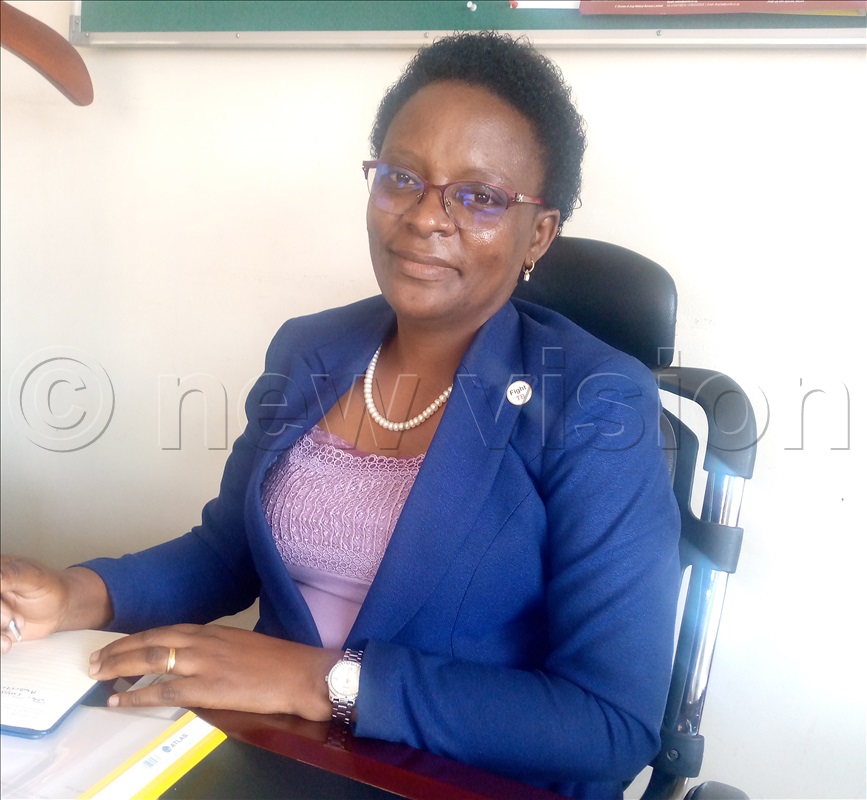
After adhering to treatment, Ebil’s health improved and he regained strength. So, the doctors told him that he was to be taken home where he would continue taking his medication. The news of leaving the hospital warmed Ebil’s heart, but little did he know that the worst was yet to come in the form of stigma.
“When the health workers took me home, they told people about my condition and told them to keep a distance from me to prevent the transmission of the disease. The doctors could have done this to prevent me from spreading the disease, but instead [their action] ended up subjecting me to the worst stigma. I was put in a separate room and everything of mine was set aside. I had a special plate, cup, and other items. If a person brought me food, they would leave it there and I pick without me getting into contact with them. It was a very lonely season for me,” he says.
Ebil adds: "My family and I suffered a lot of segregation".
As Ebil’s TB situation improved, his mental and financial health worsened. He was the breadwinner for his family and was unable to run his businesses. However, since he was a civil servant, he remained on the payroll but earned only sh80,000 since he had taken a loan just before he fell ill.
“My family was only saved by the AIDS Support Organisation (TASO) team that used to give us maize flour and cooking oil,” Ebil says.
Despite all the challenges, he adhered to the treatment and regained the strength to return to work after six months. At this stage, he informed his principal at the technical college that doctors had cleared him to resume work because the TB was now latent ie he had the TB germs in the body but could not spread them.
When he returned to work, the stigmatisation got worse.
Abandoning work
After resigning, Ebil teamed up with other TB survivors to start Fellowship of TB Survivors, an organisation that advocates for the interests of TB survivors, especially offering counselling services to people suffering from TB and carrying out sensitisation. The organisation is based in Rubaga, Kampala with a team that has been trained in guidance and counselling, contact tracing, and directly observed therapy (DOT). DOT means monitoring the TB treatment of patients. The team is trained by experts from Uganda Stop TB Partnership (USTP), a non-governmental organisation.
“We need sensitisations not only on how people should treat TB patients but also encourage people to carry out testing. TB is a highly fatal disease, but people hardly test for it. They only test when they start coughing,” he says.
What is MDR TB?
First discovered in 1956 in Great Britain, MDR TB is a strain of TB that is resistant to more than one anti-TB drug and is the most known potent drug against the disease. It is different from drug-resistant TB, which is caused by TB bacteria that are resistant to at least one first-line anti-TB drug.
Nabukenya says every MDR patient who remains untreated can infect 15 people every year. Treating it requires expensive drugs, and takes a long period (nine-18 months) in addition to close monitoring of the patient by health experts.
Dr Susan Akello, a multi-drug TB specialist at Mulago Hospital in Kampala, says treating each patient costs the Government shillings 13 million. This cost is high given the fact that treatment of ordinary or drug-sensitive TB costs shillings 1.9 million.
“We use more drugs — five drugs on the minimum — to manage MDR TB. These drugs are strong and have many side effects. One of the drugs can cause a fast heartbeat and if not noticed early, it can lead to death. They can also cause psychosis and depression,” Akello says.
Stavia Turyahabwe, the assistant commissioner in charge of tuberculosis and leprosy control at the health ministry, says there are about 1,500 cases of MDR TB in Uganda, with Kampala having the highest number.
One can get MDR TB as a result of missing or mismanaging treatment. Taking the wrong medicine, wrong dose and poor-quality drugs are some of the leading causes of MDR TB.
“If a person with TB does not swallow their drugs regularly or the drugs are substandard or the dose the patient gets is inadequate, they can get drug-resistant TB. This is TB, which is not curable by the usual drugs,” Nabukenya says.
She adds that although a person can acquire MDR TB from another, it can also develop within the body of a person with ordinary TB as a result of resistance to drugs.
“A person can get infected with MDR TB directly from somebody who has the germs expels the germs in the air — when they cough, sneeze, sing or laugh. But also when patients take their drugs irregularly, they can create MDR TB within themselves. The drugs stop killing the bacteria and the bacteria become resistant,” Akello says.
Prevalence
According to the health ministry and the World Health Organisation, Uganda is one of the world's 30 high-burden countries for TB and TB/HIV co-infection. Each year, approximately 91,000 people in Uganda get sick of TB with 32% of them being HIV-infected.
Two out of every 100 people with TB have drug-resistant TB that is not cured by first-line drugs, while approximately 15% of TB cases in Uganda are children aged below 14 years.
According to the ministry, children get TB from parents, caretakers, and colleagues at school. In Uganda, 15,000 people are diagnosed with the disease every year.
Nabukenya says children under five are at more risk of getting TB and in case they are exposed, she advises that they get preventive treatment.
Testing and treatment
Over the years, the Government and development partners have invested heavily in the testing and treatment of MDR TB. Currently, cases can be tested in all public hospitals, health centres IV, and some health centres III.
“Nobody should die of MDR TB. MDR TB is curable. So, it is very painful that we lose patients to a disease where everything is available to manage it. And a lot of money is being spent — shillings 13.4 million per patient at no cost on them,” Dr Akello says, adding that it now takes a short time to get results. Akello says one can get TB test results in two hours in most health centres across the country.
“The good thing about this test is that they find out that you have TB and also tell us if you are resistant to the basic drugs. Truenat machines have longer battery life and have been extended to those health centres III that may not have received the gen expert [machine],” Nabukenya says.
Some of the facilities that are currently handling MDR are Mulago, Murchison Bay Prison for prisoners, Lira, Soroti, Mbale, Hoima, Fort Portal, Moroto, Arua, Mubende, and Masaka Hospitals.
“Drugs like linezolid can cause visual loss, cycloserine can cause mental problems, depression, and psychosis,” Akello says.
The other drugs used in the treatment of MDR TB are bedaquiline, linezolid, clofazimine, cycloserine or terizidone, ethambutol, delamanid, pyrazinamide, meropenem, and prothionamide, among others.
Symptoms
The common TB symptoms are persistent cough, coughing blood, weight loss, sweating at night, chest pain, swollen lymph nodes, and fever. According to Dr Akello, the symptoms of ordinary TB and MDR TB are the same.
“Anyone with a cough of two weeks or more, weight loss, drenching sweats at night and those persistent evening fevers point to TB. If you have those symptoms, please visit the health centre and they check you,” Nabukenya says.
TB risk factors
Some of the risk factors of TB include being in crowded places, poor ventilation, being near TB patients, ailments like diabetes and HIV, and malnutrition. According to Akello, HIV is a big risk factor for TB and MDR TB.
“40% of the MDR TB patients that we are treating also have HIV. This high number is because people who are HIV-positive have many TB drugs to take in addition to antiretroviral drugs. The interaction between TB and HIV drugs leads to poor outcomes when there is HIV-TB co-infection,” she adds.
Health experts also note that areas with poor nutrition tend to register high rates of TB cases.
According to Dr Nabukenya, the Ministry of Health gets many TB notifications from areas such as West Nile, Northern Uganda, and Karamoja and experts believe it is because of poor nutrition.
“The nutrition status of the population in those areas is bad yet bad nutrition is one of the pre-disposing factors. If your nutrition is bad, your body will not be able to control the TB germ that comes into your body,” Nabukenya says.
Prevention
Vaccination is one way of preventing TB. Children are always given the BCG vaccine at birth to offer protection against the disease. Health experts, however, say this vaccine does not give 100% protection.
“The BCG that is given to children is not very effective because we have registered a lot of TB in immunised infants that are less than two months old,” Dr Timothy Muwanguzi of the Uganda Case Western Reserve University- Research Collaboration, a project that is studying the efficacy of new TB drug trials in Uganda, says.
Other ways of preventing TB are good aeration, avoiding crowded places, isolation of patients, covering one’s mouth when coughing or sneezing, wearing a mask, and preventive treatment.
Preventive is treatment given to people who are at risk of getting the disease. According to Nabukenya, preventive treatment is given to people who have latent TB (they have the TB germ in the body, but it has not progressed to be a disease).
“We give such people preventive therapy because we do not want the germ to progress into disease. Initially, we were targeting children under the age of five and people living with HIV because they are at a high risk. However, now as long as you have evidence of having been in contact with a TB patient and we find a germ in your body, we give you preventive treatment,” Nabukenya says.
Muwanguzi says knowledge about TB in Uganda is extremely low yet the number of patients is going up. He says more sensitisation should be carried out to encourage people to test for the disease and seek treatment.
“The Government should roll out mass media campaigns to educate people about TB disease like it did in the case of HIV. People should be encouraged to test and seek treatment early,” Muwanguzi says.