
Health
Tayebwa pushes for diagnostic labs in schools to curb malaria fatalities
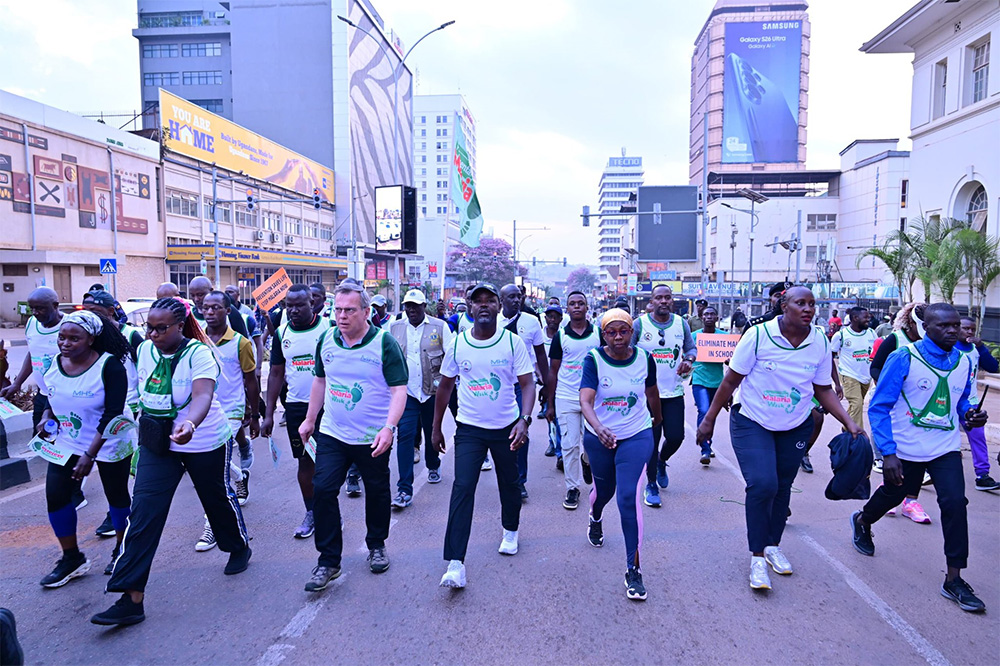
Tayebwa made the remarks while officiating at the closing ceremony of the Parliamentary Malaria Walk, which took place at the South Wing parking area on Sunday, July 26, 2026.
Deputy Speaker Thomas Tayebwa has called on schools across the country to establish diagnostic laboratories to help curb malaria-related deaths among learners. (Courtesy photo)
By: Dedan Kimathi, Journalist @New Vision
_________________
Deputy Speaker Thomas Tayebwa has called on schools across the country to establish diagnostic laboratories to help curb malaria-related deaths among learners.
Tayebwa made the remarks while officiating at the closing ceremony of the Parliamentary Malaria Walk, which took place at the South Wing parking area on Sunday, July 26, 2026.
Speaking at the event, Tayebwa said the move was imperative in reducing malaria fatalities among children.
Deputy Speaker Thomas Tayebwa has called on schools across the country to establish diagnostic laboratories to help curb malaria-related deaths among learners. (Courtesy photo)
He cited the case of Sunshine Murungi Bethel, a 14-year-old student at Gayaza High School who tragically died this month due to malaria-related complications.
“The case of Sunshine has reminded us that we must go to the schools. Can we have at least minimum laboratory standards for testing in our schools? Because there are schools which can even afford and then can we also make it a policy so that we don’t lose these young souls,” he implored.
Tayebwa added that increased efforts are needed to combat the tropical disease across all sections of society.
“Yesterday, I was in my constituency; over 65% of the disease burden registered in the health centres in my constituency are malaria-related cases,” Tayebwa emphasised.
He commended Dr Cedric Akwesigye, the managing director of Microhaem Scientifics and Medical Supplies (MHS), whom he said had reduced the country’s import burden and increased access to testing services through the local manufacture of rapid diagnostic kits for malaria, HIV and sickle cell diseases.
“I am really happy to see that a Ugandan is the one producing kits that we are now using,” Tayebwa said.
Government contribution
In the ongoing 2026/27 financial year budget, the government allocated Sh5.23 trillion to the health sector towards key priorities such as maternal and child health, prevention and treatment of non-communicable diseases and provision of essential medicines, among others.
“Because of the efforts we are pushing, especially in upcountry health centres, in this financial year’s budget, we managed to secure another Sh40 billion to recruit other health workers in upcountry health facilities,” Tayebwa added.
Increased awareness
Belgium’s Ambassador to Uganda, Hugues Chantry, called for continued vigilance in the fight against malaria.
“You don’t take an appointment with mosquitoes, diseases, especially with malaria. I think that it is important indeed that we raise awareness. We know that malaria is there with us in our midst, but sometimes we have a tendency to forget. Precisely, because it is there all the time with us,” said Chantry.
“We know many people in the laboratory are working to find vaccines and so on, but we are not yet there. That means that kind of effort today should definitely be supported and that’s definitely why I am here with you today,” he added.
“I am really happy to see that a Ugandan is the one producing kits that we are now using,” Tayebwa said.
Government contribution
In the ongoing 2026/27 financial year budget, the government allocated Sh5.23 trillion to the health sector towards key priorities such as maternal and child health, prevention and treatment of non-communicable diseases and provision of essential medicines, among others.
“Because of the efforts we are pushing, especially in upcountry health centres, in this financial year’s budget, we managed to secure another Sh40 billion to recruit other health workers in upcountry health facilities,” Tayebwa added.
Increased awareness
Belgium’s Ambassador to Uganda, Hugues Chantry, called for continued vigilance in the fight against malaria.
“You don’t take an appointment with mosquitoes, diseases, especially with malaria. I think that it is important indeed that we raise awareness. We know that malaria is there with us in our midst, but sometimes we have a tendency to forget. Precisely, because it is there all the time with us,” said Chantry.
“We know many people in the laboratory are working to find vaccines and so on, but we are not yet there. That means that kind of effort today should definitely be supported and that’s definitely why I am here with you today,” he added.
The event was attended by public service state minister Lydia Wanyoto, Wakiso Woman Member of Parliament (MP) Betty Ethel Naluyima, among others.
The Ministry of Health has ruled out the existence of a new malaria variant in Uganda, saying scientific surveillance shows that the country's malaria parasite has not changed.
Ministry of Health position
The remarks come barely two weeks after Parliament debated rising malaria cases in schools.
Speaking on July 15, health minister Dr Chris Baryomunsi dismissed allegations that the country was battling a new malaria strain, arguing that genomic surveillance conducted by the National Malaria Control Division and its research partners had found no evidence to support the claim.
Baryomunsi explained, “Plasmodium falciparum remains, as it has for decades, the dominant species in Uganda, accounting for approximately 97% of infections, and it is well established as the species responsible for the most severe forms of the disease. On the basis of current genomic and clinical surveillance data, the Ministry's technical position is that there is no evidence of a new malaria strain driving these deaths."
Furthermore, Baryomunsi pointed out that the reported deaths occurred in the Kampala Metropolitan Area, which historically is regarded as a low transmission area, and said the answer lies in the immunological profile of the affected population.
Listing several interventions in the fight against malaria, the minister stated that according to “a well-documented epidemiological paradox: children growing up in lower-transmission areas are exposed to malaria parasites less frequently in early childhood, and therefore do not build up the same level of acquired immunity as children in high-transmission rural areas."
This implies that a school-age child in a low-transmission area who contracts malaria has little or no background immunity to slow the progression of the disease, whereas a child with high acquired immunity might experience a mild, self-limiting illness.
Deputy Speaker Thomas Tayebwa participating in the Parliamentary Malaria Walk. (Courtesy photo)
The Ministry of Health has ruled out the existence of a new malaria variant in Uganda, saying scientific surveillance shows that the country's malaria parasite has not changed.
Ministry of Health position
The remarks come barely two weeks after Parliament debated rising malaria cases in schools.
Speaking on July 15, health minister Dr Chris Baryomunsi dismissed allegations that the country was battling a new malaria strain, arguing that genomic surveillance conducted by the National Malaria Control Division and its research partners had found no evidence to support the claim.
Baryomunsi explained, “Plasmodium falciparum remains, as it has for decades, the dominant species in Uganda, accounting for approximately 97% of infections, and it is well established as the species responsible for the most severe forms of the disease. On the basis of current genomic and clinical surveillance data, the Ministry's technical position is that there is no evidence of a new malaria strain driving these deaths."
Furthermore, Baryomunsi pointed out that the reported deaths occurred in the Kampala Metropolitan Area, which historically is regarded as a low transmission area, and said the answer lies in the immunological profile of the affected population.
Listing several interventions in the fight against malaria, the minister stated that according to “a well-documented epidemiological paradox: children growing up in lower-transmission areas are exposed to malaria parasites less frequently in early childhood, and therefore do not build up the same level of acquired immunity as children in high-transmission rural areas."
This implies that a school-age child in a low-transmission area who contracts malaria has little or no background immunity to slow the progression of the disease, whereas a child with high acquired immunity might experience a mild, self-limiting illness.