
Soroti steps up sickle cell fight, 131 screened at Etop-supported drive
The campaign brought together health workers, patients, parents, community members and other stakeholders to raise awareness about sickle cell disease and mobilise resources to improve screening and diagnosis.
Prof Amos Odiit, an Associate Professor of Paediatrics and Child Health at Soroti University School (L) and Dr Alfred Anyonga, a surgeon at Princess Diana Health Centre IV, among others, cut cake. (Credit: Juliet Akello)
SOROTI - Health experts have warned that delayed diagnosis of sickle cell disease is putting children's lives at risk, as 131 people were screened for the condition during a community campaign in Soroti on Friday, September 04th.
The screening was conducted during the VARAM Sickle Cell Run held at Soroti Sports Ground in partnership with Etop Radio.
The campaign brought together health workers, patients, parents, community members and other stakeholders to raise awareness about sickle cell disease and mobilise resources to improve screening and diagnosis.
Professor Amos Odiit, an Associate Professor of Paediatrics and Child Health at Soroti University School of Health Sciences, said some children living with sickle cell disease die before their condition is diagnosed.
He urged parents to ensure their children are tested as early, saying early identification of the disease allows families and health workers to begin appropriate care and management.
Odiit also called for increased access to early infant diagnosis to ensure children with sickle cell disease are identified before they develop severe complications.
He advised parents whose children develop severe symptoms to seek care at higher-level health facilities rather than relying only on preventive clinics.
Odiit further stressed the importance of proper management of routine anaemia among children.
The VARAM Sickle Cell Run was organised partly to raise funds towards the acquisition of an Hb Electrophoresis machine, which organisers say will strengthen the capacity to screen and diagnose sickle cell disease.
The need for better diagnostic services emerged as one of the major concerns during the campaign, with health experts and advocates urging the public to test and know their sickle cell status.
By the end of the exercise, 131 people had been screened for sickle cell disease.
The organisers said the screening was an important step towards encouraging communities to know their status and seek medical attention early.
However, the campaign also highlighted challenges beyond testing, including delayed diagnosis, misconceptions about the disease and reluctance by some people to accept medical results.
He said such attitudes can make it difficult for patients and families to begin appropriate care.
Anyonga called on the Iteso Cultural Union to take a leading role in creating awareness about sickle cell disease and encouraging communities to accept testing and medical diagnoses.
He said cultural leaders can help address misconceptions and encourage families to seek appropriate medical care.
Anyonga also proposed the establishment of collection boxes at strategic points where members of the public can voluntarily contribute towards supporting sickle cell patients and improving services.
He revealed that Princess Diana Health Centre III is currently managing 14 critical cases of sickle cell disease.
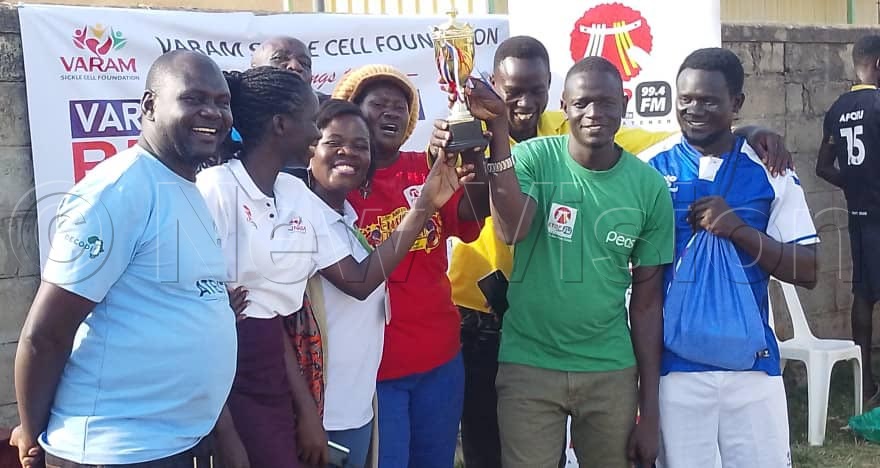
Executive Director VARAM sickle cell Vicky Irebu (2nd left) celebrating the trophy with Etop radio staff. (Credit: Juliet Akello)
Vicky Irebu, the Executive Director of VARAM Sickle Cell Foundation, said the organisation is committed to fighting sickle cell disease through awareness, medical support and community empowerment.
Irebu said the foundation was established in Soroti because of what she described as a desperate need for specialised care and increased awareness about sickle cell disease.
She urged members of the public to test and know their sickle cell status.
She said increased awareness would help communities understand sickle cell disease and encourage affected people and their families to seek appropriate care.
Martha Apeduno, a mother of a child living with sickle cell disease, urged parents to show love and support to children affected by the condition.
She called for greater understanding of children living with the disease and support for families caring for affected children.\
Their experiences highlighted the impact of sickle cell disease on patients and families and the importance of reducing stigma around the condition.
Etop Radio pledges continued support
Stella Akia, the Head of Promotions at Etop Radio, said the station remains committed to working with communities to address challenges affecting residents.
She said Etop Radio would continue supporting initiatives aimed at raising awareness of issues of public interest.
The partnership between Etop Radio and VARAM Sickle Cell Foundation brought health advocacy and community mobilisation together, using the run, screening and other activities to encourage residents to take an active role in the fight against sickle cell disease.
Etop beats Eastern Tweeps
The day's activities also included a friendly football match between Etop Radio and Eastern Tweeps.
Etop Radio emerged victorious, defeating Eastern Tweeps 4–2.
The match provided an opportunity for further community engagement and added a sporting element to the sickle cell awareness campaign.
Despite the sporting activities, organisers said the main focus remained on increasing awareness, encouraging early testing and mobilising support for better sickle cell services.
With 131 people screened during the campaign, health advocates say the next step is to ensure that more people, particularly children, have access to early testing, accurate diagnosis and appropriate care.
For families and health workers, the message from the campaign was clear: knowing one's sickle cell status early can make a difference in managing the condition and preventing avoidable complications.