
Private sector urged on HIV&AIDS prevention interventions
With the new HIV infection rate standing at 37,000, it simply means that a total of 711 people get infected every week and about five people every hour in Uganda, according to the 2025 national HIV estimates.
Private sector members and Uganda AIDS Commission officials pose for a photo with lite candles (Credit: Agnes Kyotalengerire)
__________________
Private sector entities in Uganda have been asked to incorporate HIV&AIDS prevention interventions into their programmes as a strategy of the ambitious target to end AIDS by 2030.
Dr Vincent Bagambe, the director of planning and strategic information at the Uganda AIDS Commission (UAC), described the private sector as a strong arm in the fight against HIV because they have the resources.
He said since donors are pulling out funding, the private sector will be filling the gap through the revenue collected, adding that in many countries, including the developed ones, the private sector is the key driver of the economy.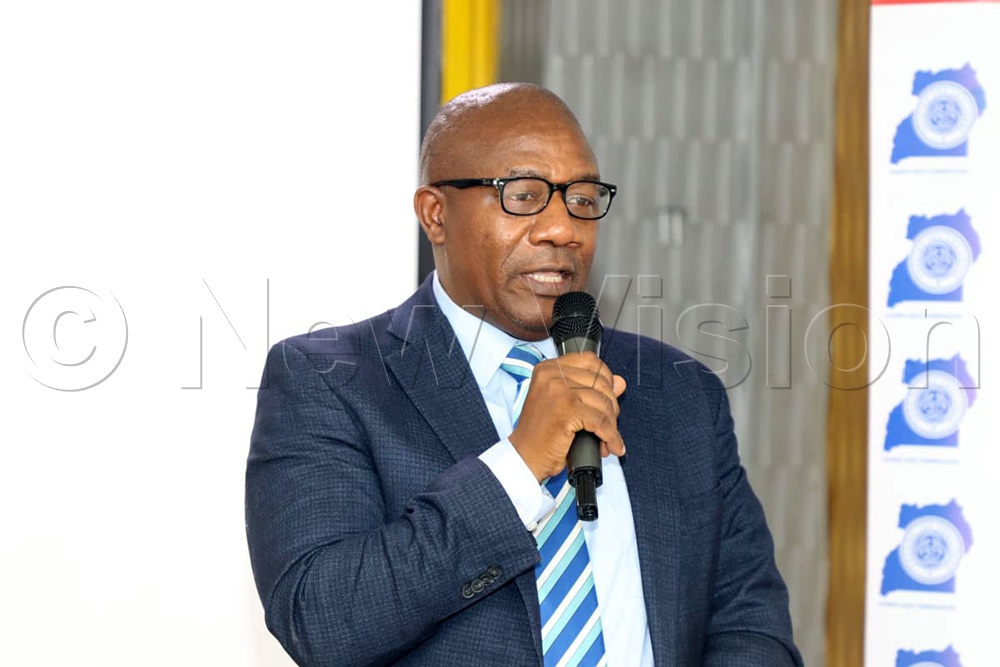
Dr Vincent Bagambe, the Director of Planning and Strategic Information at the Uganda AIDS Commission (UAC), addressing private sector members at Hotel Africana. (Credit: Agnes Kyotalengerire)
Notably, the sector also drives innovation and new technologies, and Uganda has been able to fight the pandemic because of the evolving technology.
This was on Tuesday (May 5) when UAC officials met corporate companies to introduce them to the new guidelines of mainstreaming HIV&AIDS in their activities, as part of the strategy to end AIDS by 2030.
The meeting that took place at Hotel Africana attracted private sector members from the Uganda Fisheries and Exporters Association, the Tea and Sugar Manufacturing Association, the Uganda Small Scale Industries Association (USSIA), construction services, the Federation of Performing Artists, horticulture, banking, hotels, and the health sector.
The participants also lit candles as part of the gear-up activity of the International Candlelight Memorial Day scheduled for May 19.
Need to harmonise
The UAC's coordinator of the private sector, Hope Murungi, said the agency is willing to work with the private entities to mainstream HIV&AIDS interventions in their already existing structures.
The one challenge is that they are scattered.
"We cannot do much if we do not consolidate, yet we would like to see the private sector take on the mantle of fighting HIV,” she said.
Mainstreaming is a process that enables management of sectors and institutions to address the causes and effects of HIV&AIDS in an effective and sustainable manner, both through their usual work and within their workplace.
The UAC’s director of partnerships, Tom Etti, said there is a need to harmonise, considering that private sector entities offer services on behalf of the government.
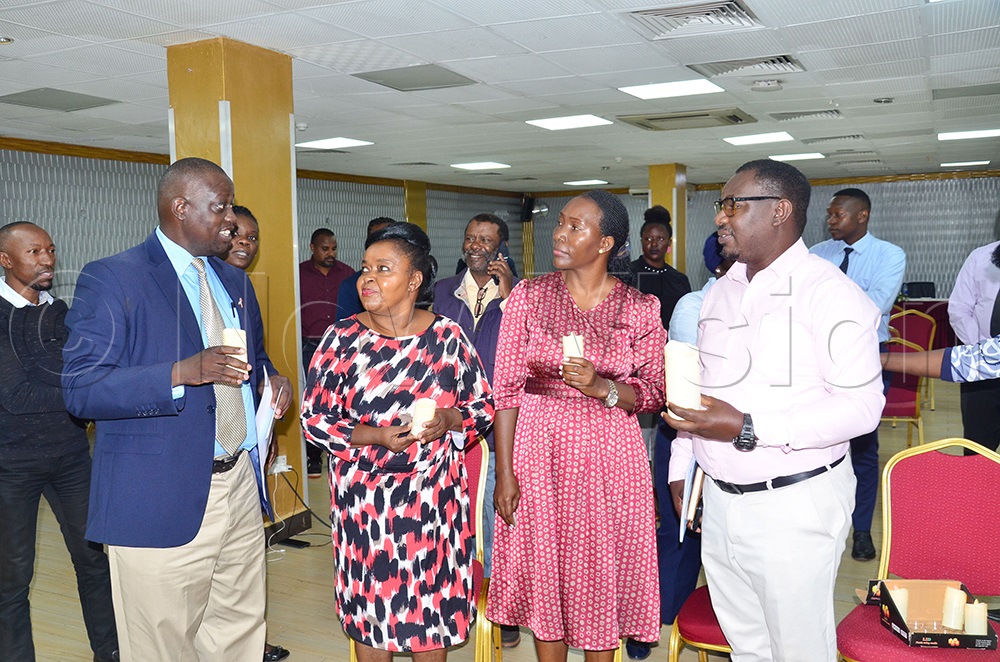
The director of partnerships at UAC, Tom Etti, interacting with renowned artist Joanita Kawalya Stella Namaganda from DOH and William Tibyasa from the Uganda Fish Processors and Exporters Association. (Credit: Agnes Kyotalengerire)
Stella Namaganda, the HIV&AIDS and gender coordinator at Dott Services Ltd (road construction company), said the partnership with UAC will enable them to get information, education, and communication materials about HIV&AIDS that they can distribute during their outreach activities.
She said the agency is already mainstreaming HIV activities in their structures by partnering with other organisations to conduct community outreaches to offer HIV counselling and testing services and educate the communities on how to safeguard themselves from HIV.
William Tibyasa, the chief executive officer of the Uganda Fish Processors and Exporters Association, said the engagement is timely considering that HIV prevalence among the fishing communities stands at 24 percent.
He said that to achieve the target of ending AIDS by 2030, there is a need to have sector-specific interventions because the needs for each entity differ.
In regard to that, he said they have dispensers at factories. The users are available, but there are no condoms.
Prudence Asoloba, the projects manager of C-Care Uganda (a health care service provider), said there are a number of issues that limit the agency from embracing the HIV response.
She said they are willing to distribute condoms in all their outlets across the country, but accessing the commodities from Joint Medical Stores is a hurdle.
"This pushes us to buy condoms, which in the end comes with huge taxes, and there isn't much we can do."
Asobola called for government systems that favour the private sector to enable the entities to implement the HIV&AIDS prevention interventions.
HIV stats
With the new HIV infection rate standing at 37,000, it simply means that a total of 711 people get infected every week and about five people every hour in Uganda, according to the 2025 national HIV estimates.
Last year alone, the country recorded a total of 20,000 HIV-related deaths, with a total of 54 people dying daily.
Notably, 1.5 million people are living with HIV in Uganda, and of those, only 1.3 million are on treatment.