
Police vows to enforce mandatory National Cleaning Day
During the three-hour period, movement of people and vehicles will be prohibited except for emergency services and other categories exempted by the government.
Prime Minister Robinah Nabbanja said the initiative was approved by Cabinet on July 11, 2025, following months of consultations on how to institutionalise a nationwide sanitation programme. (Credit: Richard Sanya)
____________________
As the Ugandan government declared the last Saturday of every month a mandatory National Cleaning Day, police have vowed to strictly enforce the new government exercise, saying force will be used where necessary against those who defy.
The inaugural National Cleaning Day will be held on Saturday, July 25, 2026, in Kampala's Kisenyi suburb, with all Ugandans expected to participate in a nationwide clean-up exercise from 7:00am to 10:00am.
During the three-hour period, movement of people and vehicles will be prohibited except for emergency services and other categories exempted by the government.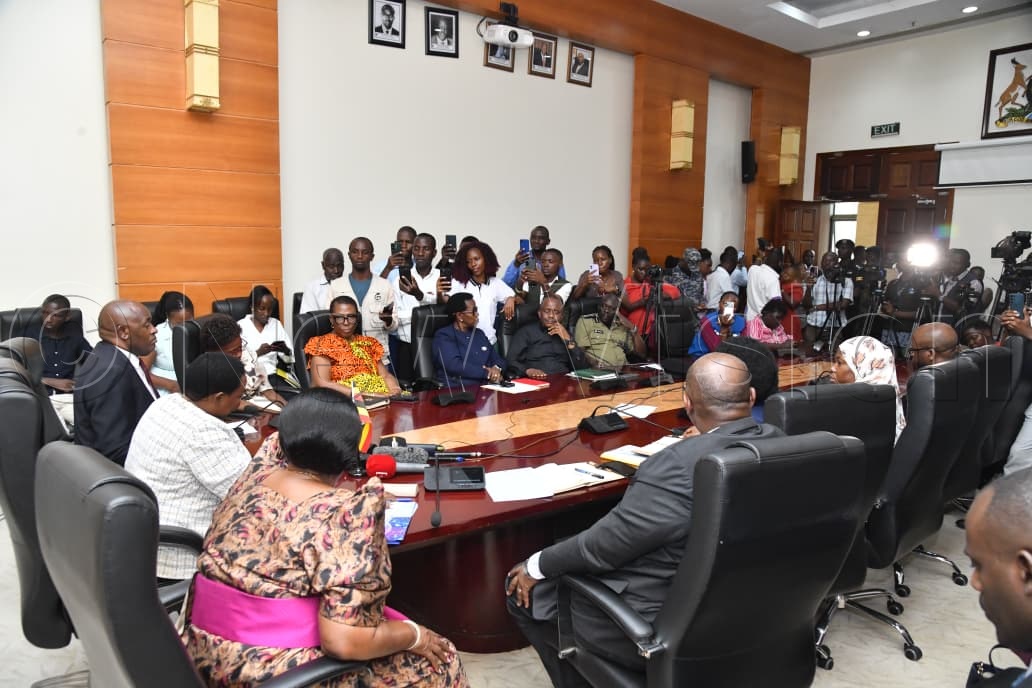
An overview of the meeting during the launch at the Office of the Prime Minister on Thursday, July 23, 2026. (Credit: Richard Sanya)
The deputy Inspector General of Police James Ocaya said security agencies have been instructed to ensure full compliance with the directive.
"We expect every citizen to comply with the Government's directive. Force shall be used where need be against those who deliberately frustrate the exercise or disregard lawful instructions from security personnel," Ocaya said.
Ocaya clarified that ambulances, security vehicles, fire and rescue services and other essential emergency services authorised by the government will continue to operate during the restricted hours.
The police commitment comes after the Government declared the last Saturday of every month a mandatory National Cleaning Day aimed at improving sanitation, preventing disease outbreaks and promoting environmental cleanliness.
While launching the day at the Office of the Prime Minister on Thursday, July 23, 2026, Prime Minister Robinah Nabbanja said the initiative was approved by Cabinet on July 11, 2025, following months of consultations on how to institutionalise a nationwide sanitation programme.
"For three hours, let Uganda stop and clean," Nabbanja said, adding; "This is an order, not a voluntary exercise. Every Ugandan has a role to play in ensuring that our homes, markets, schools, workplaces and public spaces remain clean."
The Prime Minister said the programme is part of the Government's broader strategy to reduce preventable diseases, noting that many illnesses affecting Ugandans are directly linked to poor sanitation.
"About 75 percent of the diseases affecting Ugandans are preventable. Many of these illnesses are linked to poor sanitation, poor waste management and unhygienic environments. If we clean our surroundings consistently, we shall save lives and reduce the pressure on our health facilities," she said.
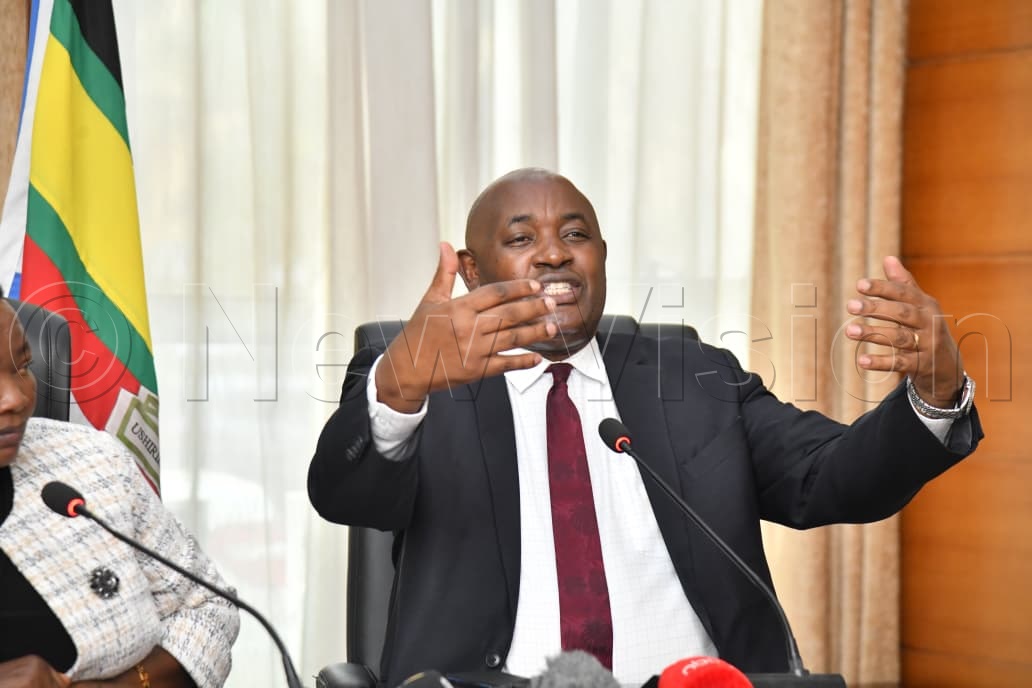
Health Minister Dr Chris Baryomunsi hails the programme as a key preventive public health intervention for Uganda. (Credit: Richard Sanya)
Health Minister Dr Chris Baryomunsi described the programme as one of the country's most important preventive public health interventions.
"The importance of this initiative cannot be overstated. A clean environment is the first line of defence against diseases. When communities regularly clean drainage channels, dispose of waste properly and maintain good sanitation, we reduce outbreaks, lower healthcare costs and improve the quality of life for our people. Prevention is always better and cheaper than cure," Baryomunsi said.
He added that diseases such as cholera, typhoid, and dysentery continue to affect many Ugandan communities due to poor waste disposal and blocked drainage systems. Cleaner neighbourhoods, he said, would also help eliminate mosquito breeding sites and strengthen efforts to fight malaria.
During the official launch of the programme in Kisenyi, one of Kampala's most densely populated suburbs, government leaders, security agencies and residents will participate in the first National Cleaning Day.
The Government said the monthly exercise is intended to cultivate a culture of cleanliness and civic responsibility similar to successful community sanitation programmes in other East African countries.
Officials believe sustained community participation will improve public health, reduce environmental pollution and ease the burden of preventable diseases on Uganda's healthcare system.