
Mulago hits 19 kidney transplants, four more scheduled
Bagasha said about 40 of the 50 specialists involved in the latest camp were Ugandan, with only 10 being foreign specialists.
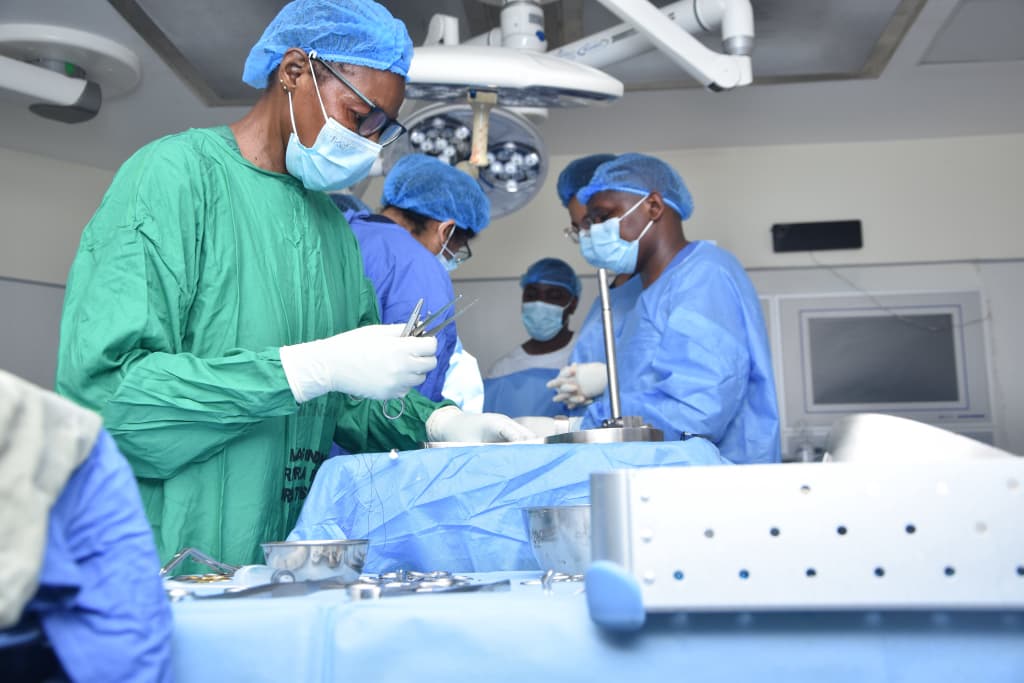
Mulago currently performs kidney transplants through periodic camps, but the long-term plan is to move to routine transplantation. (Courtesy photos)
________________
A total of 19 Ugandans have now benefited from the free government kidney transplant program at Mulago National Referral Hospital, following the successful surgeries of four more patients this week.
The hospital resumes the program after a seven-month pause.
The four recent patients (all Ugandans) received kidney transplants during the hospital's sixth kidney transplant camp, which started on September 7th.
Under the programme, which began in December 2023, the hospital plans to perform another four transplants in November as it works towards making kidney transplantation a regular service and eventually carrying out one transplant every week.
Transplant process
Dr Peace Bagasha, a kidney specialist and member of Mulago's transplant team said both donors and recipients undergo extensive medical assessments before they are cleared for surgery.
The examinations involve specialists in nephrology, transplant surgery, urology, anaesthesia and cardiology, among others.
“We do not accept people to buy kidneys, so the first tick on the list should be availability of a family donor,” Bagasha said.
The hospital currently has about 15 patients on its waiting list for the November camp, although more patients are assessed and prepared than can ultimately undergo surgery.
Bagasha said the team normally prepares about eight patients for four available slots so that a replacement is available if one patient becomes medically unsuitable or withdraws before surgery.
Mulago's transplant programme started with support from visiting specialists who worked alongside Ugandan health workers.
The number of foreign specialists involved has since reduced as Ugandan doctors, nurses and other health workers gain experience through the program.
Bagasha said about 40 of the 50 specialists involved in the latest camp were Ugandan, with only 10 being foreign specialists.
She expects the number of foreign specialists to reduce further during the November camp.
From transplant camps to weekly surgery
Mulago currently performs kidney transplants through periodic camps, but the long-term plan is to move to routine transplantation.
Bagasha said the immediate target is to hold at least one camp every quarter, treating about four to five patients during each camp, before eventually moving to weekly transplants.
In July 2025, Mulago performed four kidney transplants, including one involving a 16-year-old recipient who received a kidney from a 24-year-old sibling.
Surgery free, medicines costly
Although the transplant operation at Mulago is provided free of charge, patients still face substantial costs after surgery, particularly for anti-rejection medicines.
Bagasha said major post-transplant medicines can cost about Sh2 million, requiring patients to demonstrate that they can sustain treatment for several years.
“The operation is free of charge, but we have to make sure families can maintain the post-transplant treatment drugs required after receiving a new kidney,” she said.
The cost of treatment is particularly challenging for patients who have spent years on dialysis before becoming eligible for transplantation.
Bagasha said dialysis costs about Sh150,000 per session in government hospitals, while private facilities can charge between Sh350,000 and Sh450,000 per session.
Most patients require three dialysis sessions a week.
The resumption of transplantation comes as Mulago continues to see patients with chronic kidney disease, including younger people.
Bagasha said hypertension was increasingly being seen among young patients with kidney failure.
She said the hospital's growing transplant capacity could eventually reduce the burden on patients who otherwise depend on lifelong dialysis.