
Leaders call for stronger support for teenage mothers facing stigma
One of the teenage mothers from Buikwe district, whose identity has been withheld to protect her privacy, said she became pregnant at the age of 15 after what she described as a traumatic experience while working away from home.
Peter Ssenkumba, Church Of Uganda (secretariat), speaking at the event on Monday, June 15, 2026. (Credit: Rhyman Agaba)
________________
District officials, religious leaders, government representatives and civil society actors have called for stronger support systems for teenage mothers, arguing that stigma, exclusion and weak community responses continue to undermine efforts to address teenage pregnancy in Uganda.
The leaders made the remarks on Monday (June 15) at Protea Hotel in Kampala during the launch of Twisted Adolescence, a documentary that explores the lived experiences of adolescent girls facing pregnancy and early motherhood.
The documentary premiered at Protea Hotel in Kampala and was produced by the Initiative for Social and Economic Rights (ISER).
Speaking at the event, Kizito Musasizi, the Buikwe district education officer, said communities and families need to play a more active role in supporting teenage mothers, many of whom face rejection after becoming pregnant.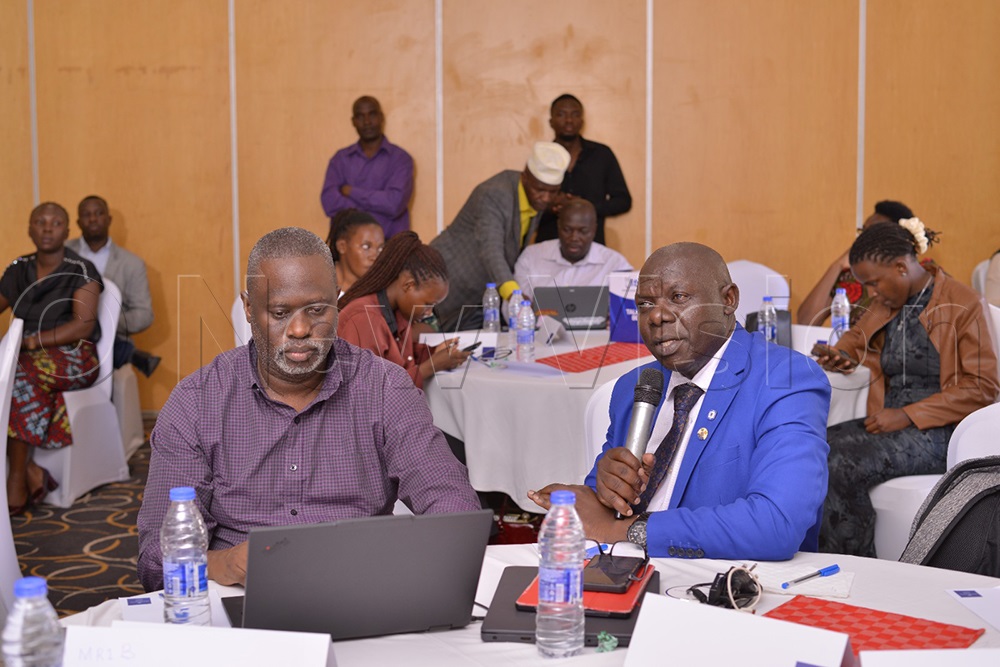
Kizito Musasizi, the Buikwe District Education Officer (right), speaking during the launch at Protea Hotel Kampala. (Credit: Rhyman Agaba)
“I am touched by the teenage mothers’ experiences. It hurts me that parents seem very distant from those experiences, yet their support would be very helpful,” Musasizi said.
Musasizi's remarks followed emotional testimonies from teenage mothers who narrated experiences of poverty, abuse, school dropout and social exclusion.
One of the teenage mothers from Buikwe district, whose identity has been withheld to protect her privacy, said she became pregnant at the age of 15 after what she described as a traumatic experience while working away from home.
She said that after becoming pregnant, she faced abandonment from relatives and continued stigma from members of the community and violence from her own in-laws.
The documentary highlights how such experiences often affect girls' education, mental well-being and future opportunities.
Religious leaders respond to concerns
Representing the Uganda Muslim Supreme Council (UMSC), Al-Hajji Mahmood Kateregga, chairman of the education committee at UMSC and national programmes coordinator for UNICEF-supported initiatives at the institution, said religious leaders remain committed to discouraging teenage pregnancy while promoting responsible behaviour among young people.
He urged faith leaders to continue educating communities about the consequences of teenage pregnancy and to support affected children and families.
“We should work together with communities and government to reduce teenage pregnancies while ensuring affected children receive care, education and support,” he added.
Kateregga's remarks came in response to concerns raised during the discussion that some teenage parents feel excluded from places of worship after becoming pregnant.
Church of Uganda, represented by Peter Ssenkumba, a cleric who sits at the institution’s secretariat, said the impact of poverty in communities is making girls vulnerable, exposing them to men and boys around them because they cannot afford certain essentials like menstrual pads.
“So, when there is an inferiority complex, and someone promises to cater to them, they can’t resist. We need to work toward economic empowerment, at least for the basics, so that the girls are able to say no to some of the pressures,” Ssenkumba explained.
Kateregga also revealed that UMSC has integrated sex education in its schools, noting that despite existing interventions, challenges persist. He said the health ministry has several policies, but communities are not adequately informed because information delivery is weak.
Govt raises concern over stigma
Patience Namanya, senior youth officer at the Ministry of Gender, Labour and Social Development, called on faith-based institutions and communities to adopt more inclusive approaches towards teenage mothers and their children.
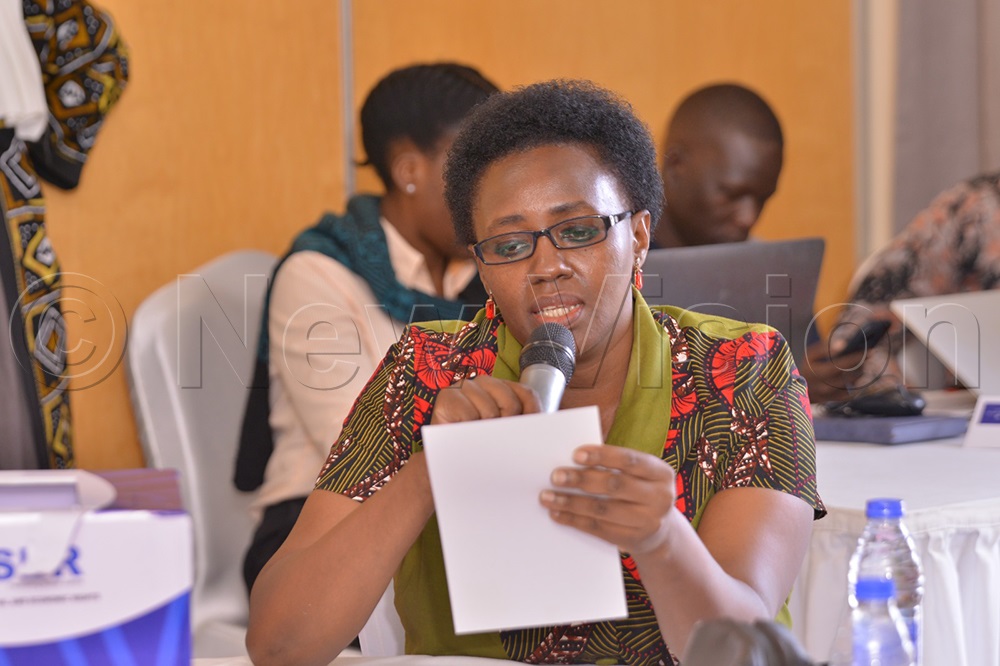
Patience Namanya, Gender Ministry official from the Youth & Children Affairs department. (Credit: Rhyman Agaba)
She argued that stigma often extends beyond young mothers to their newborn children.
“Some churches do not baptise those babies and do not dedicate them. How subtle is that?” Namanya said.
She urged religious institutions and communities to ensure that vulnerable girls and young mothers are not isolated.
Civil society calls for stronger support systems
“The parents of the girl or boy can even be removed from leadership positions. We acknowledge that there is a need for faith-based institutions to look into this because it is one of the most subtle forms of victimisation,” Bwiite said.
She noted that fear of judgment often discourages teenage mothers from participating in religious and community activities.
Rose Wakikona, deputy executive director of the Women’s Pro Bono Initiative, said the documentary sought to assess how existing systems respond to girls who become pregnant.
“A lot of effort has been invested in preventing teenage pregnancies, but we know that many girls still fall through the cracks and become pregnant. We want to understand how our systems support those who become pregnant,” Wakikona said.
She stressed the need for stronger school re-entry programmes, community support structures and efforts to address stigma.
“We need an integrated approach. No single institution can solve the challenge of teenage pregnancy on its own,” she added.
Documentary highlights gaps
According to Labilah Sumaya Musoke, programme officer at ISER, the documentary took five months to produce and was completed in 2025.
She said it highlights challenges that often go unnoticed, including poverty, abuse, stigma and weak support systems for adolescent mothers.
“What we want is for all stakeholders, faith leaders, government ministries, schools and communities to pay attention to issues that rarely make headlines,” Musoke said.
She called for greater accountability for perpetrators of abuse and more compassion for girls who become pregnant at a young age.
“Let these girls not be portrayed as immoral people. Let them be seen as human beings deserving protection, dignity and compassion,” she said.
The documentary concludes that while prevention of teenage pregnancy remains important, communities, schools, religious institutions and government agencies must also strengthen support systems for girls who become pregnant to help them rebuild their lives.