
How solar power is transforming maternal care at rural Acet HCIII in Omoro
Acet Health Centre III received a 12-kilowatt peak centralised solar system capable of powering vaccine refrigerators, the laboratory, maternity and delivery wards, operating theatre equipment, computers and staff quarters.
Justin Ojok, the senior clinical officer in charge of the facility, said frequent power outages had previously disrupted services when the centre relied on the national grid through results-based financing. (Photos by Christopher Nyeko)
________________
Acet Health Centre III in Acet town council, Omoro district, is recording a steady rise in safe deliveries following the installation of a solar-powered electrification system that has strengthened maternal and immunisation services.
The solar system was installed in November 2025 under Uganda’s Health Facility Solar Electrification Project, launched in July 2025 to equip 250 selected health facilities with reliable solar energy.
The initiative is supported by Gavi, the Vaccine Alliance, in partnership with UNICEF. Uganda joins Ethiopia, Pakistan and Zambia in piloting clean energy solutions aimed at strengthening healthcare delivery.
Reliable power for critical services
Acet Health Centre III received a 12-kilowatt peak centralised solar system capable of powering vaccine refrigerators, the laboratory, maternity and delivery wards, operating theatre equipment, computers and staff quarters.
The facility serves a catchment population of 1,440 people and was upgraded from Health Centre II to Health Centre III in 2020.
Although a new multifunctional block was constructed to accommodate maternity, antenatal, postnatal, emergency and general wards, unreliable electricity had previously discouraged women from delivering at the facility.
That trend is now changing.
Mothers choosing local care
“Before, I would travel to Lalogi Health Centre IV because there was no reliable power here,” she said.
Health worker standing next to the solar panel installed at the facility compound.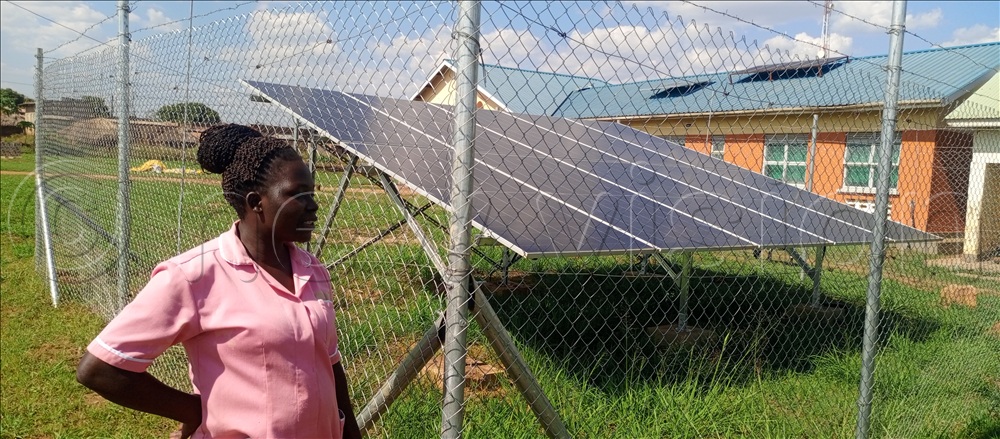
Apiyo previously spent sh10,000 on boda boda transport for the roughly 20-kilometre journey to Lalogi Health Centre IV. On the day of her delivery, she arrived at 11:00am and gave birth at 4:00pm.
She said the well-lit labour and postnatal wards gave her peace of mind, especially at night, and she now encourages other women to seek services at Acet.
Improved diagnostics and immunisation
Justin Ojok, the senior clinical officer in charge of the facility, said frequent power outages had previously disrupted services when the centre relied on the national grid through results-based financing.
“Sometimes our power units would run out when we had no funds to reload immediately. This disrupted services because most of our equipment relies on electricity,” Ojok explained.
With the solar installation, laboratory services have improved significantly. The microscope now operates consistently, enabling faster diagnostic results.
A major relief for health workers
Midwife Sarah Akot Auma described the solar system as life-changing.
“Before, we used our phones as torches during night deliveries. One hand to assist the mother, one hand to hold the light,” she recalled.
“If the battery ran out, we were left in darkness.”
Security lighting now allows mothers to access the facility safely at night.
Key equipment, including sterilisation units, a powered blood pressure machine and an oxygen concentrator, is now fully functional. The equipment enables early detection of complications and supports newborns with breathing difficulties before referral.
Rising deliveries
Facility records show that 62 women delivered at Acet Health Centre III between December 2025 and January 2026, marking a significant increase in service utilisation.
Health workers have been trained to maintain the solar system through regular panel cleaning and prompt fault reporting to ensure sustainability. Ojok has appealed for similar installations across Omoro District to increase institutional deliveries and improve maternal outcomes.
Health staff say reliable electricity has restored community confidence in the facility and is steadily improving maternal and neonatal health indicators.