
Health ministry launches SupraHub to transform digital training for health workers
Health services director general Dr Charles Olaro, who represented the ministry’s top leadership, said the SupraHub marks a turning point in Uganda’s ambition to build a competent, well-supported and digitally empowered health workforce.
Dr Charles Olaro, Director General of Health Services said the SupraHub marks a turning point in Uganda’s ambition to build a competent health sector that leads in Africa. (Photo by John Musenze)
_________________
The health ministry has called for continuous training and upskilling of health workers following the launch of a national tele-mentoring platform, which is designed to overhaul how clinicians access real-time guidance, digital learning and continuing professional development (CPD).
The new digital innovation named SupraHub was launched on December 3, 2025, at the ministry headquarters, where health stakeholders noted that this major milestone will ensure that every health worker in all government health facilities can learn, consult specialists and refresh critical skills without leaving their duty stations.
Health services director general Dr Charles Olaro, who represented the ministry’s top leadership, said the SupraHub marks a turning point in Uganda’s ambition to build a competent, well-supported and digitally empowered health workforce.
“This is not just another programme; it is an engine of innovation. It will power Uganda’s efforts to integrate HIV and TB care into primary health services, strengthen clinical skills and advance universal health coverage,” Olaro said.
He added that the SupraHub is anchored within the ministry’s human resources development department and implemented in partnership with the Mbale Training Hub. The system enables national and regional specialists to mentor clinicians across the country through virtual case discussions, digital classrooms and weekly tele-mentoring sessions.
To demonstrate the platform’s early reach, he revealed that over 5,000 health workers have already participated in national tele-mentoring sessions since October. In addition, over 425 health facilities have been equipped with tele-mentoring technology, enabling rural and hard-to-reach areas to connect with national experts.
At the national level, six specialist hubs, including the AIDS Control Programme, Makerere University School of Public Health, and Butabika National Mental Hospital, are now connected with 17 regional referral hospital hubs that are active and supporting structured learning.
Olaro said even in facilities where equipment is still being installed, health workers are joining sessions using personal laptops and mobile phones, reflecting a strong appetite for digital learning.
Building capacity
Ministry commissioner of human resource development, Dr Alfred Driwale, said the SupraHub represents a major investment in building health worker capacity for disease prevention, surveillance and outbreak response.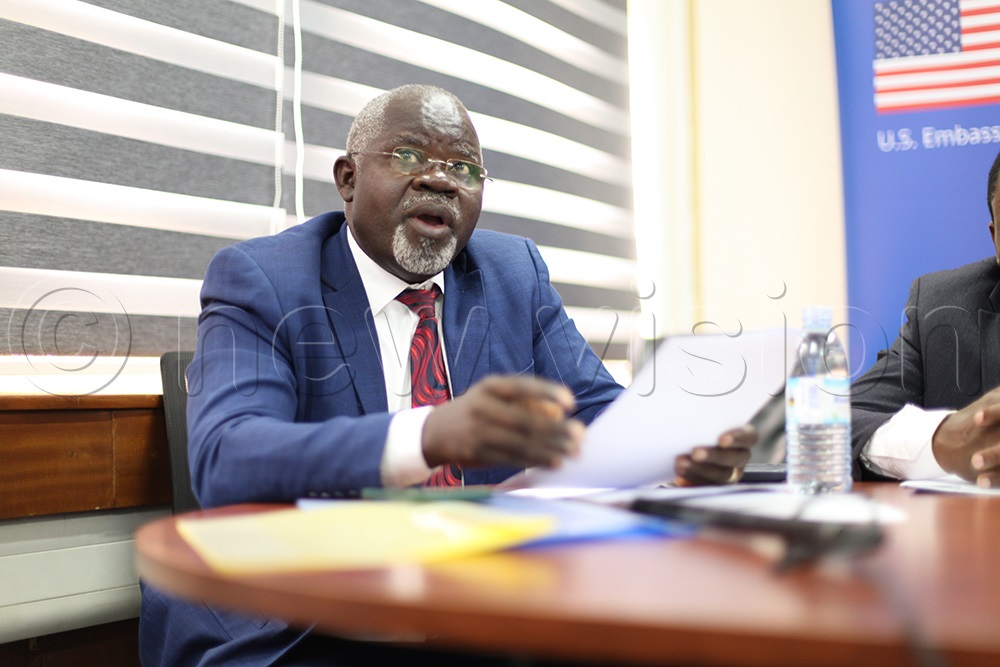
Dr Alfred Driwale, the commissioner Human Resource Development at the health ministry said SupraHub represents a major investment in building health worker capacity for disease prevention, surveillance and outbreak response. (Photo by John Musenze)
“This hub comes at a time when frontline health workers require fast, reliable and high-quality mentorship. Whether the topic is immunisation, HIV, TB or maternal health, we need a health workforce that learns continuously, adapts quickly and applies new knowledge with confidence,” he added.
Driwale, whose department will manage the SupraHub, said the initiative responds directly to three pressures faced by health workers, including the natural decay of knowledge, rapidly evolving technologies, and continuous scientific discoveries.
“Knowledge acquired decays after five years. Technologies for health service delivery keep changing. If a health worker does not constantly update their skills, they will be left behind,” he said.
Reducing training inequalities
Driwale added that Continuing Professional Development (CPD) will increasingly become mandatory as the ministry strengthens regulatory enforcement, where all practising health workers are required to renew their licences with professional councils, and the SupraHub will make it easier to provide, track, and regulate CPD.
“If you are in the private sector and practising without a licence, you know you are doing the wrong thing. This platform now gives the private sector a cheaper, more effective opportunity to participate. Now we are building a system that makes learning accessible and affordable, so compliance will improve, so for one to renew their license, we will have to look at whether they have done CPD,” Driwale said.
He noted that the platform will help reduce training inequalities that have historically disadvantaged rural districts. Health workers previously relied on in-person workshops that were expensive and irregular, often leaving many facilities without regular supervision. The SupraHub, he said, eliminates those barriers.
“With the SupraHub, learning no longer depends on where you work or how remote your facility is. A nurse in Kaabong can now discuss a case with a national expert in real time. That is transformational,” Dr Driwale heighted.
Alignment with global strategies
U.S. Ambassador to Uganda William Popp, who are the key partners in this innovation, praised the ministry for adopting a digital-first approach to strengthening health systems. He said the SupraHub aligns with global strategies that emphasise continuous learning, collaborative care and strong digital infrastructure.
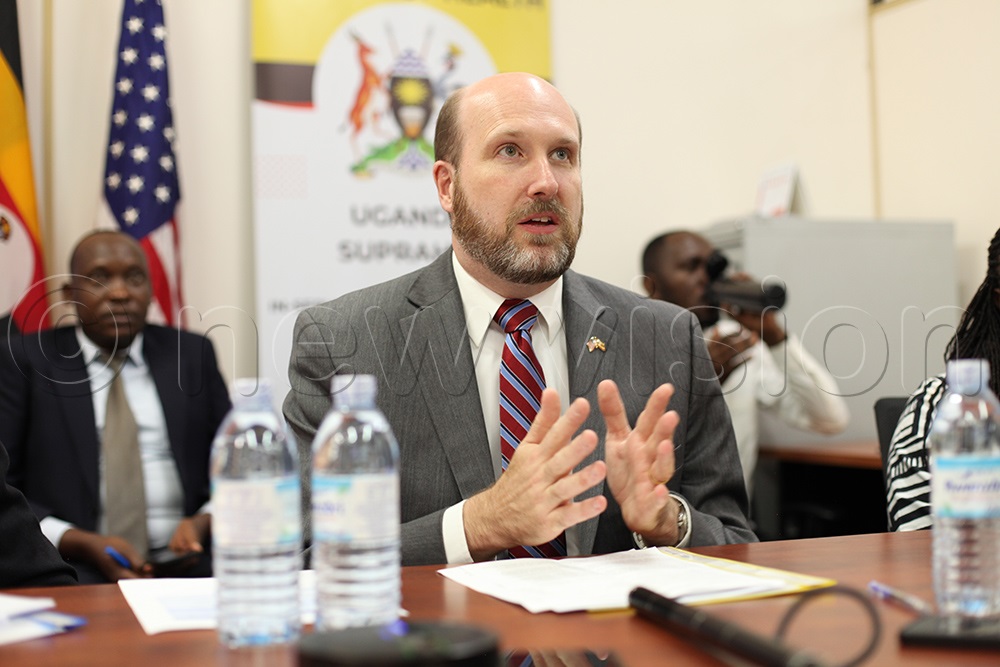
US Ambassador to Uganda, H.E. William Popp making his remarks during the launch of Uganda Suprahub. (Photo by John Musenze)
“This platform brings specialists, mentors and frontline workers into a single learning space. It means better care, faster problem-solving, and a stronger health system, one that can respond effectively to HIV, TB and emerging threats. The United States is proud to support innovations that place patients and health workers at the centre.” Ambassador Popp said.
He added that digital mentorship models have proven effective in improving clinical outcomes, particularly in resource-limited settings where specialist access is uneven.
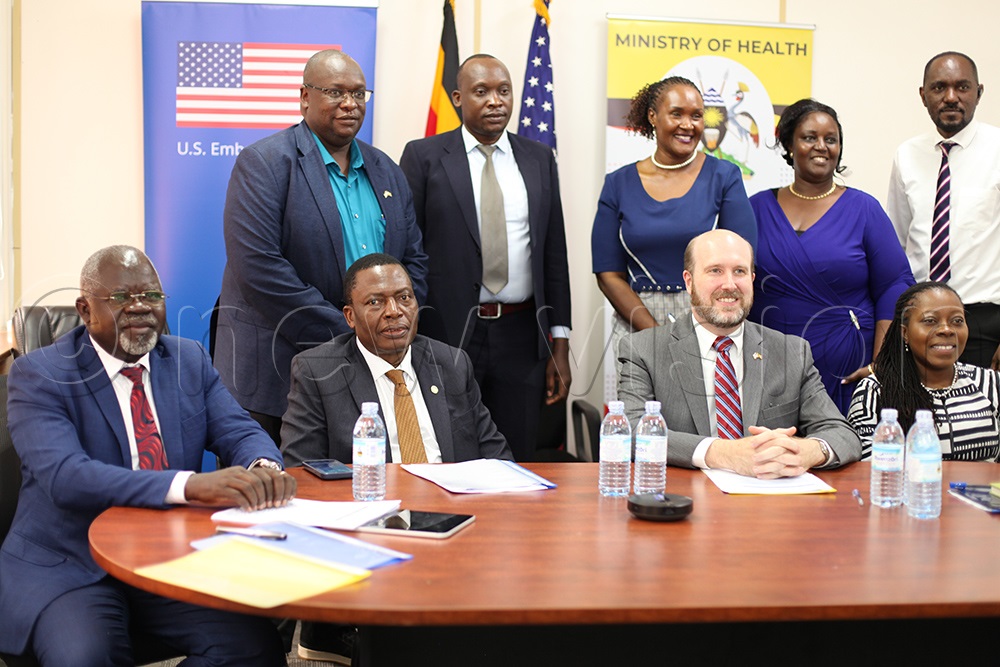
Ministry of Health officials together with other health stakeholders pose for a group photo with US Ambassador William Popp after the launch. (Photo by John Musenze)
Health workers from regional hospitals who participated in the demonstration session said the platform is already bridging the mentorship gap. Ministry officials said the next phase will include specialised modules for emerging diseases, multilingual content, and accredited learning pathways through which health workers can directly earn CPD points.