
Govt targets lower health facilities in sickle cell treatment expansion
The development follows the commissioning of the hydroxyurea manufacturing facility by Quality Chemical Industries Limited (QCIL) in Luzira, Kampala, where the company also unveiled Sikurea, a locally produced hydroxyurea medicine used in the treatment of sickle cell disease.
Ajay Kumar Pal explains the drug as Emmanuel Katongole, Co-founder and Chairman of Quality Chemical Industries Limited, and Diana Atwine, Permanent Secretary at the Ministry of Health, listen. (Photo by Richard Sanya)
___________________
The Ministry of Health has announced plans to expand sickle cell treatment services to lower health facilities across Uganda following the launch of the country’s first locally manufactured hydroxyurea plant, which is expected to reduce drug shortages, lower treatment costs and improve access to life-saving care for thousands of patients.
The development follows the commissioning of the hydroxyurea manufacturing facility by Quality Chemical Industries Limited (QCIL) in Luzira, Kampala, where the company also unveiled Sikurea, a locally produced hydroxyurea medicine used in the treatment of sickle cell disease.
Diana Atwine, Permanent Secretary at the Ministry of Health, cuts the tape as Emmanuel Katongole, Co-founder and Chairman of Quality Chemical Industries Limited, and ceo Ajay Kumar Pal in the back looks on during the launch of the Sikurea Hydroxyurea factory and 500mg capsules for the treatment of sickle cell anemia at QCIL on May 20, 2026. (Photo by Richard Sanya)
Launching the facility on May 20, 2026, Ministry of Health permanent secretary Dr Diana Atwine said local production would help Uganda take control of its medicine supply chain, including the life-saving hydroxyurea, while allowing the government to decentralise sickle cell treatment beyond major referral hospitals.
“We will not have stock-outs, we will not have delayed shipments, and we will not have foreign exchange shortfalls. We are now in charge of the supply chain of our country,” Atwine said.
She said the government plans to progressively distribute hydroxyurea through regional referral hospitals, Health Centre IVs and eventually lower health facilities, including Health Centre IIIs and IIs, to reduce the long distances families travel to seek treatment, unlike the current situation where drugs and care can only be accessed at general hospitals and referral facilities.
“We want to go up to the lower facilities. We want to train and mentor more health workers and even community health extension workers because we can do these basic tests,” Atwine added.
For years, sickle cell patients in Uganda have largely depended on imported hydroxyurea, a medicine clinically proven to reduce painful crises, lower hospital admissions, minimise blood transfusions and improve survival among children and adults living with the disease.
However, inconsistent supplies and high costs have left many families struggling to maintain treatment.
The challenge became more severe during and after the COVID-19 pandemic when global supply chain disruptions delayed shipments of specialised medicines across Africa, exposing Uganda’s dependence on imported pharmaceuticals.
According to the Ministry of Health, Uganda has spent billions of shillings over the years importing specialised medicines, with health experts arguing that local manufacturing could significantly reduce treatment costs while strengthening medicine security.
At Mulago National Referral Hospital’s sickle cell clinic alone, doctors review nearly 500 patients every week, most of them children whose families struggle to maintain consistent treatment because of high costs and unreliable supplies.
Dr Deogratias Munube, a haematologist, said interruptions in treatment often push patients back into severe crises, creating repeated emergency admissions and prolonged hospital stays.
“Wider access to hydroxyurea will reduce complications before they escalate and lower the demand for emergency blood transfusions,” Munube said.
Uganda records approximately 20,000 babies born with sickle cell disease every year, placing the country among those carrying the world’s highest burden. More than 36 percent of Ugandans are estimated to carry the sickle cell trait.
Atwine said the disease continues to place enormous pressure on paediatric wards across the country, with some hospitals recording more than half of admissions involving sickle cell patients.
“Whenever I visit paediatric wards, over 50% of those admissions are sickle cell warriors, with 20% of child mortality caused by sickle cell,” she said.
She recalled visiting Kayunga Hospital and finding an entire children’s ward filled with sickle cell patients, some of whom had travelled from distant districts, including Nakasongola.
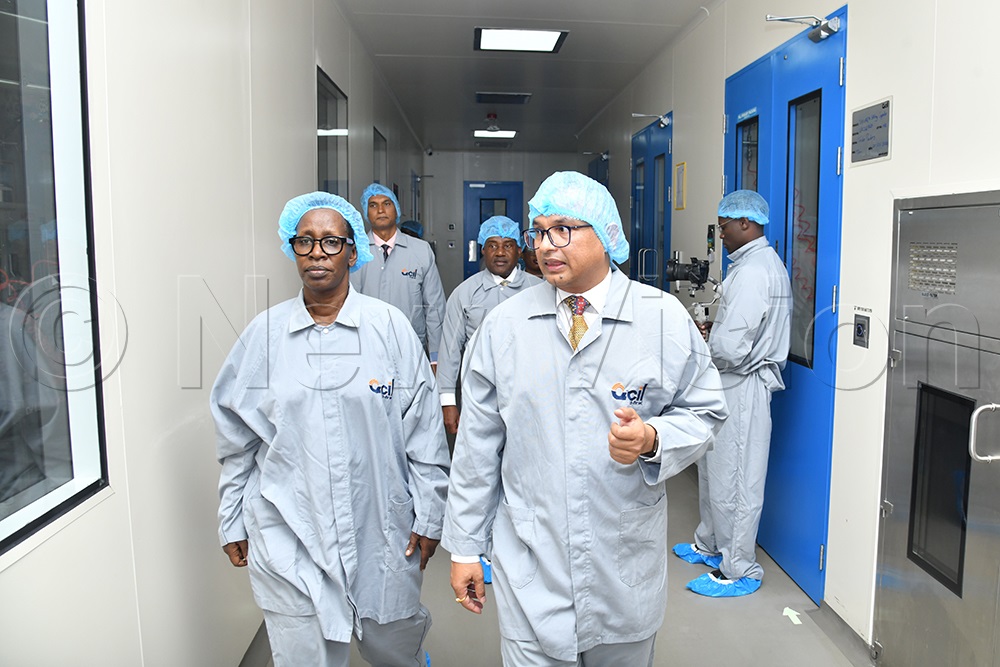
Ajay Kumar Pal, CEO of Quality Chemical Industries Limited, takes Diana Atwine, Permanent Secretary at the Ministry of Health, on a guided tour of the new facility. (Photo by Richard Sanya)
Speaking during the launch, QCIL chief executive officer Ajay Kumar Pal described the hydroxyurea facility as the beginning of a new chapter in African pharmaceutical independence.
“Africa is writing a new chapter. Not of dependence, but of dignity. Not of uncertain hope, but of homegrown healing,” Pal said.
He said local manufacturing was aimed at addressing one of Uganda’s biggest public health burdens while reducing dependence on imported life-saving medicines.
“We have chosen action, we have chosen sovereignty, and we have chosen life. This is bigger than manufacturing a tablet. It is about restoring hope to families who have lived in fear for years, wondering whether treatment will be available tomorrow,” Pal added.
QCIL founder Emmanuel Katongole said the hydroxyurea plant represented a long-awaited African solution to a disease that has affected millions of families across the continent for generations.
“For decades, Africa has exported raw materials and imported expensive medicines at unaffordable prices. This facility changes that conversation,” Katongole said.
Atwine revealed that the government had already increased budget allocations for hydroxyurea procurement and was pushing to include the drug on Uganda’s essential medicines list following discussions among African health ministers.
She also pledged government support to accelerate registration, procurement and distribution of locally manufactured hydroxyurea nationwide.
“We are going to continue advocating and knocking on every door that matters to make sure sickle cell care receives significant funding,” Atwine said.