
Falling vaccine aid and rising refugee numbers fuel a measles resurgence in Uganda
The October 1–5 campaign, which will cover children aged nine to 59 months in all 156 local governments, is targeting at least 95% coverage. Uganda Government and development partners have committed sh21.8b to the exercise, with Gavi, the Vaccine Alliance, providing $5.6m (about sh21.8b), alongside other partner and government support.
L-R: Rtn. Gerald Obai, Rotary District 9213 Governor, interacts with Charles Olaro, Director of Health Services at the Ministry of Health, and Richard Kabanda, Commissioner for Health Promotion, Education and Communication, during a high-level stakeholder engagement on the national measles-rubella campaign at Speke Resort Hotel on September 23, 2026. (Photo by Mary Kansiime).
_______________ Rita Atugonza of the Vaccines and Immunisation Division at the Ministry of Health speaks during a high-level stakeholder engagement on the national measles-rubella campaign at Speke Resort Hotel on September 23, 2026. (Photo by Mary Kansiime).
Uganda is preparing to vaccinate 7.5 million children against measles and rubella in a campaign that exposes a deeper problem facing the country’s immunisation programme. However, a widening immunity gap is colliding with rising demand for services and shrinking international financing, according to experts.
The October 1–5 campaign, which will cover children aged nine to 59 months in all 156 local governments, is targeting at least 95% coverage. Uganda Government and development partners have committed sh21.8b to the exercise, with Gavi, the Vaccine Alliance, providing $5.6m (about sh21.8b), alongside other partner and government support.
The campaign follows a resurgence of measles. Ministry of Health data presented during a stakeholder engagement in Munyonyo Speke Resort, Kampala, on Wednesday showed that 66 districts recorded outbreaks in 2025, while about 18 districts had registered outbreaks in 2026 by the time of the meeting.
Michael Baganizi, the Ministry’s deputy commissioner for immunisation, said Uganda is facing an active outbreak, although most affected districts have responded. “Since the year began, about 18 districts have registered outbreaks,” Baganizi said. Last year, 60 districts registered outbreaks d, with 66 districts ultimately mapped as affected in 2025," revealed.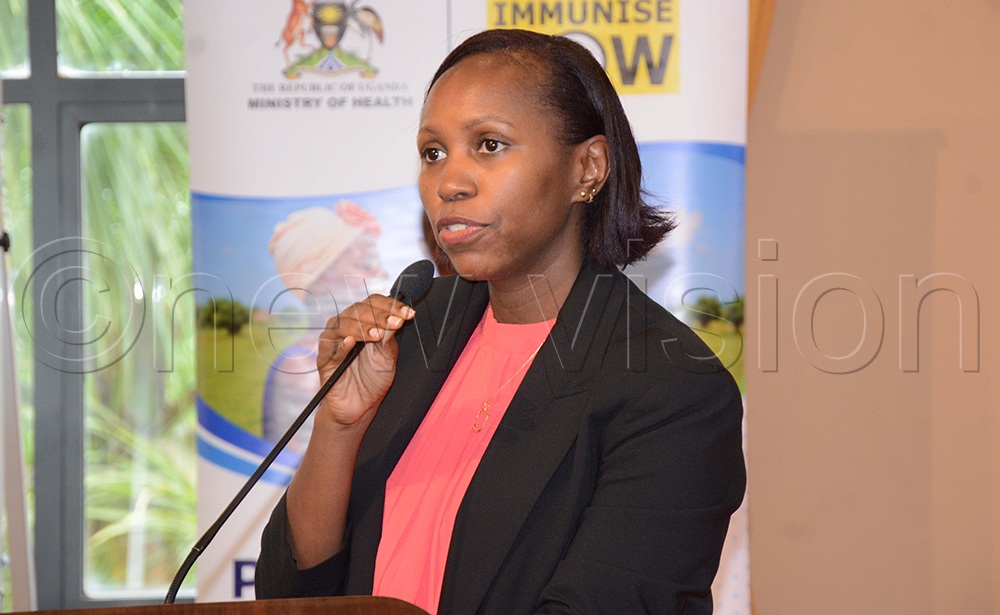
Among 429 confirmed cases whose vaccination status was assessed, 64% had never received an Measle Rubella (MR) vaccine, 33% had received one dose and only 3% had received two doses. Atugonza said Uganda’s MR1 coverage fell from 95% in 2023 to 92% in 2025, while MR2 coverage stood at only 64%. Only 23% of districts achieved more than 90% MR2 coverage.
WHO recommends sustained coverage of about 95% with two doses to prevent measles transmission.
Atugonza said the October campaign will therefore vaccinate children regardless of whether they have previously received routine measles-rubella doses. She described it as a booster campaign intended to strengthen population immunity, adding that children who had previously received the vaccine would not be harmed by receiving another dose.
Annet Kisakye, the WHO national professional officer responsible for routine immunisation and new vaccine introduction, said the campaign will use health facilities, temporary posts in schools, markets and settlements, as well as mobile teams for communities more than 10km from vaccination points.
Mop-up vaccination will follow in areas that fail to achieve 95% coverage. While Uganda is mounting the campaign, the financial environment supporting immunisation is changing according to experts.
Gavi entered its 2026–2030 strategic period after donors pledged more than $9b against an original $11.9b requirement. Gavi subsequently recalibrated planned expenditure to about $10b. In July 2026, its board reported that increased vaccine demand had created a further $111m funding gap in vaccine-budget allocations.
Jimmy Ameny, the Gavi coordinator at the Ministry of Health, said Uganda has been informed that vaccines for refugees previously supported by Gavi will increasingly have to be financed by the Government of Uganda. “Considering that we are all operating in a resource-constrained envelope, this message has been shared with all health actors across the country,” Ameny said. Of Uganda’s 14 vaccine antigens, he added Government fully funds six traditional vaccines, while Gavi has mainly supported eight newer vaccines, with Government co-financing them.
The refugee population is part of Uganda’s wider public-health system, with settlements located within districts and refugees using health facilities alongside host communities. Ameny said this increases the demand for vaccination, outreach, surveillance and outbreak response, particularly in hard-to-reach areas.
A 2025 investigation into measles in refugee-hosting Kamwenge district also identified persistent immunity gaps and difficulties reaching refugee and hard-to-reach populations.
However, health officials caution that the resurgence cannot be attributed to refugees or donor reductions alone.
Ameny noted that Uganda’s wider vaccination gaps, missed children, weak outreach, transport barriers, delayed detection and follow-up are also contributing to outbreaks.
Dr Charles Olaro, the Director of General Health, said vaccine distribution had started
across the country.
“By now all districts should have received and be getting ready,” Olaro said, urging health workers to ensure that no eligible child is missed.