
Drug stockouts pushing NCD patients to form medicine purchase support groups
To address the growing burden, the World Diabetes Foundation (WDF), through the World Health Organisation (WHO), allocated 1.28 million euros for a four-year project dubbed D-CARD.
Dr Deogratiuos Kalinzi the in charge of Sembabule Health IV speaking during an interview. (Photo by Violet Nabatanzi)
_______________
For 64-year-old Geoffrey Tumwesigye, a resident of Bugongi in Kabale municipality, living with both diabetes and hypertension has required him to depend not only on government health services but also on the strength of a patient support group.
Diagnosed in 2006, Tumwesigye has faithfully adhered to his treatment, mainly accessing care from Kamukiira Health Centre IV. While the facility has supported him over the years, he says medicine shortages remain a recurring challenge.
“We came up with the Patient Support Group because sometimes, the government does not provide all the medicines that we need,” Tumwesigye says.
Under this arrangement, patients make monthly contributions depending on their condition. Those managing a single illness contribute about shillings 5,000, while those with multiple conditions, such as both diabetes and hypertension, contribute up to shillings 10,000.
The pooled funds are used to purchase essential medicines, especially during periods when supplies at public facilities run low. Currently, the association has 64 active members, all committed to ensuring that none of them misses treatment due to a lack of drugs.
Tumwesigye notes that while the initiative has helped bridge critical gaps, it is not without challenges. Some members struggle to raise the monthly contributions, particularly those without stable sources of income.
Despite these hurdles, Tumwesigye applauds the integration of health services at facilities like Kamukiira Health Centre IV, saying it has improved access to care.
“We like the integrated system because we are not stuck when we need help. When services are available, we get the support,” he adds.
Oswald Atuheire, the NCD focal person at Kamuganguzi Health Centre III, Kabale district, said the demand for drugs to treat conditions such as hypertension and diabetes far exceeds what the government supplies.
“The Government has tried to provide medicines, and we appreciate that. But the quantities are not enough, and many of the drugs our patients need are not consistently available,” Atuheire explains.
As a result, many patients, who require long-term and combination therapies, are forced to buy medicines out-of-pocket, often at high cost.
To cope with the shortages, patients formed an NCD association through which members contribute money to collectively procure drugs. The associations, which have their own leadership structure, including a chairperson, treasurer and secretary, have become a lifeline for many.
“The patients organise themselves and contribute funds. The leadership then uses that money to buy drugs in bulk. When the medicines arrive, we help to store them at the facility, and patients receive their doses based on what they have paid for,” Atuheire says.
Each member is issued a receipt as proof of payment, which they present when collecting medication. While this system has improved access for some, it has also highlighted the financial strain many patients face.
Even with the association in place, not all treatment needs are met. Many patients require multiple drugs or specific combinations that are costly and not covered under government supplies.
“For example, we may receive some medicines like amlodipine, but many patients need combinations of two or three drugs. Those are rarely available, so they have to buy,” Atuheire adds.
While certain medicines like nifedipine are being phased out, some patients remain on them due to limited alternatives.
“Because of stock challenges, we sometimes maintain patients on available drugs, especially if they are stable. But when their condition worsens, we try to switch them to better options, which are often more expensive,” he explains.
Speaking on March 1, Dr Deogratiuos Kalinzi, the in charge of Sembabule Health IV said patient clubs play a major role in supporting care. They provide a platform where patients share ideas, discuss challenges, and learn from one another. For those on specific medications who are unable to access them, members contribute funds and collectively purchase the drugs. This approach has been particularly helpful for patients with NCDs.
Kalinzi further revealed that in some cases, depending on a patient’s clinical needs, health workers may recommend switching to a different medication that is not available at the facility. For such patients, the clubs offer a solution by enabling them to pool resources and purchase the prescribed drugs. This highlights the critical role patient clubs play; they cannot be overlooked.
Beyond financial support, the clubs also foster interaction among patients, helping them share experiences and find ways to overcome challenges together.
He said currently, there are 215 patients with hypertension and 107 with diabetes, bringing the total to about 320 members of the club and each member contributes shillings 5,000.
Dr Hafisa Kasule, Technical Advisor for NCDs at the World Health Organisation (WHO), said "the reason for supporting patient support groups is that, apart from helping each other, we also thought that during stockouts they could mobilise some money to buy medicines when supplies run out. That was the idea, and it’s why we encouraged them to do so."
Jude Mubiru, the in-charge of Matete Health Centre III, said 'Before the D-CARD project came in, we had a few numbers. But since our training, it was emphasised that from 18 years and above, whoever comes to the facility, we have to screen them more, especially for hypertension. So, we have more cases, but the supplies are still not enough.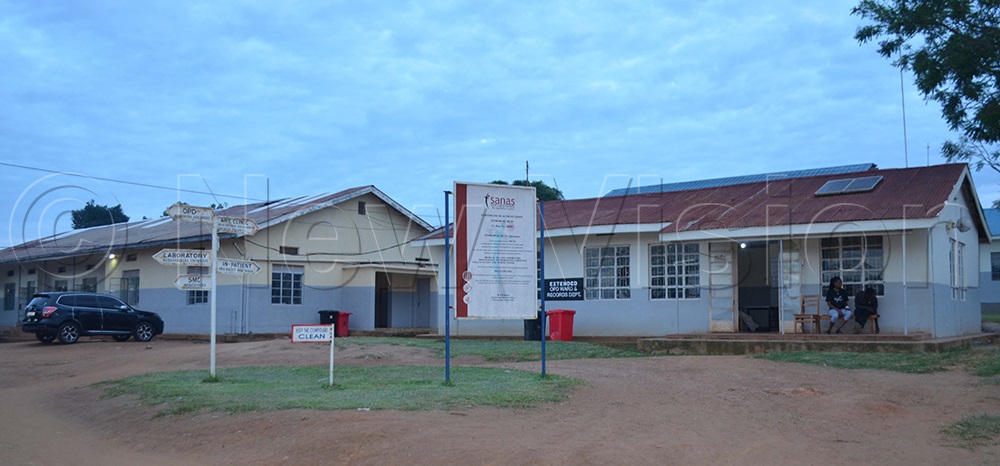
Some of the structures of Sembabule Health Center IV . (Photo by Violet Nabatanzi)
Statistics
The prevalence of diabetes stands at 2.7%, up from 1.4% less than a decade ago, nearly doubling within that period.
According to Dr Gerald Mutungi, the assistant commissioner of non-communicable Diseases at the health ministry, “Hypertension has also increased from 23.4% to 26%, showing the growing burden of these diseases.”
Project Intervention
To address the growing burden, the World Diabetes Foundation (WDF), through the World Health Organisation (WHO), allocated 1.28 million euros for a four-year project dubbed D-CARD.
The pilot project, launched in November 2023, is being implemented by WHO in collaboration with the Ministry of Health. The selected districts include Kabale, Sembabule, Koboko, and Lira districts.
Kasule said ten Health Centre IIIs and IVs were selected in each district. “The goal is to bring services closer to communities, improve screening, treatment, and follow-up, and ultimately reduce deaths from diabetes and hypertension,” she said.
Message to public
Dr Gerald Mutungi, the assistant commissioner of NCDs at the health ministry, cautioned that prevention is better than cure.
"We must prevent the increase of these conditions by reducing the alcohol intake, by stopping tobacco use, by eating healthy diets. Let's leave out these fried processed foods,"
"Let's eat our normal food with vegetables, fruits, and boiled local foods. Less of processed foods, which have a lot of salt and a lot of fat. Then let us be physically active as much as possible, at least 30 minutes every day of being physically active."