
DR Congo capital wary of Ebola nightmare
Every day, hundreds of people come from northern and eastern DR Congo on wooden boats aiming to reach Kinshasa. Health teams are stepping up checks to protect the overcrowded city of nearly 17 million people where no cases have been reported — so far.
Yves Matwa, an Ebola outbreak response worker, uses a megaphone to speak to passengers aboard a large wooden riverboat, known as a baleiniere, docked at the port of Bende-Bende, in Maluku, on August 20, 2026. (Photo by Sophie Douce / AFP)
_______________
MALUKU — The Ebola virus has spread across the Democratic Republic of Congo at a frightening speed, and one of the authorities' biggest fears is that it reaches the teeming capital of Kinshasa.
That is why Yves Matwa walks up and down the jetty at the river port of Bende-Bende in Maluku, 70 kilometres (45 miles) northeast of Kinshasa, shouting through a loud-hailer at people arriving on ferries from afflicted zones.
Every day, hundreds of people come from northern and eastern DR Congo on wooden boats aiming to reach Kinshasa. Health teams are stepping up checks to protect the overcrowded city of nearly 17 million people where no cases have been reported — so far.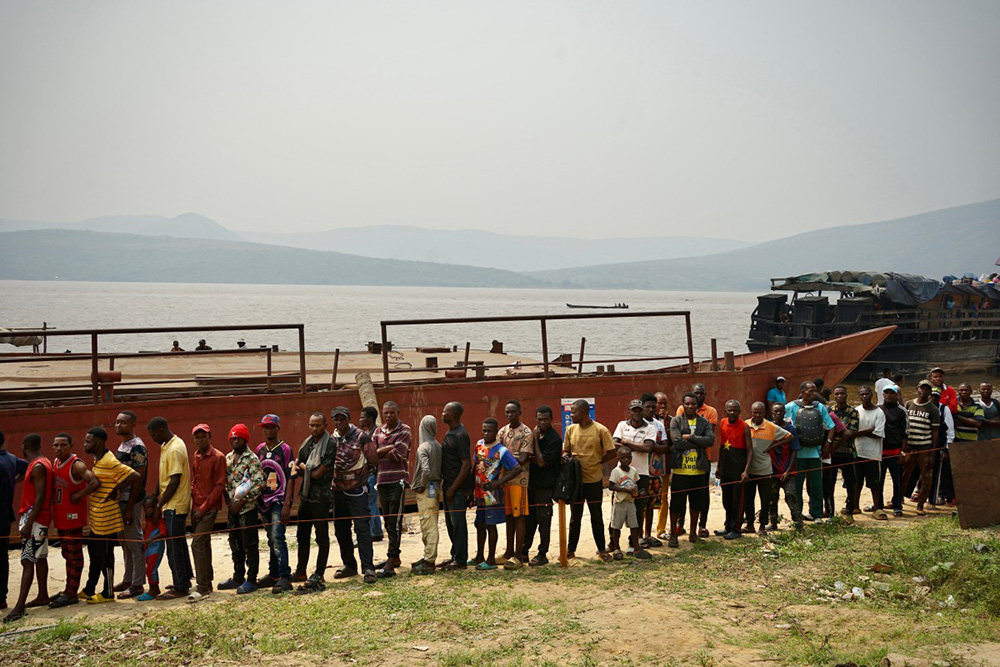
Passengers and traders line up at the port of Bende-Bende, in Maluku, on August 20, 2026. (Photo by Sophie Douce / AFP)
"They come from high-risk areas where the disease is present, so when they arrive here, we have to carry out checks," said Matwa, a community engagement officer, who wears a T-shirt bearing the grim slogan "Stop Ebola".
"I tell them they need to get ready and that if they show no signs, we'll be able to release them," he added.
A queue of traders and families waited in line at the jetty. Three boats arrived during the night from Kisangani — a major river city in the northeast where about 15 Ebola cases have been recorded since the outbreak was declared on May 15.
Ebola 'mistrust'
"I have heard of Ebola — it kills quickly — and I’m afraid there might be sick people on my boat," said the captain of one vessel that arrived from the central province of Kasai after a week-long river journey.
Matwa said that every boat is "thoroughly" inspected so that no suspect cases slip by.
At nearby tents, screening teams check passengers' temperatures and look for symptoms of the haemorrhagic fever. Each traveller's contact details and their points of departure and arrival are noted.
Each boat considered at risk is disinfected by teams who wear full-face masks and boots.
"The incubation period is two to 21 days. A person might develop symptoms later at home, but we'll be able to track them down," Matwa said, optimistically.
"If one case arrives in Kinshasa, it would be a catastrophe. The cases would then take off," said one doctor, speaking on condition of anonymity.
Many passengers are surprised to see the medical teams waiting on the dock when their ferry arrives.
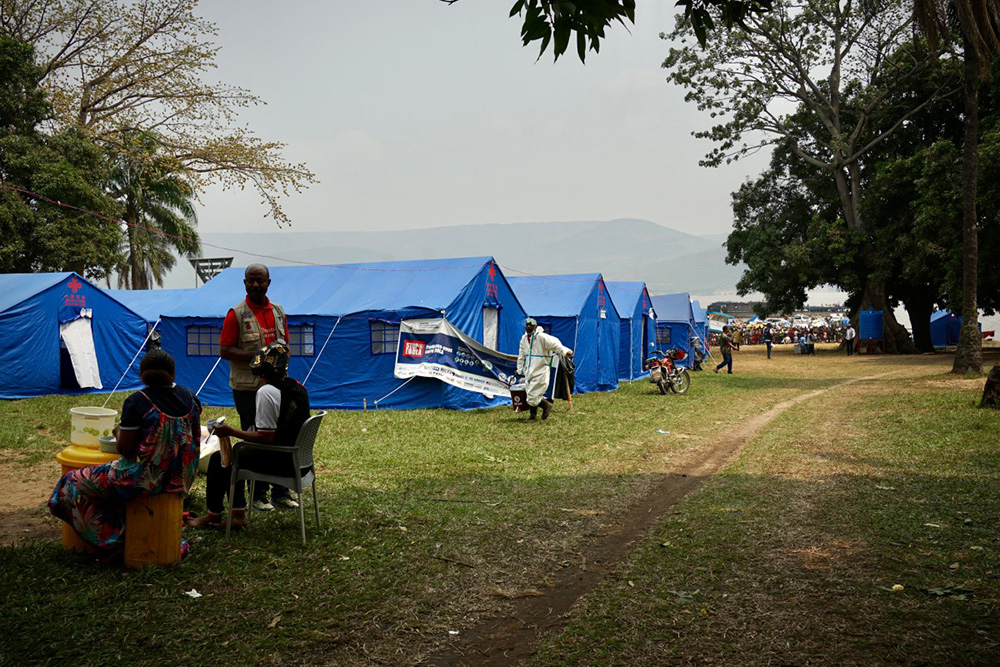
A general view of a health centre outpost near the port of Bende-Bende, in Maluku, on August 20, 2026. (Photo by Sophie Douce / AFP)
"It is sometimes hard to convince them to disembark and get screened," said Cecile Kisangu, a nurse. "Some don't believe the disease exists and think we made it up."
The Ebola campaign faces mistrust from some people in a country where the state struggles to make its presence felt, and corruption is widespread.
According to the DR Congo National Institute for Biomedical Research (INRB), 30 suspect cases have tested negative for the Ebola virus since the checkpoint was set up at Bende-Bende in early August.
But the UN and other agencies say the emergency is real. This 17th outbreak of the Ebola is already the deadliest in DR Congo's history and is spreading faster than any other.
There is no vaccine or specific treatment for the Bundibugyo strain and United Nations senior Ebola coordinator Julien Harneis said Friday that the eruption is "growing exponentially".