
Charlotte Kainerugaba rallies Ugandans to donate blood amid national shortage
Speaking during the World Blood Donor Day celebrations held at the Uganda Blood Transfusion Services (UBTS) headquarters in Nakasero on June 13, 2026, Kainerugaba said access to safe blood remains one of the most critical interventions in preventing maternal deaths.
Participants donating blood during the World Blood Donor Day celebrations held at the Uganda Blood Transfusion Services (UBTS) headquarters in Nakasero on June 13, 2026. (Courtesy photo)
__________________
Uganda's National Postpartum Haemorrhage (PPH) champion, Charlotte Kainerugaba, has called on Ugandans to embrace voluntary blood donation, warning that the country's persistent blood shortage is putting the lives of mothers, accident victims and other critically ill patients at risk.
Speaking during the World Blood Donor Day celebrations held at the Uganda Blood Transfusion Services (UBTS) headquarters in Nakasero on June 13, 2026, Kainerugaba said access to safe blood remains one of the most critical interventions in preventing maternal deaths, particularly those caused by excessive bleeding after childbirth.
Her appeal comes at a time when Uganda requires at least 500,000 units of blood annually but collects only about 350,000 units, leaving a deficit of nearly 200,000 units.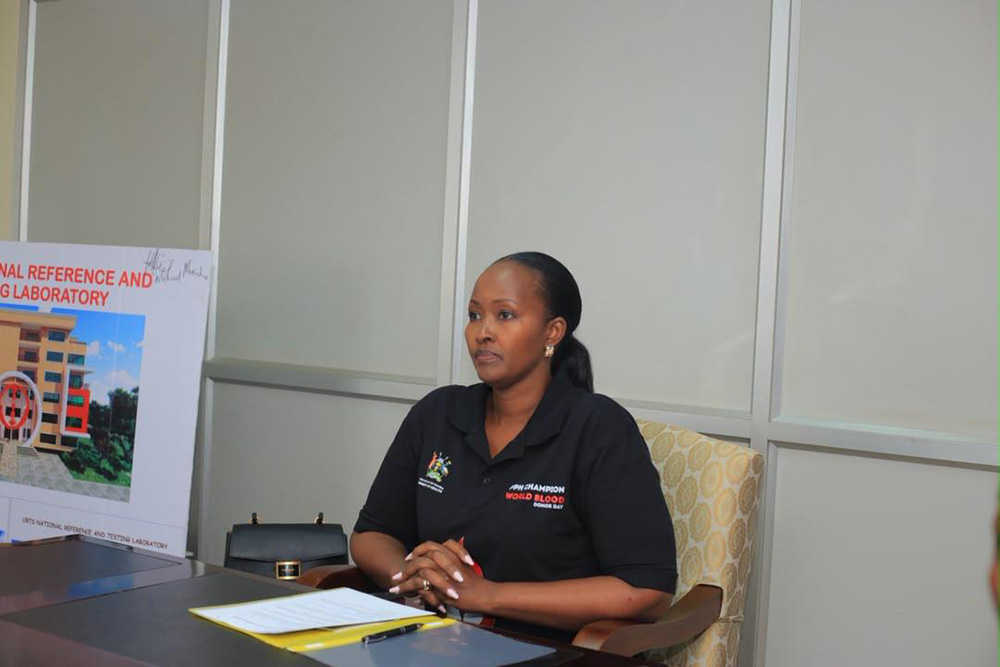
Speaking during the World Blood Donor Day celebrations held at the Uganda Blood Transfusion Services (UBTS) headquarters in Nakasero on June 13, 2026, Charlotte Kainerugaba said access to safe blood remains one of the most critical interventions in preventing maternal deaths. (Courtesy photo)
"We all have a role, communities, health workers, leaders and families. We must raise awareness so families recognise dangerous signs in pregnancy and after birth. We must make sure mothers are referred quickly to facilities that can help," Kainerugaba said.
She added that the country must strengthen skilled birth attendance, improve facility readiness, equip health workers and ensure blood is always available during medical emergencies.
According to the Ministry of Health, postpartum haemorrhage (PPH), or excessive bleeding after childbirth, remains the leading cause of maternal deaths in Uganda, accounting for one in every three maternal deaths after delivery.
"When excessive bleeding after childbirth occurs, a mother must be in the care of skilled healthcare practitioners and receive a full bundle of timely medical interventions, including blood products, to survive. These life-saving treatments must be given within two hours to achieve the best outcome," Kainerugaba noted.
She described blood products as a vital component in saving mothers experiencing childbirth complications and thanked regular donors whose contributions continue to save lives across the country.
"Let's stand with the Ministry of Health and donate a unit of blood. Your gift will protect countless lives of mothers and babies and, as a result, strengthen our communities."
The World Blood Donor Day celebrations brought together blood donors, health workers, civil society organisations and development partners to recognise the contribution of voluntary donors to Uganda's health system.
Dorothy Kyeyune Byabazaire, the executive director of Uganda Blood Transfusion Services, said blood availability remains central to maternal survival and emergency healthcare services.
"Blood availability remains central to maternal survival, especially in addressing postpartum haemorrhage, one of the most serious obstetric emergencies," she said.
Kyeyune noted that ensuring a safe and timely blood supply requires strong national coordination in collection, testing, storage and distribution, supported by trained personnel, effective mobilisation and reliable transport systems.
She urged Ugandans to embrace regular blood donation to ensure blood is available whenever emergencies occur.
"When there is no donor, there is no blood bank," she said, while thanking schools, mobilisers, civil society groups and development partners for supporting blood collection efforts.
Kyeyune also raised concerns about accountability in the utilisation of blood supplied to health facilities.
"If we've given you 10 units of blood, please account for them and explain how that blood was used. But many times, blood is not accounted for. We find it challenging because we also have to account to the government that is providing funding," she said.
At health facilities, doctors continue to witness the consequences of blood shortages, particularly among mothers experiencing complications during childbirth.
Dr Lawrence Kazibwe, deputy executive director of Kawempe National Referral Hospital, said the hospital handles between 60 and 100 deliveries every day, with nearly half requiring surgical intervention.
"On a daily basis, we are delivering 60 to 100 mothers in 24 hours. Approximately 50 percent are delivered through cesarean section. Of these deliveries, about 10 to 15 percent suffer from postpartum haemorrhage," he said.
The figures highlight the growing need for readily available blood supplies in maternity facilities across the country.
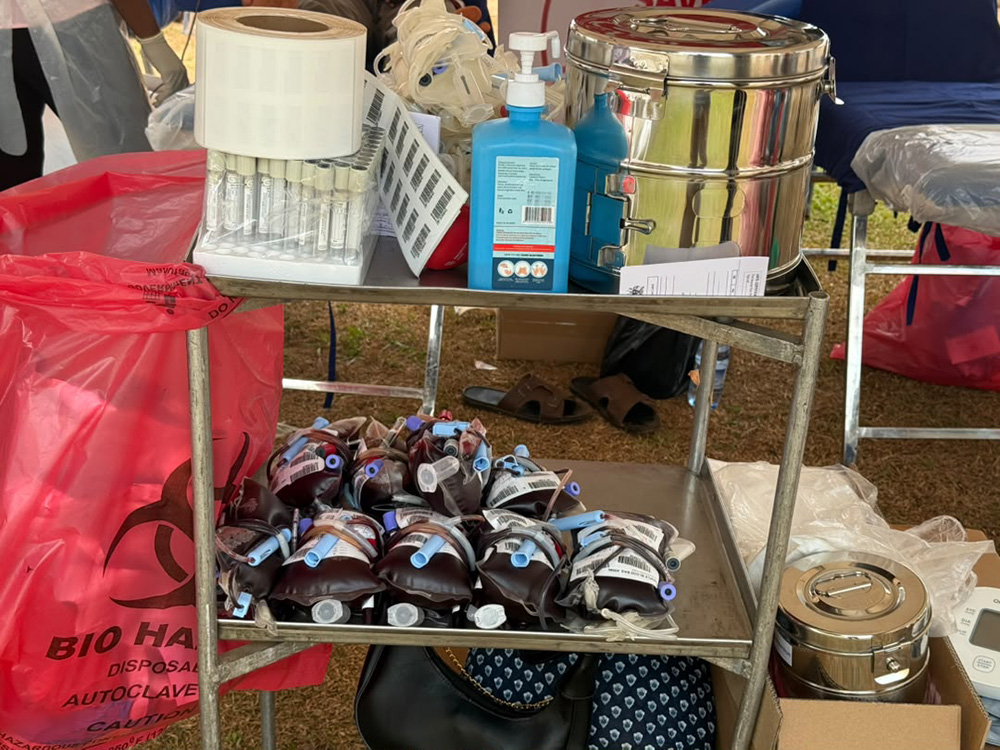
Packs of blood that was donated during the World Blood Donor Day celebrations held at the Uganda Blood Transfusion Services (UBTS) headquarters in Nakasero on June 13, 2026. (Courtesy photo)
The Ministry of Health said plans are underway to expand blood storage and distribution services through regional blood banks to improve access across the country.
Dr Richard Mugahi, commissioner for reproductive, maternal and infant health at the Ministry of Health, said the government intends to strengthen regional blood collection and distribution systems to ensure timely access to blood for all Ugandans.
"Our plan is to have regional blood banks that work closely with the centre coordinated by Nakasero to ensure that we have blood in every region," Mugahi said.
"By doing that, we shall make sure we eliminate preventable deaths. As I earlier mentioned, blood is equal to life."
Uganda joined the rest of the world in commemorating World Blood Donor Day, with health officials emphasising that addressing the country's blood deficit will require sustained public participation, stronger health systems and continued support for voluntary blood donation.