
Baryomunsi demands accountability for govt drugs amid Kigezi shortages
Baryomunsi urged health facility managers to strengthen supervision and ensure that every consignment of medicines received is properly recorded, stored and dispensed to patients according to established procedures.
Health minister Dr Chris Baryomunsi called for greater accountability and transparency in the management, storage and distribution of government medicines. (Courtesy photos)
________________
Health minister Dr Chris Baryomunsi has demanded tighter accountability for government medicines amid persistent shortages in Kigezi, as health officials warn that some drugs supplied to public facilities are allegedly being diverted and sold through private channels.
Baryomunsi questioned health workers over continued complaints about medicine shortages in public health facilities despite government funding for the procurement and distribution of medicines.
He said the unavailability of medicines remains one of the most common complaints raised by members of the public whenever the Ministry of Health engages communities about the performance of government health facilities.
He questioned why patients are sometimes informed that medicines are unavailable even after government supplies have been delivered to health facilities.
According to the minister, some health workers have attributed medicine shortages to the increasing number of patients attending public health facilities, arguing that the growing number of patients leads to rapid consumption of available medicines.
However, Baryomunsi said the government has also received allegations that some health workers divert government medicines and sell them outside public health facilities, including through private clinics.
He said such practices deny patients access to medicines procured using public funds and intended to be provided through government health facilities.
Baryomunsi called for greater accountability and transparency in the management, storage and distribution of government medicines.
He urged health facility managers to strengthen supervision and ensure that every consignment of medicines received is properly recorded, stored and dispensed to patients according to established procedures.
Drug diversion concerns
The concerns were reinforced by Dr Medard Bitekyerezo, the board chairperson of the National Drug Authority, who said medicine theft could involve cooperation between some members of the public and health workers.
Medical officials attending the meeting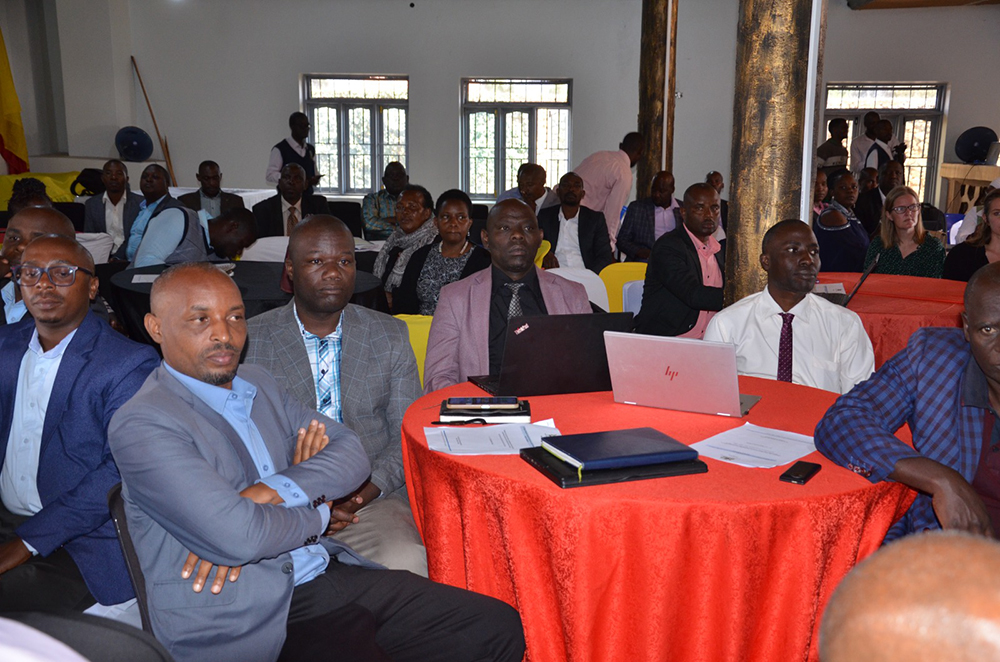
Bitekyerezo told the meeting that some members of the public allegedly connive with health workers to obtain government medicines for resale.
He said some individuals reportedly pretend that several members of their families are suffering from the same illness in order to obtain quantities of medicines that are subsequently diverted to the private market.
Bitekyerezo said the alleged practice undermines government efforts to improve access to healthcare, particularly for poor communities that depend on public health facilities for free or affordable treatment.
He also accused some health workers of lacking commitment to patients and acting irresponsibly in the management of government medicines.
Bitekyerezo further alleged that government medicines have, in some cases, been discovered in the homes of health workers, including in their bedrooms.
He called on the Ministry of Health and health facility managers to investigate such allegations and strengthen systems for monitoring medicines from the time they are received at a health facility until they are dispensed to patients.
The National Drug Authority board chairperson also called for tougher measures against corruption in the health sector, particularly the theft and diversion of medicines.
He attributed some of the losses to weak supervision and monitoring by health facility managers, saying leaders in public health facilities should take greater responsibility for accounting for medicines and other government resources entrusted to their institutions.
“People are no longer stealing drugs in small amounts. We have intercepted lorries full of stolen drugs,” he said.
He added that those allegedly involved could include nurses, pharmacists and gatekeepers, stressing the need for stronger internal controls and closer supervision.
Health managers seek fair treatment for accused workers
While calling for stronger accountability in the management of government medicines, district health officers from Kigezi urged authorities to protect the dignity of health workers suspected of corruption.
The DHOs presented a memorandum of understanding to Baryomunsi, calling for health workers accused of corruption to be handled in a manner that respects their rights and dignity.
Kabale district health officer Dr Gilbert Mateeka said the health managers were disturbed by reports of health workers from other districts being publicly humiliated after being accused of corruption.
Dr Mateeka did not cite a specific case, but his concerns came amid intensified government campaigns against corruption, in which some government officials have been publicly questioned, arrested and, in some cases, interdicted over alleged abuse of public resources.
The campaigns have involved ministers of local government Balaam Barugahara and Justin Nameere, who have publicly confronted government officials over allegations of corruption and poor service delivery.
Dr Mateeka said the DHOs support the government's efforts to fight corruption but warned that public humiliation of health workers before allegations are proven could have negative consequences for the health sector.
“We appreciate and support the fight against corruption, but we also request that when it comes to health workers, there should be consideration of the fact that some of them are wrongly accused. Publicly embarrassing them could affect public confidence in our health systems,” Dr Mateeka said.
Responding to the concerns, Baryomunsi agreed with the DHOs and said he would raise their concerns with the relevant authorities.
The minister emphasised the principle of presumption of innocence, saying the government should distinguish genuine corruption cases from accusations that could arise from personal conflicts within public institutions.
He warned that existing weaknesses within government systems could sometimes be exploited by individuals seeking to settle personal disagreements or target colleagues.
Baryomunsi said that while corruption must be confronted, investigations should be conducted fairly and disciplinary action should be based on evidence rather than allegations.
“There are many internal conflicts in different government institutions, and some people may take advantage of government efforts to fight corruption to settle personal battles,” he said.
The minister's response highlighted the need to balance protecting public resources from corruption with ensuring that government employees are not punished or publicly condemned without evidence.
Religious leaders warned over delayed treatment
The meeting also heard concerns over the role of some religious leaders in influencing the health-seeking behaviour of their followers.
James Turamubona, the vice chairperson of Rukungiri District Local Government, urged the government to take action against religious leaders who allegedly discourage sick people from seeking medical treatment and instead encourage them to remain in churches for prayers.
Turamubona said he was concerned about what he described as a growing practice among some newly established churches in Rukungiri district.
According to him, some pastors allegedly tell sick people to remain in churches and seek healing through prayer and the Holy Spirit instead of going to health facilities for medical attention.
He said the practice can cause patients to abandon or delay treatment, potentially putting their lives at risk.
Turamubona called for a clear government response to the challenge, saying the problem was not confined to Rukungiri but could also be experienced in other parts of the Kigezi sub-region.
Turamubona acknowledged the importance of faith and prayer but warned against situations where patients are encouraged to rely solely on prayer while ignoring necessary medical treatment.
He said delayed treatment could allow illnesses to worsen and, in some cases, result in preventable deaths.
The Rukungiri district leader also called on religious leaders to use their influence positively by encouraging their followers to seek timely medical care while maintaining their faith.
He said churches could become important partners in promoting health awareness, disease prevention and responsible health-seeking behaviour within communities.
The deputy resident district commissioner of Kabale District, Michael Muramira Kyakashari, also warned leaders of churches that discourage patients from seeking medical treatment that they could face legal action if found to be violating the law.
Kyakashari said the lives of patients should not be taken for granted and urged religious leaders to encourage their followers to seek appropriate medical attention whenever they fall sick.
He said people can continue exercising their faith and praying while also receiving treatment from qualified health professionals.
The deputy RDC emphasised that religious practices should not prevent people from accessing essential health services.
Kigezi health sector review
The concerns were raised during the fourth Kigezi Regional Health Sector Joint Performance Review Mission held at Volcano Hotel in Rubanda district from September 1 to 2, 2026.
The two-day meeting brought together district health officers, health facility in-charges, health unit management committee chairpersons, political and technical leaders, development partners, religious and cultural leaders, health workers and other stakeholders to assess the performance of the health sector in the region.
The review focused on immunisation, maternal and child health, HIV and AIDS services, tuberculosis control, disease surveillance and access to quality healthcare. It also provided a platform for health stakeholders to identify challenges affecting service delivery and discuss measures to improve healthcare across the six districts of Kigezi.
The fourth review mission was convened by Kabale Regional Referral Hospital on behalf of the Ministry of Health, in collaboration with regional health departments, district local governments and development partners.
The meeting brought together stakeholders from Kabale, Rubanda, Rukiga, Kisoro, Kanungu and Rukungiri districts.
The annual review is intended to assess healthcare service delivery, compare and rank district performance, identify persistent challenges and develop practical solutions to improve health services across the region.
Previous Kigezi Regional Health Sector Joint Performance Review Missions have been hosted by Kabale, Kanungu and Kisoro districts.
The concerns raised during the review point to broader challenges affecting healthcare delivery in Kigezi, ranging from medicine availability and accountability to health-seeking behaviour and the treatment of health workers accused of wrongdoing.
Stakeholders emphasised that effective systems for procurement, distribution, storage, monitoring and accountability must accompany increased government funding for healthcare.
The issue of medicine availability remains particularly important because government health facilities serve communities that may have limited ability to afford treatment in private facilities.
The alleged diversion of medicines therefore not only results in the loss of public resources but can also directly affect patients who depend on government facilities for essential treatment.
At the same time, the call by DHOs for dignified treatment of health workers highlights the importance of ensuring that anti-corruption measures are conducted within established procedures.
The stakeholders said accountability should not be weakened, but allegations should be investigated and proven through appropriate mechanisms before individuals are condemned.
The concerns over religious practices also point to the need for stronger cooperation between health authorities and religious institutions.
With churches having significant influence within communities, religious leaders can play a key role in encouraging people to seek timely medical attention and supporting government health programmes.
The stakeholders called for stronger accountability for public resources, respect for health workers' rights, responsible leadership in health facilities and greater cooperation with religious leaders to ensure that patients receive timely and appropriate medical care.