
Art and advocacy help students confront menstrual stigma
To mark World Menstrual Hygiene Day 2026 under the theme, “Together for a #PeriodFriendlyWorld,” dozens of students gathered on Thursday afternoon for a session of learning, creativity and dialogue aimed at promoting menstrual health awareness.
Robert Musema, the Founder of Msema Culture joins students to participate in activities organised by St. Lawrence Citizens High School Horizon Campus in Wakiso district. (Photo by Nelson Kiva)
_________________
For years, menstruation has remained one of the least discussed topics among many school-going girls in Uganda, often shrouded in myths, embarrassment and silence.
But at St. Lawrence Citizens High School Horizon Campus in Wakiso district, a growing movement is helping to change that narrative by equipping girls with knowledge, confidence and a safe space to discuss their menstrual health without fear or stigma.
To mark World Menstrual Hygiene Day 2026 under the theme, “Together for a #PeriodFriendlyWorld,” dozens of students gathered on Thursday afternoon for a session of learning, creativity and dialogue aimed at promoting menstrual health awareness.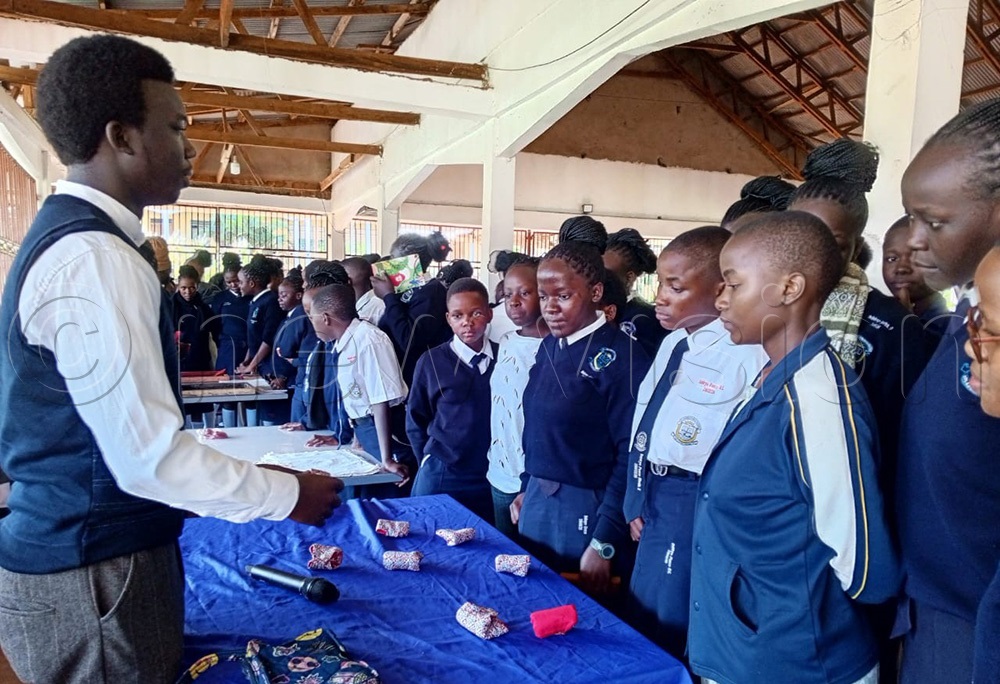
Students of St. Lawrence Citizens High School Horizon Campus in Kyengera participate in art to promote menstrual health. (Photo by Nelson Kiva)
Through games, discussions, storytelling sessions and practical demonstrations, the students explored issues that affect millions of girls worldwide but are often ignored in everyday conversations.
For 13-year-old Viva Nakanjako Tamale, a Senior One student, the event offered valuable lessons about understanding her body and supporting others.
She said the discussions helped her appreciate that menstruation is a normal biological process and not something girls should be ashamed of.
“I have learned that menstruation is normal and that people should support girls instead of making them feel embarrassed,” she said.
Her classmate, 14-year-old Peace Rhoda Babirye, shared a similar experience. She noted that the activities had given her confidence to discuss menstrual health openly, including with boys and other members of the community.
According to Babirye, many misconceptions continue to surround menstruation, causing unnecessary fear among young girls.
She believes more awareness is needed to help girls understand that menstruation is a natural part of life.
The students were participating in activities organised through a partnership between Msema Culture and the school under the Menstrualize Project, an initiative that uses creative engagement and advocacy to address menstrual stigma among young people.
The programme comes at a time when menstrual health remains a significant challenge for many girls in Uganda.
Despite increased awareness and policy discussions in recent years, thousands of girls continue to face barriers ranging from inadequate access to menstrual products to poor sanitation facilities and limited information.
Education advocates warn that these challenges often affect attendance, concentration and academic performance.
School administrators say addressing menstrual health is an important part of ensuring girls succeed both inside and outside the classroom.
Shallote Arinaitwe, the head teacher of the school, said the institution has deliberately prioritised creating an environment where girls feel supported during adolescence.
She explained that menstrual health and hygiene remain neglected issues in many communities despite their importance to the well-being and development of young women.
“At St. Lawrence Horizon Campus, we believe education goes beyond academics. We want our learners to grow into confident and informed individuals who can participate fully in society,” she said.
Arinaitwe added that many girls still lack access to accurate information and support systems needed to manage menstruation with dignity.
The partnership with Msema Culture, she noted, is helping bridge that gap through practical education and open dialogue.
Beyond sanitary pads
They argue that addressing stigma, misinformation and social attitudes is equally important in ensuring girls remain in school and achieve their full potential.
That philosophy forms the foundation of the Menstrualize Project.
Founded by creative entrepreneur Robert Musema, Msema Culture combines art, storytelling, vocational skills and advocacy to encourage conversations around issues that are often considered sensitive.
Musema believes many of the barriers surrounding menstrual health stem from silence and misinformation learned at an early age.
“To change the culture of silence, we must create environments where young people can ask questions, share experiences, and access accurate information,” he said.
The event also featured reusable pad demonstrations and interactive learning activities designed to provide practical knowledge alongside awareness messages.
Building confidence
Guest speaker Desire Ayona Patience, Miss Tourism World Uganda 2025, and a health inspector, challenged girls to reject the stigma that continues to surround menstruation.
She observed that many girls still miss educational and leadership opportunities because of fear, shame or misinformation related to their menstrual cycles.
“Menstruation is part of life and should never stop a girl from pursuing her dreams,” she told the students.
Health experts have repeatedly highlighted the importance of menstrual education in promoting confidence, dignity and healthy development among adolescents.
The World Health Organisation defines menstrual health as complete physical, mental and social well-being in relation to the menstrual cycle and emphasises the need for supportive environments where girls can manage menstruation safely and confidently.