
Health minister Aceng defends new medical training policy
“We are safeguarding the health of Ugandans,” she said, adding that the new system will ensure that only those who successfully complete internship are certified as doctors.
Under the new arrangement, medical students will be required to complete and pass their internship before graduation. (File photo)
________________
Uganda's health minister, Dr Jane Ruth Aceng, has defended a new government training policy requiring medical students to undergo six years of training, saying the move is aimed at safeguarding the health of Ugandans by ensuring only competent doctors graduate.
Under the new arrangement, medical students will be required to complete and pass their internship before graduation, a shift from the current system, where students graduate after five years and then proceed to an internship placement.
Aceng said the policy was prompted by concerns over the quality of some graduates, noting that a number of medical students have failed internships multiple times even after completing their degrees.
“We are safeguarding the health of Ugandans,” she said, adding that the new system will ensure that only those who successfully complete internship are certified as doctors.
The minister made the remarks while appearing before Parliament's health committee during the consideration of the 2026/27 Ministerial Policy Statement. She was responding to concerns raised by the Federation of Uganda Medical Interns over the implications of the policy.
Lawmakers questioned how the transition would affect students who enrolled under the previous five-year programme.
Health minister Dr Jane Ruth Aceng says the reform in medical training is necessary to improve training standards. (File photo/Edith Namayanja)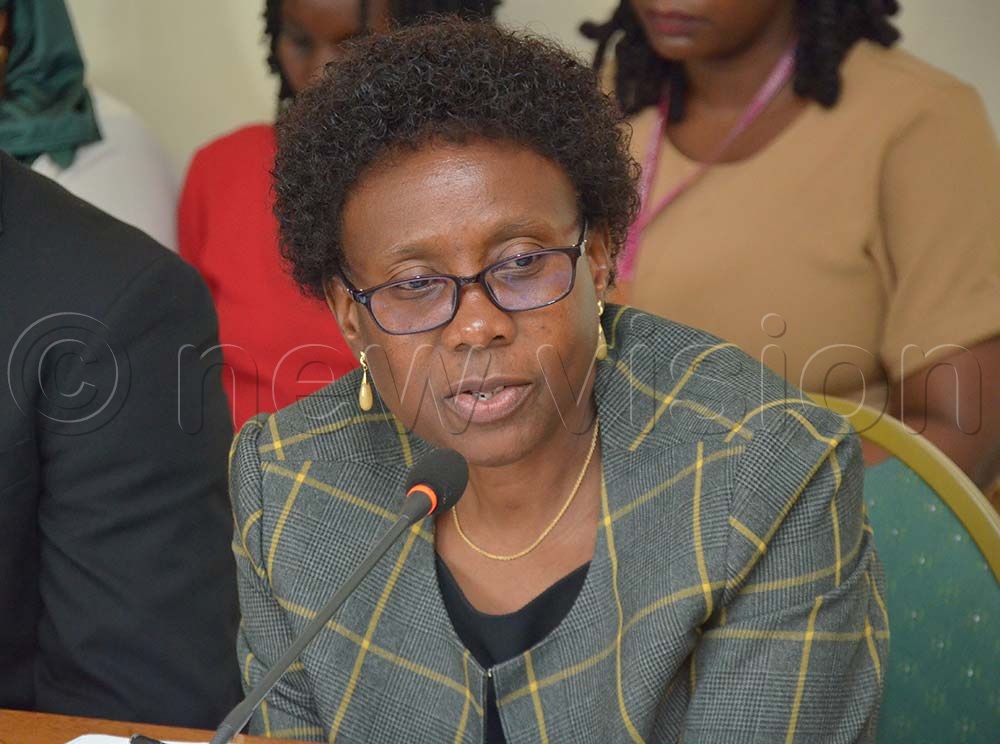
Bukomansimbi North MP Christine Nandagire sought clarification on whether the additional year would require interns to pay extra tuition fees and how their welfare would be handled.
“It has been passed that interns are going to start graduating after six years, yet most [of them] signed agreements with universities for a five-year course. Parents and students are confused. Will they pay fees for the extra year, or will they be paid?”
The legislator also raised concerns about the heavy workload faced by interns, noting that the high patient-to-intern ratio already places significant pressure on trainees.
In response, Aceng acknowledged the challenges but insisted the reform is necessary to improve training standards. She pointed to the rapid growth in the number of medical training institutions, which has strained the internship system.
Uganda currently has more than 30 medical training institutions, most of which fall under the supervision of the Ministry of Education and Sports rather than the Health Ministry.
According to the health minister, this has made it difficult for the health sector to effectively regulate the quality of graduates entering internships.
“With over 33 training institutions, we now receive between 1,500 and 2,000 interns every year, compared to about 200 in the past. Managing these numbers is not easy,” she said, adding that the finance ministry has committed to providing resources to support the new policy.
The policy, which was approved by Cabinet and signed by both the health and education ministries, is expected to take effect in July this year.