
800 children under cancer treatment—UCI
UCI head of research and training Nixon Niyonzima says every year, the institute receives 8,000 new cancer patients and 10% are children undergoing treatment.
UCI head of research and training Nixon Niyonzima receiving nutritional products at Mulago Hospital in Kampala on December 8, 2025. The assortment of nutrition products were a donation from Jesa Farm, the Old Budonians Club and American Tower of Corporation. (Photo by Francis Emorut)
_________________
The Uganda Cancer Institute (UCI) says it is treating over 800 children suffering from cancer at Mulago Hospital.
UCI head of research and training Nixon Niyonzima says every year, the institute receives 8,000 new cancer patients and 10% are children undergoing treatment.
He adds that the number of children with cancers, including leukaemia, lymphoma, sarcomas, retinoblastoma and brain tumours, is increasing, and their treatment is demanding.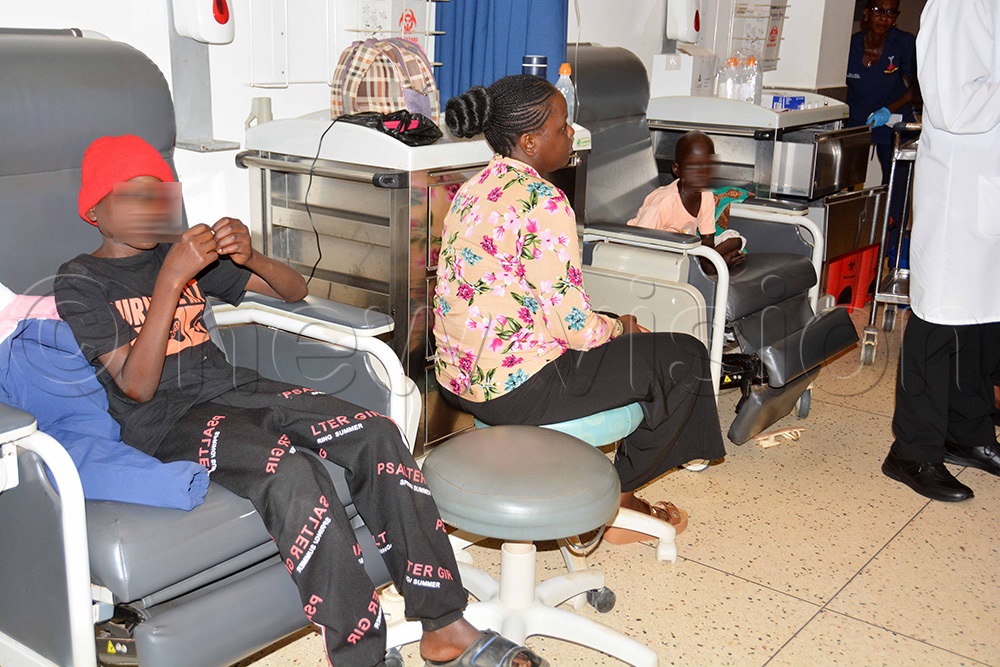
Children with cancer at their ward in Mulago Hospital. The children received assortment of nutrition items donated by Old Budonians Club, American Tower of Corporation and Jesa farm. (Photo by Francis Emorut)
According to Niyonzima, who is also the lab director at the institute, children suffering from cancer undergo chemotherapy treatment, which is toxic and therefore requires a balanced diet if the outcome is to be positive.
Niyonzima, who represented UCI executive director Dr Jackson Orem, made remarks while receiving nutritional products at Mulago Hospital in Kampala on December 8, 2025.
The assortment of nutrition products, including soya, Jesa milk, rice flour, millet for porridge and sugar were a donation from Jesa Farm, the Old Budonians Club and American Tower of Corporation.
Niyonzima praised the organisations for their initiative, saying this would go a long way to supplement the Government’s efforts as far as cancer treatment is concerned.
Niyonzima pointed out that all concerted efforts to fight cancer are welcome, as the Government provides healthcare.
“Milk has nutritional value, and this is to ensure that children who have been malnourished are nourished; the treatment outcome is going to improve significantly,” Niyonzima said.
Dr Yvonne Rose Bwikizo, a paediatrician at UCI, said items provided would boost the children’s wellbeing and enhance their treatment as those who are malnourished will be nourished.
“Children have high nutritional needs, and every gesture of help is welcome as the Government’s support is not sufficient. Our team is very happy, chemotherapy treatment is expensive,” Bwikizo said.
She said the support given will enable the management to give cancer children three meals a day.
“As a paediatric department, this means a lot to us and the parents,” she added.
Bwikizo added that some children had abandoned treatment as their parents could not afford food, but with supplies given the latter don’t need to worry.
She said cancer is like a parasite and drains a lot.
According to Jesa Farm marketing executive Barbara Kizza, the organisation is going to supply Jesa milk to the cancer children's ward for the next six months.
“Jesa is passionate about children, and we are happy to contribute as it fits well into the components every child deserves nourishment,” Kizza said.
She added that for purposes of nutrition, milk is an essential commodity in a balanced diet.
Paul Waddimba, a mobiliser for the Old Budonians Club, said they were motivated to give back to the community, especially the vulnerable.
He noted that cancer treatment is very expensive, and the needy parents can’t afford that’s why they intervened.
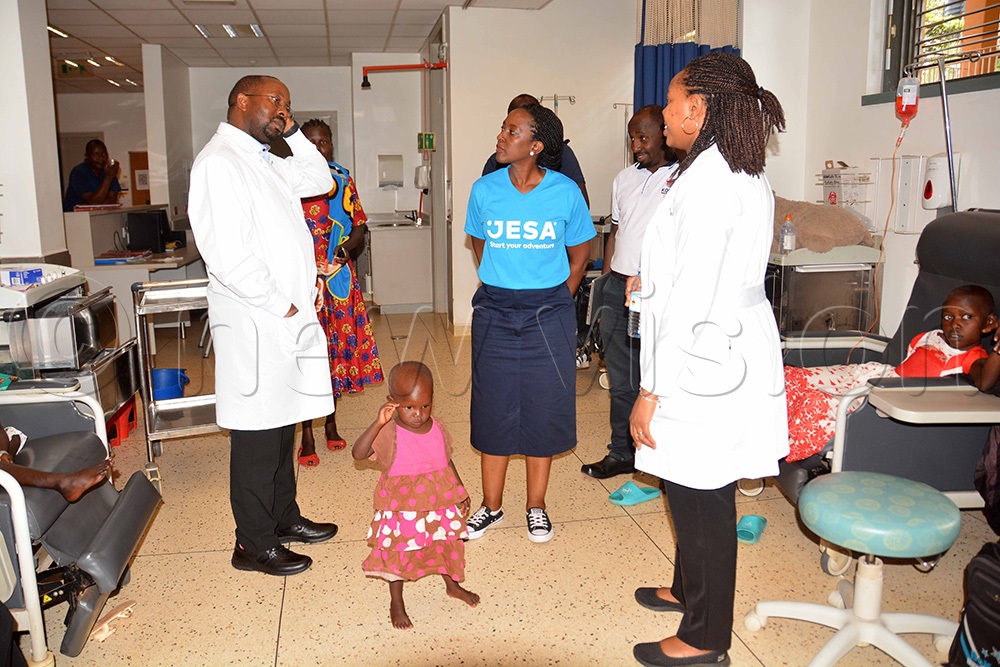
The lab director and head of research and training at Uganda Cancer Institute, Nixon Niyonzima (left) briefing an official from JESA Farm Dairy Barbara Kizza (centre) during the tour at the children's cancer ward after donating nutrition items. (Photo by Francis Emorut)
“This is a good thing to do, and we get out of our comfort zone to help the vulnerable in society,” Waddimba said.
Jonathan Adengo, the public affairs director at American Tower of Corporation, said their involvement was to bridge the gap of ensuring cancer children are well nourished, as UCI is meeting the cost of treatment.
“Food is medicine as chemotherapy is toxic, we want to ensure that children are well fed and well nourished. This support is going to be a long way in supporting cancer children,” Adengo said.
Rose Nankinga, a nurse at UCI, said the 800 children under treatment usually face a challenge of nutritional needs.
Mariam Ndagire, another nurse, said the inpatients are 50 while the rest are outpatients.