
Wakiso children with disabilities receive mobility equipment
Rashida Naiga, the Community Development Officer for Mende Sub-county in Wakiso District, said the government has introduced an initiative to support mothers of children with special needs through the Parish Development Model.
Parents of children with special needs who received wheelchairs. (Photo by Jovita Mirembe)
_________________
Cissy Nakanjako Babirye is a mother of a nine-year-old girl living with cerebral palsy. She says the father of her daughter abandoned them after the child was born, claiming that his family only gives birth to “normal” children.
Since then, Babirye has struggled to raise her daughter as a single mother. She does casual work, including washing clothes and tidying people’s compounds, to earn a living while caring for her child.
“My daughter doesn’t talk, walk or sit, but she can hear. I have to carry her on my back whenever I am going to work or taking her to hospital,” Babirye says.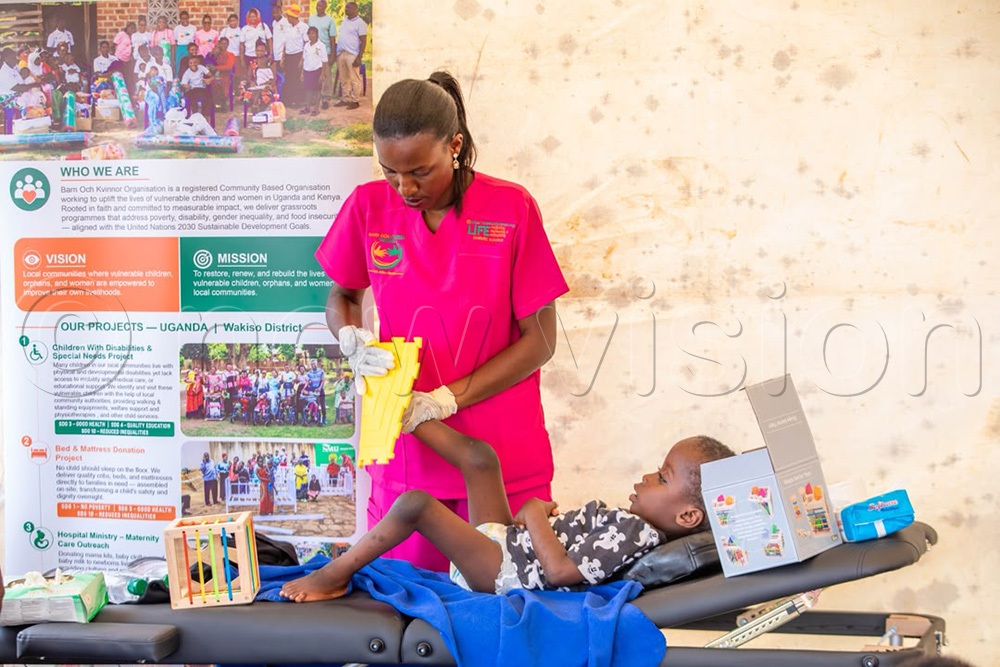
A Physiotherapist from BOK giving therapeutic exercises and massages to a child with walking disability. ( Photo by Jovita Mirembe)
She says the biggest challenge is meeting the child’s monthly medical and transport costs.
“Her medication costs sh160,000 every month, while transport to the health facility costs sh50,000. This means I need at least sh210,000 before paying rent and meeting other household expenses. I need more than sh250,000 a month, yet I do not earn that much,” she says.
Robina Nalugya, a mother of six, also says her life changed after her sixth child was born with cerebral palsy. Her other five children were born normal.
“I sell second-hand clothes, but the income is not enough to look after this big family. I also have to carry my child on my back while hawking the clothes. My child cannot walk, sit or talk. I have even developed chest pain because of carrying him,” she says.
The two mothers are among parents who received support from Barn Och Kvinnor Organisation (BOK), in partnership with Wakiso District, during an outreach activity held at Mende sub-county offices on August 04, 2026.
The outreach provided wheelchairs, crutches and physiotherapy services to children with special needs.
Flavia Kakaire, vice president and volunteer at BOK, said the organisation is a women-led, faith-based, non-profit organisation dedicated to empowering marginalised children living with disabilities.
“The children we target include those with autism, cerebral palsy and mobility challenges,” Kakaire said.
She said the organisation currently operates in Wakiso district, particularly in Kakunyu and Mende sub-counties, where it is supporting 35 children with disabilities from 35 households.
BOK began its formal operations and outreach initiatives in Uganda in 2024. The organisation is registered in Uganda and Sweden.
During the outreach, the organisation also provided mothers with essential items, including Pampers, sugar, bread, soap and clothes, to help ease the financial burden of caring for children with disabilities.
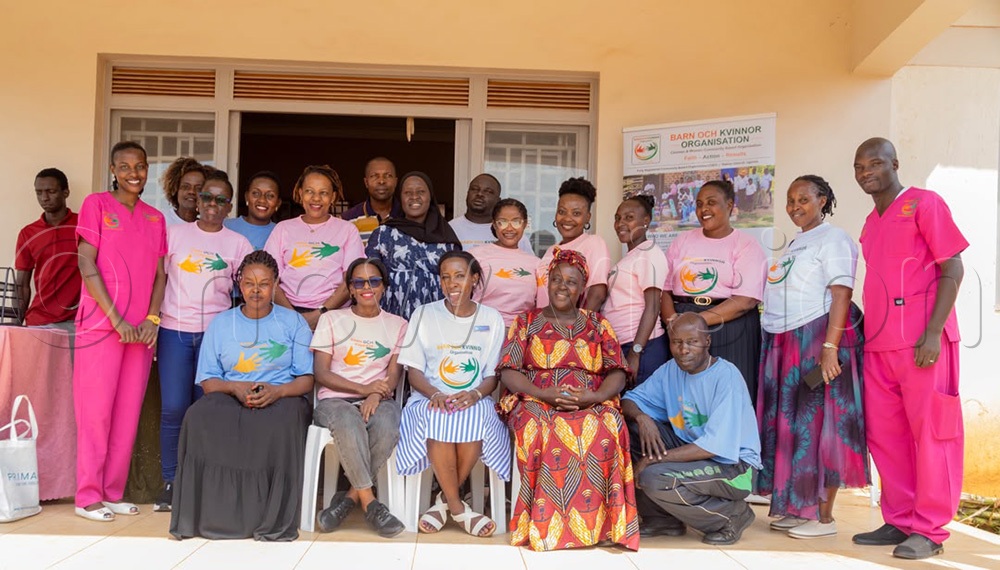
A group photo of the Barn Och staff and the Mende Subcounty staff. (Photo by Jovita Mirembe)
Kisembo said women facing violence can seek help from community development officers, police, LC1 offices and courts. Religious leaders and civil society organisations can also provide support.
PDM funds for mothers
Rashida Naiga, the Community Development Officer for Mende Sub-county in Wakiso District, said the government has introduced an initiative to support mothers of children with special needs through the Parish Development Model.
Under the initiative, mothers will form groups of between five and 10 members and access PDM funds to establish income-generating activities.
“These groups should open bank accounts where sh5m will be deposited to enable them to start businesses such as goat rearing, piggery, shoemaking, market vending, salons and soap making, among other projects,” Naiga said.
She said the initiative is intended to help mothers improve their household incomes and reduce the financial burden associated with caring for children with special needs.
Naiga urged community development officers to sensitise mothers in their areas so they can form groups and benefit from the government programme.
She also appealed to the government and non-governmental organisations to increase support for children with disabilities and their families, saying many of them require expensive medical care, assistive devices and other services that their parents cannot afford.