
Iteso chief Emolot warns mothers against refusal to breastfeed
Emorimor expressed concern that many working mothers are breastfeeding for less than two months before returning to work, leaving their infants in the care of maids.
RDC Katakwi Stephen Ilemukorit Okure greeting Emorimor Paul Sande Emolot during the breastfeeding week at Katakwi Boma Grounds on Thursday. (Photos by Delux Emmy Alomu)
________________
Iteso Cultural Union paramount chief (Emorimor) Paul Sande Emolot has urged working mothers to breastfeed their babies for the entire recommended duration.
The ideal time to stop breastfeeding is a personal decision for both the mother and child, however, most health organisations recommend exclusive breastfeeding for the first six months, followed by continued breastfeeding alongside the introduction of solid foods for up to two years or beyond.
However, Emorimor expressed concern that many working mothers are breastfeeding for less than two months before returning to work, leaving their infants in the care of maids.
The chief’s warning also reflects growing concerns from local leaders in Katakwi district about inadequate breastfeeding practices among working mothers.
Emolot emphasised that after this brief period, the infants often receive formula milk, which health experts do not recommend.
“These mothers are returning to work too soon, leaving their babies crying and relying on maids who feed them formula. This can have significant health implications for the children,” he stated.
His remarks came during the World Breastfeeding Week celebrations for the districts of Katakwi and Amuri, from August 1-7, 2025, under the theme: “Prioritising breastfeeding: Create Sustainable Support Systems.
The function took place at Katakwi Boma Grounds on Thursday, August 7, 2025.
The chief urged working mothers to prioritise breastfeeding, underscoring its vital role in ensuring healthy growth and development for their children.
He highlighted the benefits of breastfeeding, including its protective qualities against various illnesses, stating, “Breastfeeding is medicine; it reduces the risk of diseases such as breast cancer.”
Fathers urged to support mothers
Emolot also addressed the fathers, encouraging them to support their pregnant partners with balanced diets to promote healthy breastfeeding.
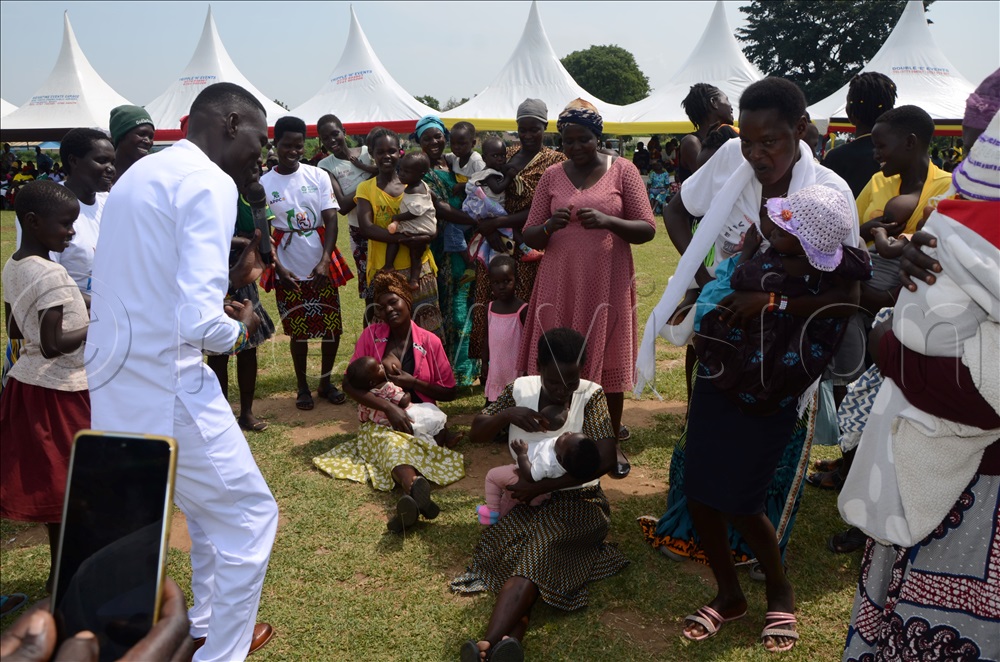
Local Artist Francis Angiro performing as women breastfeed their children on Thursday.
He warned against keeping new mothers confined to the house for three days post-delivery, emphasising that good parenting practices are crucial for raising healthy children.
Benefits of breastfeeding
Dr Simon Ichumar Omeke, the district health officer for Katakwi, emphasised the critical role of breastfeeding, calling it the first vaccine a baby receives at birth.
He highlighted that breast milk is packed with essential nutrients, antibodies, and—most importantly—love.
He pointed out that breastfeeding serves as a shield against infections, including illnesses like diarrhoea and pneumonia, while also aiding in the child’s overall development.
Omeke said breastfeeding offers health benefits to mothers as well, reducing the risk of certain cancers, including breast cancer, and it serves as a natural form of family planning and strengthens the bond between mothers, children, and the family unit.
He described breastfeeding as an affordable and sustainable strategy for ensuring child survival.
To better support breastfeeding mothers, he urged the creation of a more conducive environment in communities and workplaces.
Stop modern trends
Katakwi Resident District Commissioner Stephen Ilemukorit Okure urged Iteso mothers to return to the traditional practice of breastfeeding for at least two years, rather than the modern trend of breastfeeding for only two months.
"Breastfeeding is part of our heritage. I nursed my mother for three years. Unfortunately, working-class mothers now tend to limit breastfeeding to just three months, a pattern that rural mothers are also beginning to adopt. We must reject this trend and embrace our cultural practices," he stated.
Joseph Ecuman, the vice district chairperson of Katakwi, urged the Emorimor and clan leaders to reach out to young couples in rural areas. He noted that many young men, upon marrying, often leave their children in the care of their mothers, while they roam freely.
“This results in grandmothers who are unable to care for their grandchildren because they are occupied with their own,” he remarked.
Ecuman also pointed out that mothers-in-law have become less proactive in encouraging their daughters-in-law to breastfeed, often complicating family dynamics due to conflicts with younger women.
Harriet Faith Akwii, the principal assistant secretary in Katakwi, highlighted a concerning difference: While many rural women face challenges, working mothers are opting for formula to feed their babies.
Akwii is advocating for an extension of maternity leave from three months to six, emphasising that this extra time would significantly benefit mothers and their ability to properly breastfeed.
Deborah Iyebu, the head of projects for Welt Hunger Hilfe Katakwi and representative of civil society organisations supporting the event, stated the critical goal of preventing child malnutrition during the vital 1,000 days after birth.
“These children should be well-fed and taken care of in the first 1,000 days,” she emphasised.
Iyebu urged policymakers to create supportive environments in workplaces that enable nursing mothers to breastfeed.
She stressed the importance of breastfeeding in fostering future leaders and called upon men to support this by granting mothers the necessary time to care for their children.
The week was celebrated with various engaging activities, including food fairs, cooking demonstrations, football matches, health education, cancer screenings, and dramas.
In a cooking competition, Ongongoja sub-county took the top spot with 17 points, followed closely by Angisa in Magoro and Willa sub-county in Amuria, who both shared second place with 16 points.
The winning team received a prize of shillings 200,000, while the runners-up were awarded 100,000 each.
The event was supported by key development partners, including Welt Hunger Hilfe, KIFAD, CoU-TEDDO, Self Help Africa, AFI, and APPCO.