
Safal Eye in the Wild photography competition returns
Now in its third edition, Safal Eye in the Wild has grown into one of the region's leading conservation-focused photography platforms.
PSFU Chief Executive Officer Steven Asiimwe emphasizes a point. Courtesy photo
Uganda Baati Limited, through the Safal Uganda Baati Foundation, has officially launched the 2026 edition of the Safal Eye in the Wild Photography Competition, a regional initiative that uses the power of photography to promote environmental conservation while supporting education across East and Southern Africa.
The competition was launched on Tuesday 2 June, in the presence of representatives from the National Environment Management Authority (NEMA), Private Sector Foundation Uganda (PSFU), Uganda Manufacturers Association (UMA), and other key stakeholders.
Now in its third edition, Safal Eye in the Wild has grown into one of the region's leading conservation-focused photography platforms. The competition brings together professional photographers, amateurs, and young creatives to tell compelling visual stories about nature, communities, and sustainable development.
Beyond artistic expression, the initiative seeks to create tangible impact. Every photograph submitted contributes to environmental awareness campaigns while helping fund education programmes, including classroom construction and scholarships for disadvantaged learners across the region.
Speaking at the launch, Uganda Baati's Head of External and Corporate Affairs, Jackie Tahakanizibwa, said photography has the power to inspire change.
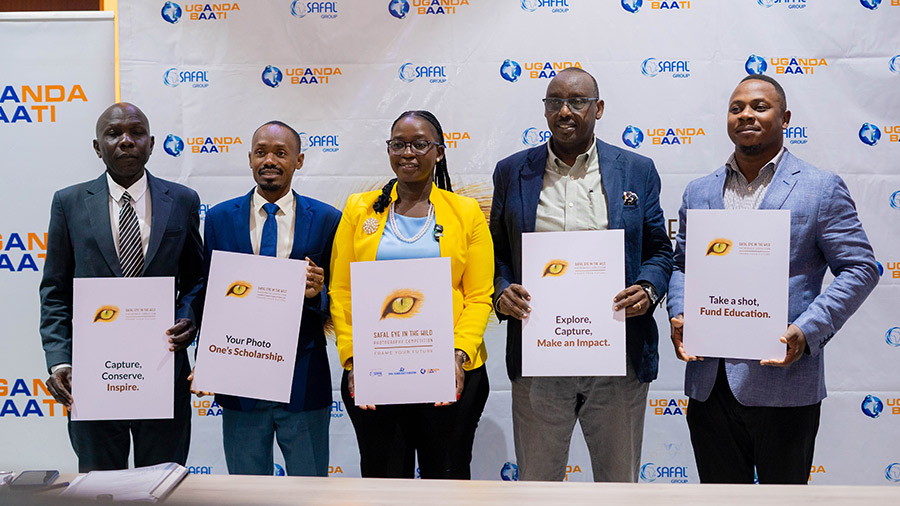
"At Uganda Baati, we believe great photography does more than capture images—it captures stories, inspires action, and deepens our connection to the world around us. Through this competition, every image has the potential to spark awareness and inspire people to protect our natural heritage," she said.
Entries must be uploaded through the official competition platform and accompanied by a mandatory 200-word statement explaining how the image relates to conservation and education.
According to Tahakanizibwa, submissions will be judged on creativity, originality, technical quality, and alignment with this year's theme, "Frame Your Future."
The deadline for submissions is June 20, 2026, while winners will be unveiled during a red-carpet awards gala scheduled for July 17, 2026.
Photographers can submit their entries through the official campaign website: https://safaleyeinthewild.safalgroup.com/
The overall Gold Award winner will receive $3,000 (about Shs11.2 million), while the silver and bronze winners will walk away with $2,000 (Shs7.5 million) and $1,000 (Shs3.7 million) respectively.
The Public Choice Award and Amateur Category winners will each receive $500 (about Shs1.8 million).
George Mubiru of the Safal Uganda Baati Foundation said the competition goes beyond photography to create lasting social impact.
"At the Safal Uganda Baati Foundation, we believe true impact happens at the intersection of environment, education, and community. This competition transforms photography into a force for learning, awareness, and opportunity for the next generation," he said.
NEMA's Assistant Commissioner for Environmental Education and Advocacy, Wilbert Ikilai, described the initiative as a powerful tool for environmental stewardship.
"The Safal Eye in the Wild initiative reminds us that conservation begins with awareness. It encourages responsible stewardship and inspires all of us to protect the ecosystems that sustain our future," he said.
PSFU Chief Executive Officer Steven Asiimwe said the programme demonstrates how businesses can contribute meaningfully to national development.
"This initiative shows how the private sector can create impact beyond business by championing sustainability through partnerships and shared responsibility," Asiimwe noted.
UMA Executive Director Dr. Ezra Muhumuza echoed similar sentiments, saying sustainability remains critical to the future of manufacturing.
"This competition demonstrates how innovation and creativity can raise awareness and inspire more sustainable practices across society," he said.
First launched in 2017, Safal Eye in the Wild has evolved from an annual photography contest into a regional movement centred on conservation, education, and sustainable development.