
Universities urged to turn research into practical solutions for communities
Ogwang said universities should prioritise translating research findings into technologies, enterprises, policies and practical solutions that improve people's livelihoods.
Participants from various universities pose for a group photo during the research conference. (Photo by Jonan Tusingwire)
_______________
FORT PORTAL — Universities have been challenged to move beyond measuring success by the number of graduates they produce and instead focus on how their research contributes to solving real-life problems affecting communities.
Speaking at the 3rd Mountains of the Moon University Research Conference held on Friday (June 26), Francis Ogwang, the Uganda Country Manager for the East African Development Bank, said the role of higher institutions of learning is increasingly being judged by their contribution to development rather than the number of students they graduate.
Ogwang said universities should prioritise translating research findings into technologies, enterprises, policies and practical solutions that improve people's livelihoods.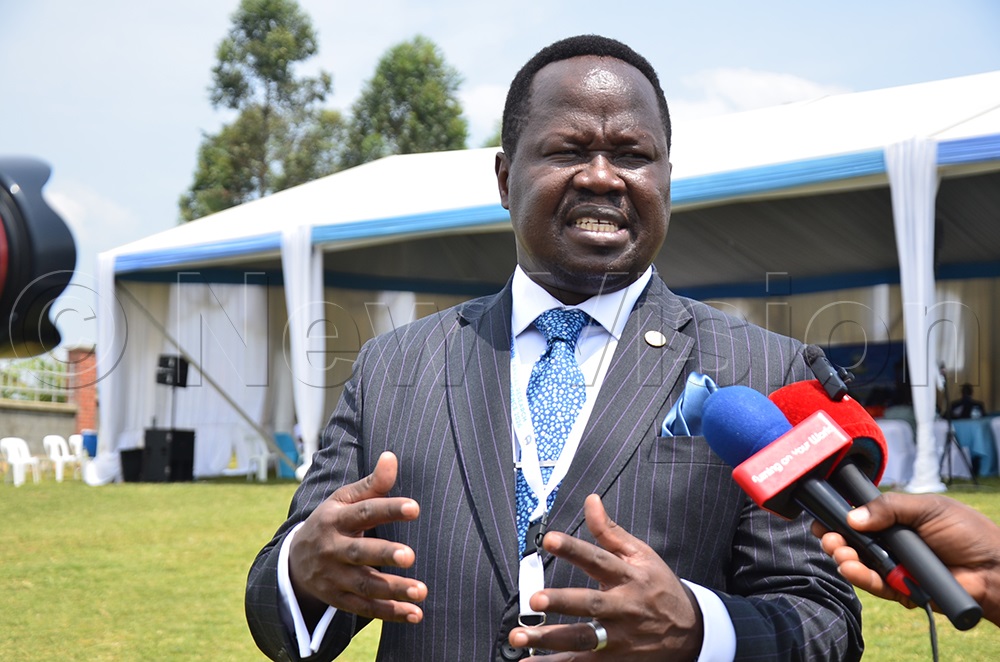
Francis Ogwang speaks to journalists following the research conference. (Photo by Jonan Tusingwire)
He emphasised that research should generate innovations that boost production, strengthen climate resilience, promote agribusiness development, add value to products and improve market competitiveness.
According to Ogwang, universities must demonstrate the value of their research by developing solutions that directly address challenges facing communities.
He urged researchers to think beyond publishing academic papers and instead focus on converting their findings into innovations that have a tangible impact on society.
Ogwang also highlighted the availability of opportunities through development partners, noting that many organisations are willing to fund innovative ideas, particularly those driven by young people.
However, he said universities need to establish stronger partnerships with financial institutions to unlock these opportunities and support research commercialisation.
The conference brought together researchers, academicians and students from several universities across the country, including Mountains of the Moon University, Kabale University, Makerere University and Kyambogo University, among others.
Held under the theme, Harnessing Research and Innovation to Strengthen Inclusive Growth and Sustainable Development, the conference provides a platform for participants from various universities in the country to share knowledge, showcase groundbreaking innovations and forge partnerships that translate research into practical solutions for society.
Prof. Pius Achanga, the Vice Chancellor of Mountains of the Moon University, said the annual gathering reflects the university's commitment to producing research that responds to real-world challenges.
Prof. Achanga noted that the conference showcases the diversity and richness of research and innovation being undertaken by scholars while creating opportunities for collaboration among academia, government, industry and development partners.
He said the research presentations cover a broad range of thematic areas, including sustainable agri-food systems, environmental sustainability, tourism and cultural promotion, among others, with findings that offer practical solutions for promoting inclusive growth and sustainable development.
Prof. Achanga raised concerns over inadequate funding and limited research infrastructure, saying the challenges continue to hinder universities from fully contributing to innovation and national development.
According to him, while universities are generating innovative ideas capable of addressing community challenges, limited resources remain a major obstacle to translating those ideas into practical solutions.
"We have all the ideas, but to turn those ideas into reality, we need resources and expertise. Government provides funding, and we are grateful for that support, but it comes with a ceiling that institutions must operate within," Prof. Achanga said.
He explained that conducting quality research requires highly qualified personnel, particularly PhD holders and experienced scholars, as well as modern research facilities equipped with laboratories.
He says the absence of adequate laboratories at the university has slowed research and limited scientists' ability to make timely discoveries and develop innovations that respond to emerging societal challenges.
"To undertake meaningful research, you need PhD holders and scholars who have spent time in laboratories. As you can see, we do not have a laboratory here, and this affects real-time research and discoveries," he noted.
The Deputy Vice Chancellor of MMU, Prof. John Massa Kasenene, said the conference is more than an academic event, describing it as a platform for showcasing research and innovations that directly contribute to national development.
He emphasised that universities have a responsibility to generate knowledge that addresses societal needs and supports Uganda's development agenda.