
UNEB steps up support for special needs candidates
“I read the questions to her and write down the answers she gives orally. My responsibility is to facilitate her examination, not to provide answers or influence her responses,” said Namulindwa.
A candidate being assisted by a specialised personnel during today's exams. (Photos by John Matrix Tiboruhanga)
________________
The Uganda National Examinations Board (UNEB) has stepped up support for candidates with special educational needs as this year's national examinations got under way on Monday.
It has deployed specialised personnel to assist candidates with disabilities and other learning challenges across the country.
The intervention was evident at several examination centres, for instance in Kampala, where candidates with visual, physical and learning impairments received tailored support to enable them to sit their examinations under conditions that protect equity, fairness and academic integrity.
According to UNEB statistics, 906 Special Needs Education candidates registered for the 2026 Uganda Certificate of Education (UCE) examinations.
They include the blind, learners with low vision, the deaf, dyslexic candidates and those with physical disabilities, while hundreds of others qualified for extra examination time because of various special needs.
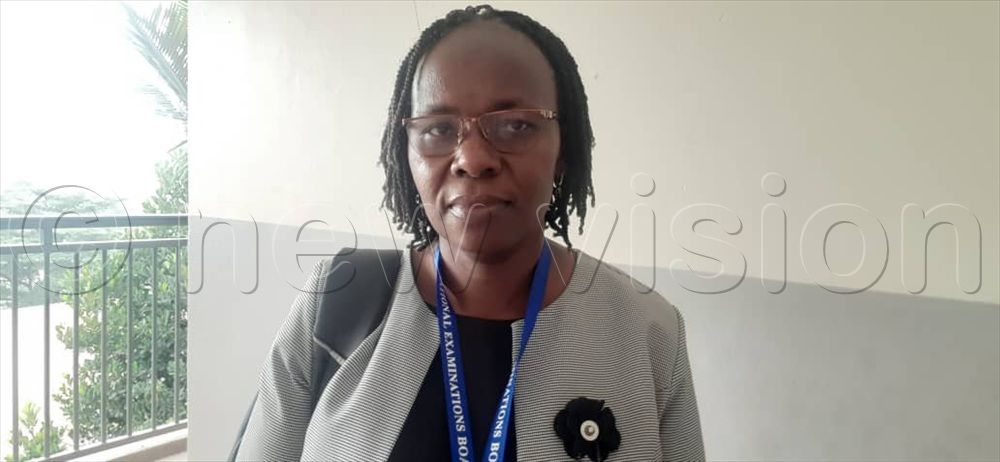
One of the specialised personnel deployed to assist candidates with disabilities and other learning challenges across the country.
To ensure inclusivity during national examinations, UNEB has rolled out a range of accommodations for learners with special needs.
Blind candidates are provided with Braille examination materials, learners with low vision receive large-print papers, deaf candidates are assisted by sign language interpreters, while transcribers support candidates with severe physical disabilities and learning difficulties such as dyslexia. Eligible learners are also entitled to an extra 45 minutes per paper and specialised support during practical examinations.
At Kololo Secondary School, 17-year-old Edith Komugisha, a candidate living with dyslexia and other physical impairments, sat her examination in a separate room, assisted by Prossy Namulindwa, a special needs specialist deployed by UNEB from Baliita Primary School.
Namulindwa's role was limited to reading the examination questions and transcribing the candidate's responses.
A similar arrangement was observed at Makerere College School, where 18-year-old Flavia Nantume, a physically impaired candidate, received assistance from Flavia Nakaddu, who helped read the questions and record her responses.
“I can read the questions and write down her answers, but I cannot explain them or influence her reasoning. The answers must come entirely from her."
Candidates with approved special needs are entitled to additional examination time where necessary. Nantume is eligible for an extra 45 minutes should she require it.
The support arrangements highlight UNEB's ongoing efforts to ensure that no learner is disadvantaged during national examinations because of a disability or learning difficulty.
However, not all special needs candidates were able to participate. At Kololo Secondary School, one candidate, Agnes Kibwesi, missed the examinations after losing her father shortly before the exams began.
Headteacher Betty Mwesigwa said the learner was still emotionally distressed and unable to sit the papers.
“She is still grieving and was not emotionally ready to sit the examinations. We shall liaise with UNEB to establish how she can be accommodated without losing the year."