
Schools given Ebola prevention guidelines ahead of second term reopening
The new standard operating procedures introduce strict infection prevention measures for schools, religious institutions, transport services, markets and mass gatherings across the country.
_______________
The Ministry of Health has issued Ebola prevention guidelines for schools and other public institutions ahead of the reopening of schools for Term II, as Uganda intensifies measures to stop local transmission following imported Ebola cases linked to the Democratic Republic of Congo (DRC).
The new Standard Operating Procedures (SOPs) issued under the guidance of the health ministry Permanent Secretary, Dr Diana Atwine, introduce strict infection prevention measures for schools, religious institutions, transport services, markets and mass gatherings across the country.
The directives come amid heightened concern in the region after Uganda confirmed two imported Ebola Bundibugyo cases in Kampala, while eastern DRC continues to battle a growing outbreak that has so far recorded more than 500 suspected infections and over 130 deaths.
The new directives come as some schools have already reopened for Term II, while the remaining institutions are expected to resume classes on May 24.
The guidelines
Under the new Ministry of Health guidelines, all schools and higher institutions of learning must immediately establish handwashing facilities, temperature screening points and designated isolation areas for suspected Ebola cases.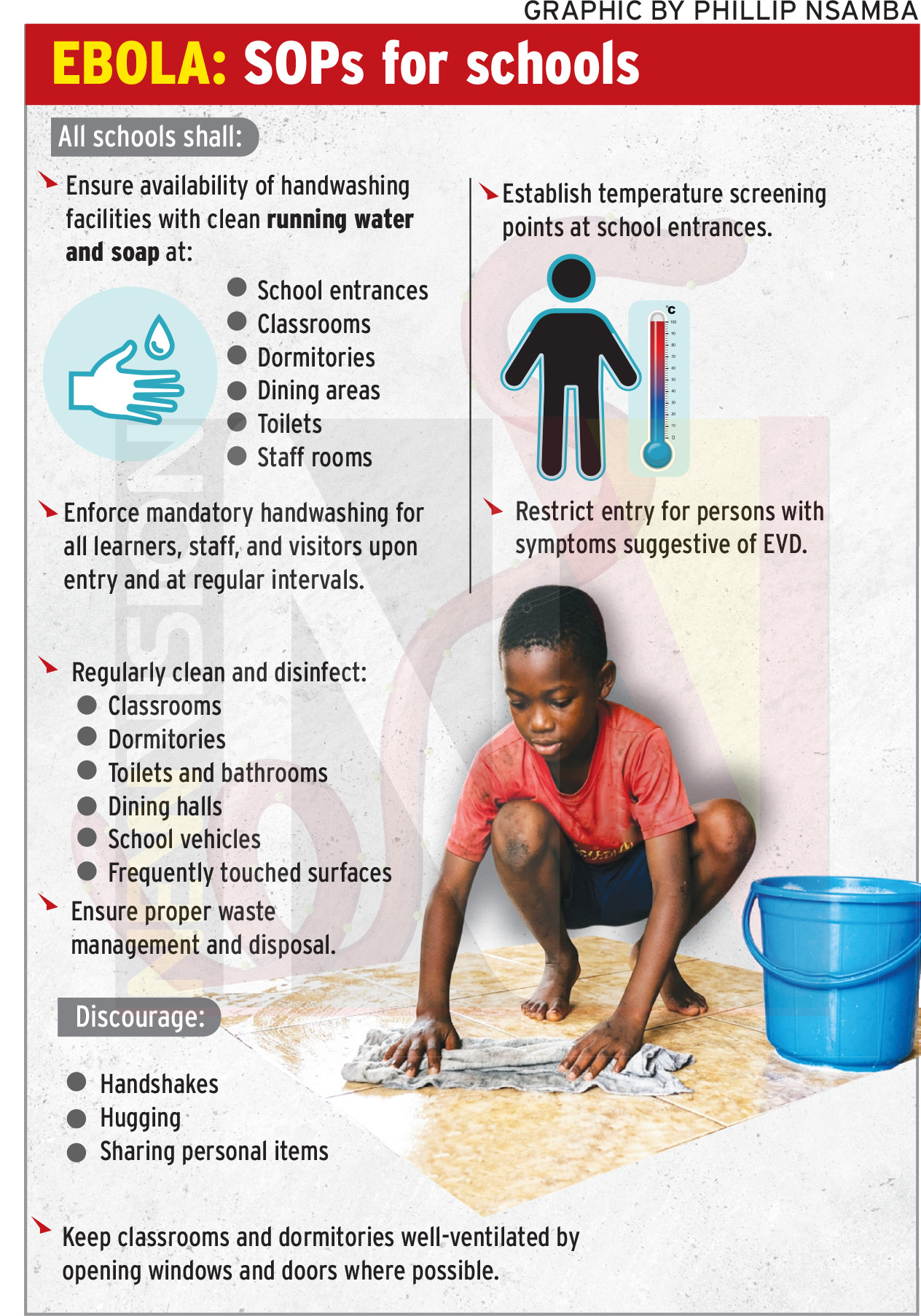
The SOPs apply to nursery, primary and secondary boarding and day schools, universities and vocational institutions, which the ministry said remain high-risk settings because of close interaction among learners, teachers and staff.
“All schools shall ensure availability of handwashing facilities with clean running water and soap at school entrances, classrooms, dormitories, dining areas, toilets and staff rooms," the ministry guidelines state.
Schools have also been instructed to discourage handshakes, hugging and sharing of personal items, while classrooms and dormitories must remain properly ventilated.
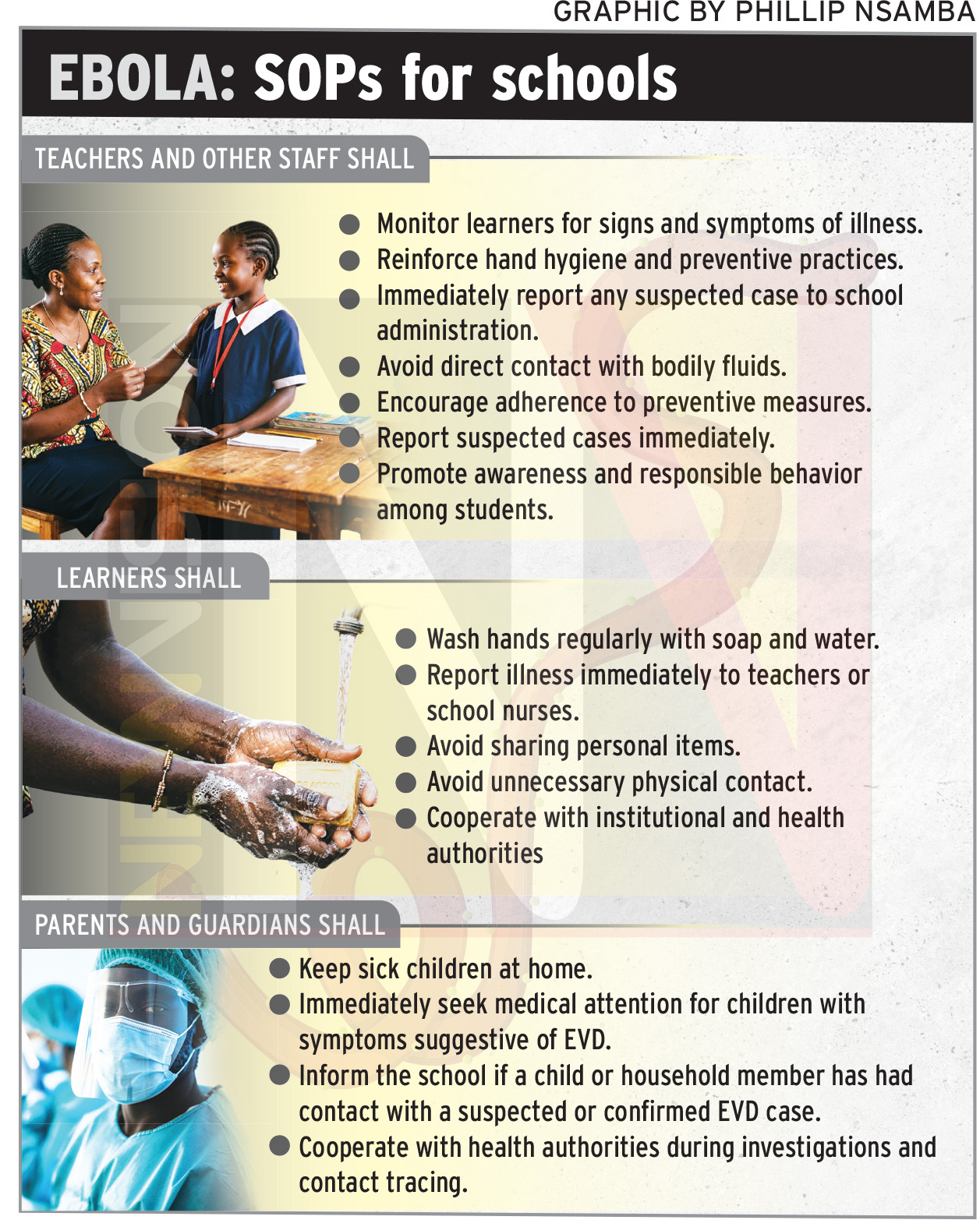
The health ministry further ordered school administrators to immediately isolate and report any learner, teacher or staff member presenting Ebola-like symptoms such as fever, vomiting, diarrhoea, bleeding, chest pain or unexplained weakness.
“We ask you to immediately call the Ministry of Health. Every district has got an outbreak response unit headed by the resident district commissioner. Please do not handle any suspected case yourself. We have no plan to close any institution because Ebola is not like COVID-19. Please report any cases and do not hide them for fear of closure,” Atwine said.
She noted that the new preventive measures were necessary because of the continued movement between Uganda and eastern DRC, where the outbreak is spreading rapidly.
“With the capacity we have built, we are able to detect any outbreak anywhere in the country within 24 hours. We are also able to test for any disease," Atwine added.
The Ministry of Health said rapid response teams, surveillance officers and laboratory units have already been deployed across high-risk border districts stretching from Arua to Kisoro.
Other Measures
The ministry also issued strict health conditions for organisers of religious events, football matches, weddings, political rallies, funerals and crusades. Under the SOPs, organisers of mass gatherings must notify health authorities before holding events and allow inspection and risk assessment at venues.
Atwine said every gathering site must have handwashing facilities, temperature screening points, waste management systems, isolation rooms and emergency evacuation arrangements in case of suspected Ebola patients.
“Any participant with a temperature above 38 degrees must be isolated for further investigation,” the ministry warned.
The guidelines further require organisers to provide at least one toilet stance for every 20 participants and ensure proper ventilation at all venues. Large gatherings may also be postponed or restricted depending on the situation.
Places of worship have additionally been instructed to suspend physical greetings and close-contact prayer practices. “Religious leaders should avoid touching congregants during prayers and avoid laying hands on worshippers,” the ministry stated.
Churches and mosques have also been directed to install handwashing facilities at entry points, display Ebola prevention messages and isolate anyone who develops symptoms during services.
Transport, marketplaces on alert
Taxi parks, buses, boda bodas, ferries and markets have also been placed under enhanced Ebola surveillance measures.
According to the health ministry guidelines, transport operators must regularly disinfect vehicles, provide hand sanitisers and avoid transporting visibly sick passengers. For market operators, the ministry advised their respective managements to install screening points and improve hygiene standards.
The ministry further warned the public against touching sick persons or handling bodies suspected to have died of Ebola without trained burial teams. Atwine urged Ugandans to remain calm but vigilant, saying Uganda had successfully contained several Ebola outbreaks before.
“The country has experience from previous outbreaks, which we have always managed to contain and address in the shortest time possible. This time as well, we are confident that we shall overcome it," she said.
A total of 528 suspected Ebola cases have been reported in DRC, with over 130 deaths. In Uganda, two cases have been confirmed, with one death.